A Chinese Buyer's Guide to Azerbaijan Real Estate
Published on 2026-07-29 · 5 min read

Chinese interest in Azerbaijan real estate is still small in absolute terms, but it is growing for a specific and fairly unusual reason: geography and trade routing, not lifestyle or passport programs. Understanding that context is useful before looking at the property market itself.
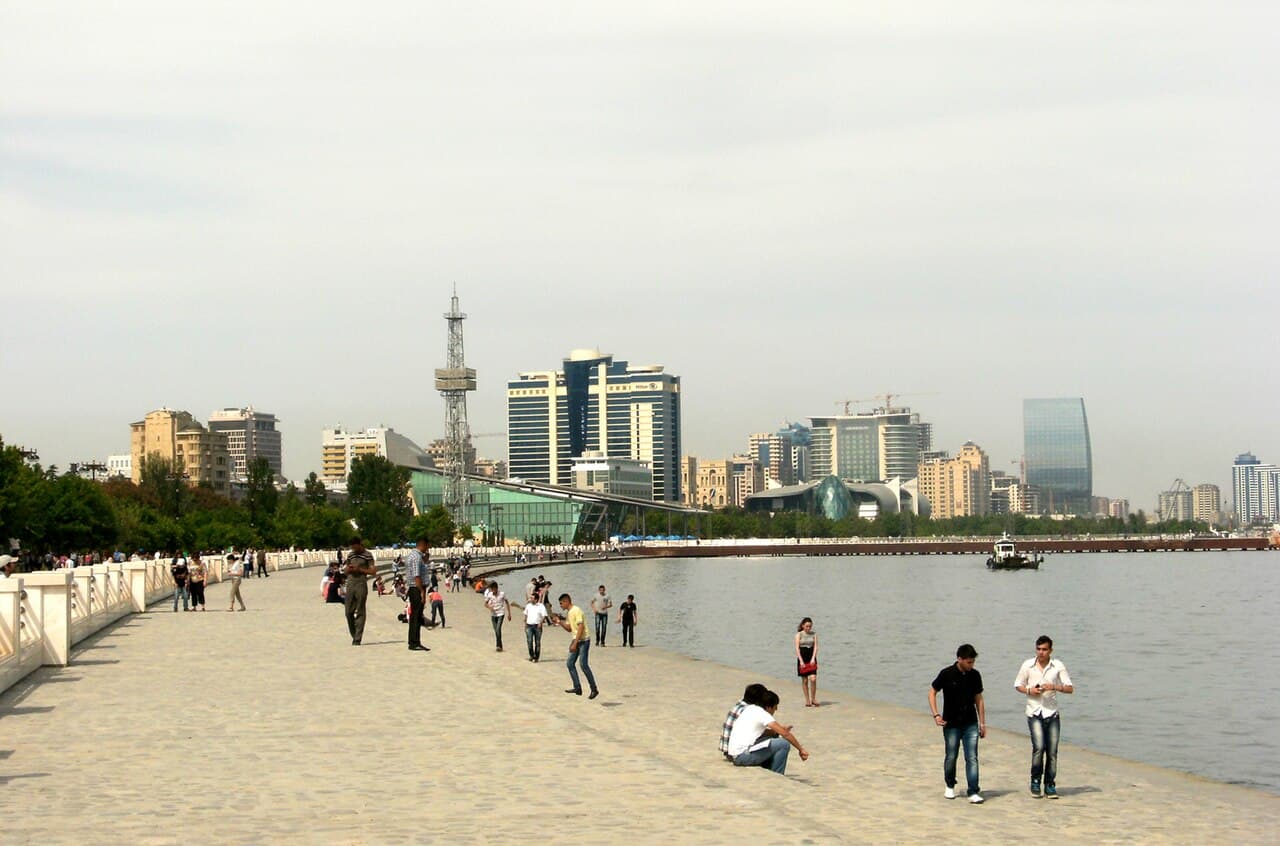
Azerbaijan's Place in the Middle Corridor
Azerbaijan sits at the center of the Middle Corridor, also known as the Trans-Caspian International Transport Route - a trade route connecting China to Europe via Central Asia, the Caspian Sea, the South Caucasus, and Turkey, deliberately routed around Russia. Goods moving along this corridor typically cross Kazakhstan or other Central Asian states, are ferried across the Caspian Sea, arrive at the Port of Baku, and then continue west by rail via the Baku-Tbilisi-Kars line into Georgia and on to Turkey and Europe.
This corridor has taken on added strategic weight since 2022, as Western sanctions and the war in Ukraine made the traditional northern route through Russia far less attractive for both Chinese and European shippers. Azerbaijan has invested heavily in the Port of Baku's container capacity and in rail infrastructure to support higher volumes, and it markets itself explicitly as a logistics hub connecting Asia to Europe. This is the backdrop against which Chinese state-linked and private logistics, shipping, and infrastructure companies have shown increasing interest in the Caspian and Caucasus region - not because of Baku's residential property market, but because of what flows through it.
From Trade Interest to Real Estate Interest
That trade and logistics interest is starting to translate, gradually, into real estate interest - primarily commercial and logistics-adjacent property (warehousing, light industrial space, land near port and rail infrastructure) rather than residential apartments. Some Chinese investors and trading companies active in Central Asia have begun scouting Azerbaijan as a natural extension of routes they already use through Kazakhstan and the Caspian. Residential and investment-apartment interest exists too, largely from individuals connected to trade, shipping, or construction businesses already operating in the region, but it remains a much smaller and less organized segment than the commercial side.
An Honest Note on Flight Connectivity
Anyone actually planning to visit, manage, or inspect a property in Baku should factor in that direct flight connectivity between mainland China and Azerbaijan remains limited compared to routes from Europe, the Gulf, or Turkey. Most journeys currently involve a connection through hubs such as Istanbul, Dubai, or Doha rather than a direct flight. This is a genuinely practical consideration - it affects how easily an owner can visit for due diligence, closing, furnishing, or ongoing property management, and it is worth checking current airline schedules directly rather than assuming connectivity will match more established Chinese outbound markets.
An Early-Stage Market, Not an Established One
It's worth being direct about where Azerbaijan sits on the maturity curve of Chinese outbound real estate investment. Markets like the United Kingdom, Australia, Southeast Asia (Thailand, Malaysia, Singapore), and Dubai have decades or, in Dubai's case, well over a decade of deep, well-documented Chinese buyer activity: dedicated Chinese-speaking agencies, mortgage products tailored to Chinese buyers, established transaction precedent, and abundant market data and price history. Azerbaijan has essentially none of that infrastructure yet. There are very few, if any, dedicated Chinese-speaking real estate agents on the ground in Baku, limited English-language (let alone Chinese-language) market data, and no meaningful track record of Chinese buyer transactions to benchmark against.
This is not a reason to avoid the market - it is a reason to treat it as a genuine frontier opportunity rather than a well-trodden channel. That distinction has practical implications: due diligence needs to be more independent and more thorough, since there is little peer experience to draw on; working with a local lawyer and a local accountant is not optional but essential; and price expectations should be built from first principles (comparable sales, rental data, construction costs) rather than assumed based on how other Chinese-favored markets have behaved.
What This Buyer Segment Tends to Look For
Based on the trade-driven origin of most current Chinese interest, the property types that come up most often are: land or warehouse space near the Port of Baku and along rail corridors, small-to-mid-size commercial or logistics units suited to import-export operations, and secondarily, residential apartments for personnel or as a passive investment alongside a trading business. Price sensitivity tends to be high relative to comparable assets in more mature markets - buyers coming from a trade-and-logistics background are generally evaluating Azerbaijan property against the cost of alternative bases in Kazakhstan, Georgia, or Turkey, not against Chinese domestic prices.
Registration and Legal Process
The legal process itself does not differ for Chinese buyers versus other foreign nationals: foreign nationals can purchase apartments and units in existing buildings, land ownership is generally restricted and handled through long-term leasehold instead, and any purchase should go through proper due diligence against the State Real Estate Register, a notarized sale contract, and formal registration of the transfer. Given the limited pool of Chinese-speaking professionals in Baku, buyers should expect to work through English or Russian with local lawyers, and to budget extra time for translation and communication compared to more established markets.
This article is general in nature and does not constitute legal, tax, or investment advice. Given how early-stage this market segment is, independent verification with current official sources and local professionals is especially important before proceeding.
Legal & tax mattersBuying Property in Azerbaijan: A Guide for Foreigners
What a foreigner may and may not buy in Azerbaijan, how the notary and land registry process works, which costs actually apply, and why owning a flat differs from owning land
Read more → Legal & tax matters
Buying Property in Baku Remotely: Doing It Properly
Can you buy a property in Baku without flying — power of attorney, a local representative, virtual tours, independent verification and the risks you must know
Read more →Legal & tax mattersBaku Mortgages and Housing Credit: Market State 2026
The Azerbaijani mortgage market — state-subsidised programmes, interest rates, access for foreigners and how credit expansion affects housing prices in Baku
Read more →