A UK Buyer's Guide to Azerbaijan Real Estate
Published on 2026-07-28 · 5 min read
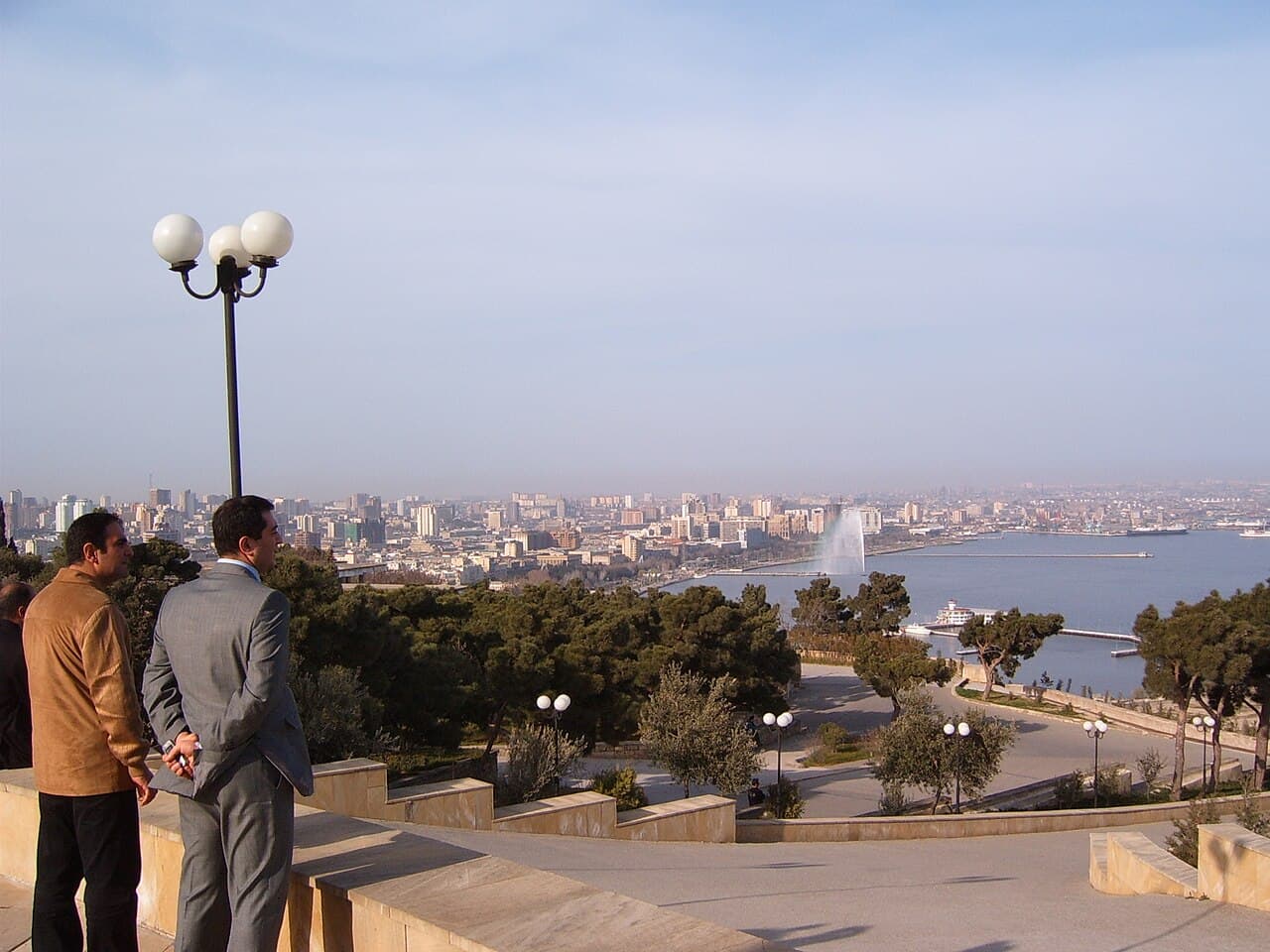
British interest in Azerbaijan is not a recent phenomenon. BP has operated in the country since the 1990s, anchoring the Azeri-Chirag-Gunashli oil fields and the Baku-Tbilisi-Ceyhan pipeline, and remains one of the largest foreign investors in the Azerbaijani economy. That long industrial relationship left a durable footprint: a resident British business community in Baku, a network of UK-linked professional and oil-services firms, and an expatriate infrastructure built up over three decades. For a UK buyer considering property in Baku, this matters practically - there is an existing community, familiar service providers, and a business culture that has absorbed British norms in a way few other emerging markets in the region have.
Why the Language Barrier Is Smaller Than Expected
English is widely used in Baku's international business, energy, banking and hospitality sectors, a legacy partly of the BP-led energy sector and partly of Azerbaijan's own push to internationalise its economy after the oil boom of the 2000s. This does not mean every stage of a property purchase happens in English - contracts, notarial acts and land registry filings are conducted in Azerbaijani - but it does mean that agents, developers marketing to overseas buyers, and increasingly lawyers in international-facing firms can operate comfortably in English. That reduces, though does not eliminate, the practical friction a UK buyer faces compared with markets where no English-language intermediary layer exists at all.
Price Comparison: Baku Against the UK Market
The gap between UK and Baku entry prices is the detail that draws the most attention from British buyers. Average house prices across the UK sit in the low-to-mid several-hundred-thousand-pound range, and London prices run substantially higher, often several times the national average per square metre in central boroughs. Baku, by contrast, offers new-build apartments in central and prestige districts such as White City or Badamdar at a fraction of London's per-square-metre cost, with more modest neighbourhoods considerably cheaper still. This is a general, illustrative comparison rather than a precise benchmark - actual prices vary significantly by building, developer and finish quality - but the order-of-magnitude difference is real and is the main driver of British interest in the market.
Common Law Habits Meet a Civil Law System
This is where UK buyers most often misjudge the process. England and Wales operate under common law: title is typically verified through a land registry with strong reliance on solicitor-conducted searches, precedent shapes contract interpretation, and a purchase completes through an exchange of contracts, often with conveyancing handled largely by correspondence.
Azerbaijan, like most of continental Europe and the former Soviet space, operates a civil law system built around codified statutes rather than case-law precedent. Several consequences follow that a UK buyer should understand before signing anything:
- Notarization is central, not optional. In common law jurisdictions a solicitor's letter or a witnessed signature is often sufficient. In Azerbaijan, the sale contract is executed before a notary, who verifies the identities of the parties, confirms the seller's ownership, and formally attests the transaction. The notary's role is closer to that of a public official than a private advisor.
- Title registration is the operative legal event. Ownership transfers on registration with the State Real Estate Register, not merely on signing a contract. Until registration is complete, the buyer's interest is not fully secured against third parties.
- Contracts are drafted around statute, not precedent. Azerbaijani civil code provisions govern most of what a UK solicitor would expect to see negotiated clause-by-clause in a bespoke contract. This generally makes contracts shorter and more standardised, but it also means unusual terms a UK buyer might want - staged completion conditions, specific warranties - need to be checked against what local law actually permits, rather than assumed to be freely negotiable as in an English contract.
- There is no direct equivalent of UK-style title insurance in wide use, so due diligence before signing carries proportionally more weight than it might in a UK transaction where title insurance is a common backstop.
Working with a bilingual local lawyer who deals specifically with foreign buyers is the standard, sensible response to these differences, and one most experienced UK buyers in Baku already follow.
What This Buyer Segment Tends to Prioritise
British buyers active in the Baku market, drawing on the caution instilled by a mature and heavily regulated home market, tend to weight a fairly consistent set of factors: verifiable, clean title free of disputes or unresolved claims; construction quality and the reputation of the developer, since build standards vary considerably across projects; realistic rental income potential rather than speculative price appreciation alone; and lifestyle and coastal appeal, given Baku's Caspian seafront position and relatively short flight time from London. Price sensitivity is real but secondary to these confidence factors - a UK buyer who has verified title and developer track record is generally willing to pay a premium over a cheaper, less transparent alternative.
Tax and Reporting Considerations
UK tax residents are generally expected to declare overseas property and any rental income from it to HMRC, and the UK's double taxation treaty network - which includes an agreement with Azerbaijan - is designed to prevent the same income being taxed twice, though the mechanics depend on individual circumstances, residency status and how the property is held. These are matters that change and that depend heavily on personal circumstances, so this article should be treated as a starting point for questions to raise with a UK tax adviser experienced in overseas property, not as a statement of current tax law.
The information in this article is general in nature and does not constitute legal or tax advice. Consult a lawyer specializing in Azerbaijani real estate law and a UK tax adviser before entering into any transaction.
 Legal & tax matters
Buying Property in Azerbaijan: A Guide for Foreigners
What a foreigner may and may not buy in Azerbaijan, how the notary and land registry process works, which costs actually apply, and why owning a flat differs from owning land
Read more → Legal & tax matters
Buying Property in Baku Remotely: Doing It Properly
Can you buy a property in Baku without flying — power of attorney, a local representative, virtual tours, independent verification and the risks you must know
Read more →Legal & tax mattersBaku Mortgages and Housing Credit: Market State 2026
The Azerbaijani mortgage market — state-subsidised programmes, interest rates, access for foreigners and how credit expansion affects housing prices in Baku
Read more →