Business and Work Spaces at Miami Residence: Living at a Resort, Working From One Too
Published on 2026-08-16 · 5 min read

Among the amenities described for Miami Residence, a residential cluster within the Sea Breeze resort city on the Caspian coast near Baku, is a category that doesn't fit the classic image of a beach-and-pool development: business and meeting spaces built into the residential complex itself. It's a detail worth unpacking, both because it reflects a broader shift in how resort-style residential projects are being designed, and because it says something about who this kind of address is likely meant to attract.
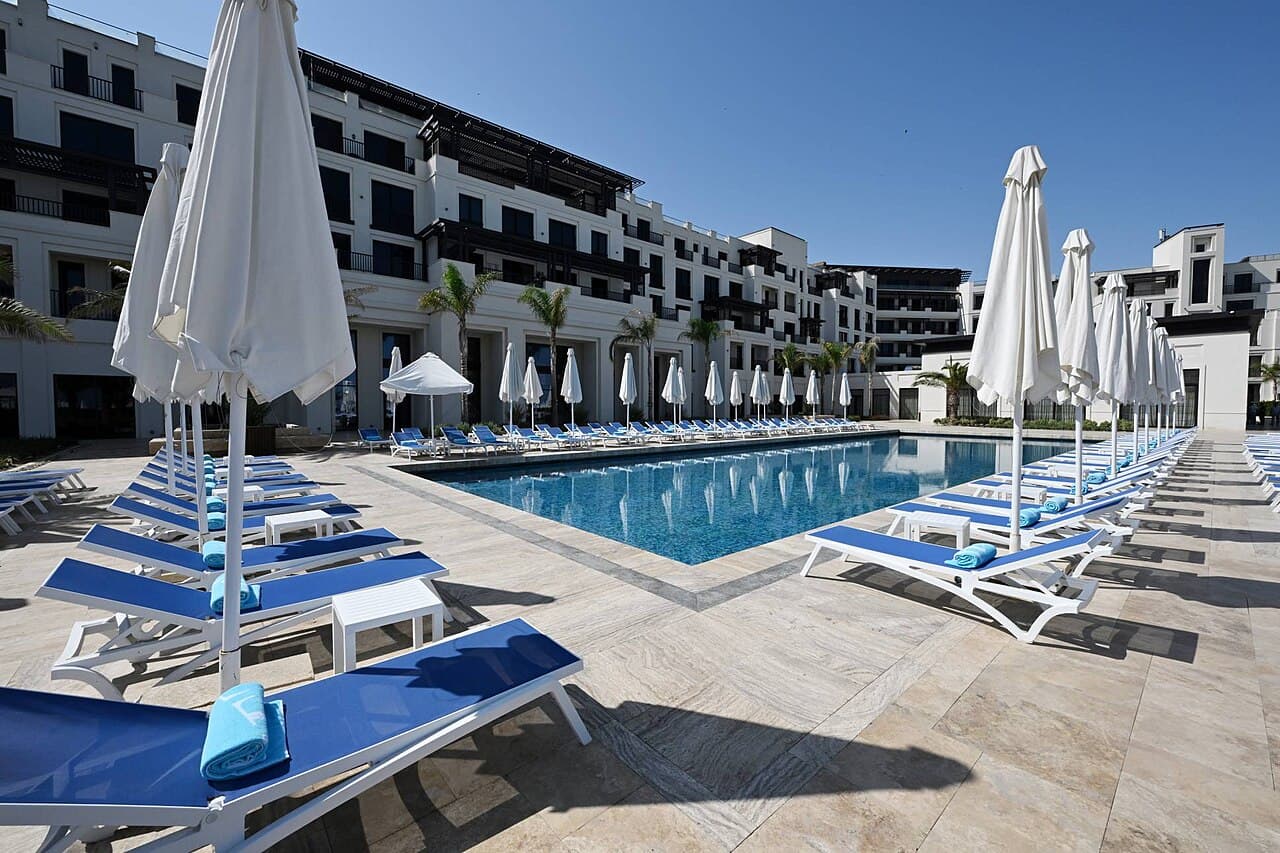
What's Described
Project materials for Miami Residence mention shared business-oriented spaces alongside the more expected resort amenities — azure pools, boutiques, cafes. These are described as common areas suitable for individual work or small meetings, rather than a dedicated office tower or formal business center. Precise details, such as square footage, desk capacity, whether the space includes meeting rooms with audiovisual equipment, or whether access is included in a standard ownership package versus offered as a paid add-on, are not confirmed in public materials at the time of writing. Anyone weighing this feature seriously should ask the developer or a sales representative for specifics rather than assuming a particular scope or finish level.
Why Resort Developments Are Adding This
The inclusion of work-oriented common spaces in a resort-residential project is not unique to Miami Residence — it reflects a pattern seen across many newer developments worldwide since remote and hybrid work became widespread. Buyers of second homes, investment apartments, or resort residences increasingly expect to be able to spend meaningful stretches of time on-site without giving up the ability to take a video call or get a few hours of focused work done. A pool-and-palm-trees aesthetic alone no longer fully answers that expectation for a segment of buyers who might otherwise view a resort property as purely a vacation asset.
Developers responding to this shift generally take one of a few approaches: a dedicated co-working lounge with desks and Wi-Fi, small private meeting rooms bookable by residents, or more informal work-friendly common areas — a cafe or lobby lounge with good connectivity rather than a purpose-built office. Which of these Miami Residence ultimately delivers, at what scale, is something to confirm directly rather than infer from a general amenities description.
Who This Kind of Space Tends to Suit
Business and meeting spaces within a resort-residential project generally appeal to a handful of overlapping groups. Remote employees who can work from anywhere but want more structure than a hotel room or a beachside cafe are one obvious fit. Entrepreneurs and small business owners who travel with a laptop and need to take occasional calls, or who split time between a home base and a second property, are another. A third group is buyers who are not planning to work on-site themselves but see the amenity as a factor that supports rental appeal — a unit that can be marketed to remote-work tenants or medium-stay guests may have a broader pool of potential renters than one without any equivalent space.
It's worth being realistic, though, about what this amenity does and doesn't replace. A shared lounge or meeting room within a residential complex is not a substitute for a proper office if someone's work requires regular in-person meetings, specialized equipment, or a team physically present. It's better understood as a convenience for periodic or occasional work needs layered onto a primarily residential and leisure-oriented lifestyle.
How This Fits the Broader "Work From a Resort" Trend
Sea Breeze, the larger development Miami Residence sits within, has been positioned by its developer as a year-round destination rather than a purely seasonal resort — meaning the intent, at least as described, is for residents to use the property outside the peak summer months as well. Business and meeting spaces are consistent with that positioning: a resort meant for genuine day-to-day living, not only holiday stays, benefits from amenities that support ordinary working life, not just leisure. This mirrors a trend visible in resort markets from the Mediterranean to Southeast Asia, where "workations" and long-stay remote work have become a meaningful part of how such properties are marketed and, in some cases, actually used.
Whether that vision plays out as intended at Sea Breeze specifically depends on factors beyond the amenity list — internet reliability at the site, actual occupancy patterns once the development matures, and how the business spaces are managed and maintained over time. These are practical questions worth raising with the developer rather than assuming based on marketing language alone.
Questions Worth Asking
Anyone genuinely considering how a unit at Miami Residence might support remote or flexible work should ask a few concrete questions: what exactly is included in the business/meeting space (desks, private rooms, printing, video-conferencing setup); whether access is part of standard ownership or an added service; what the internet infrastructure looks like at the site, since resort areas outside a city center do not always match urban connectivity; and whether the space is described as available year-round or tied to particular operating hours or seasons. These details tend to matter far more in practice than the general concept of "business spaces" listed in an amenities brochure.
Bottom Line
The presence of business and meeting spaces at Miami Residence reflects a broader trend of resort-residential developments building in support for remote and flexible work, rather than assuming residents are purely on vacation. For certain buyers — remote professionals, small business owners, or those thinking about rental appeal — this kind of amenity can be a genuinely relevant consideration. As with other features of the project, though, the practical details of scope, access, and day-to-day functionality are best confirmed directly with the developer before factoring them heavily into a decision.
Related Articles
 Living & visiting guide
The Absheron Peninsula Water Quality Map
What the Ministry of Ecology's monitoring found suitable and what it did not, why the infrastructure list and the test results disagree, and how the Khazri wind changes things
Read more → Living & visiting guide
Why You Can't Swim in Baku Bay — and Where You Can
Swimming is banned in Baku Bay and Shikhov closes most summers, while the northern Absheron beaches stay clean. Here is why, and how to check before you go in
Read more →Living & visiting guideBaku Beaches: A Practical Guide to the Coast
Bilgah, Buzovna, Mardakan, Novkhani and Amburan - what to expect at each beach, how to get there, and why some charge entry when the law says they are free
Read more →