Mingachevir: Azerbaijan's Lake City and Hydropower Hub
Published on 2026-07-22 · 5 min read
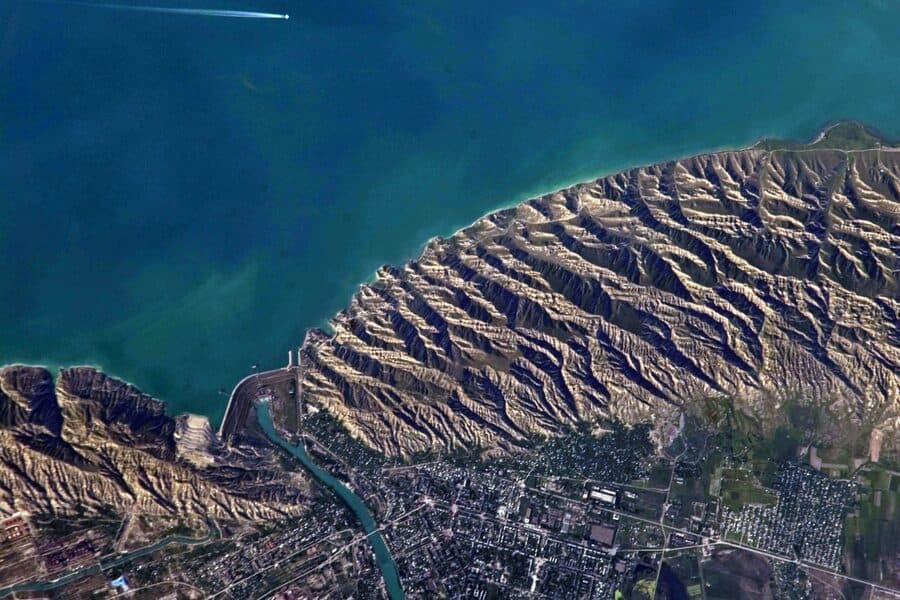
About 200 kilometers west of Baku, on the banks of the Kur (Kura) River in the heart of Azerbaijan, sits Mingachevir — a city that exists almost entirely because of water. Built from the mid-1940s onward to house the workforce and engineers of a massive hydroelectric dam project, Mingachevir today is home to roughly 100,000 people and sits on the shore of the largest artificial lake in the South Caucasus, a body of water so large that locals simply call it "the sea."
A City Built by an Artificial Sea
Mingachevir is unusual among Azerbaijani cities in that it did not grow organically around a historic settlement, trade route, or fortress. Construction began in 1945 on what was initially a workers' settlement for the Mingachevir Hydroelectric Power Station project, and the town was granted official city status in 1948. Streets were laid out in the wide, orderly grid typical of planned Soviet industrial towns, with broad avenues, uniform apartment blocks, and public squares designed around the needs of a workforce rather than the accumulated layout of centuries. That planned character is still visible today — Mingachevir reads as more spacious and more orderly than older Azerbaijani cities, with wider streets and more greenery per resident than is typical elsewhere in the country.
The Mingachevir Reservoir: Azerbaijan's "Sea"
The defining feature of the city is the reservoir that shares its name. Formed by damming the Kur River — the longest river in the South Caucasus — the Mingachevir Reservoir was filled in stages between 1953 and 1960 and today covers roughly 600 square kilometers, with a total capacity exceeding 15 billion cubic meters of water. It is by a wide margin the largest body of water of any kind, natural or artificial, in Azerbaijan, and it is commonly referred to across the country as "Azərbaycan dənizi" — the Sea of Azerbaijan. The reservoir's scale is difficult to grasp from the shore: it stretches for tens of kilometers, has its own microclimate along parts of its coastline, and supports a small fishing industry alongside its primary functions of power generation, irrigation, and flood control for the lowlands downstream.
Energy Capital of the South Caucasus
The reservoir exists first and foremost to serve the Mingachevir Hydroelectric Power Station, which was completed in stages through the 1950s and remains the largest hydropower facility in Azerbaijan and one of the largest in the wider South Caucasus region. With an installed capacity of roughly 360 megawatts across its turbines, the station has long supplied a significant share of Azerbaijan's electricity and continues to play a stabilizing role in the national grid, particularly given the intermittency of newer solar and wind projects elsewhere in the country. A second, smaller station downstream at Varvara adds further generating capacity along the same stretch of the Kur. This energy role gives Mingachevir an economic identity distinct from oil-driven Baku or agricultural Ganja: it is, in effect, Azerbaijan's hydropower capital, and state investment in the dam, grid infrastructure, and related industry has kept the city economically active well beyond its original construction-era purpose.
Central Crossroads Between West and East
Mingachevir's location gives it a second, less visible advantage: it sits almost exactly at the midpoint between Baku and the western cities of Ganja, Sheki, and the Georgian border region. The city sits on both the main east–west highway corridor and a rail line connecting the capital to western Azerbaijan, making it a natural stopover and logistics point for freight and travelers moving between the Caspian coast and the country's interior and mountain regions. This central position, combined with the presence of Mingachevir State University and a handful of light-industry and textile enterprises inherited from the Soviet period, has helped the city maintain a diversified economic base rather than depending solely on the power station.
Tourism and Water Sports Potential
For a city with the largest lake in the country on its doorstep, Mingachevir's tourism sector remains modest and largely domestic — a gap that is increasingly seen as untapped potential rather than a permanent limitation. The reservoir's calm, expansive waters are well suited to boating, water skiing, and fishing, and a growing number of small guesthouses, lakeside restaurants, and rental boat operators have appeared along the accessible shoreline in recent years, catering mostly to Azerbaijani visitors from Baku and Ganja seeking a lake escape without the crowds or prices of the Caspian coast. Compared to established seaside destinations elsewhere in the country, the infrastructure for organized tourism — marinas, hotel capacity, waterfront promenades — is still at an early stage, but the raw physical asset is difficult to overstate: few cities in the region can offer 600 square kilometers of open water within city limits.
Takeaway
Mingachevir is a city defined by a single 20th-century engineering project that reshaped both its landscape and its economy. What began as a hydroelectric workers' settlement is now a mid-sized, well-planned city anchored by the largest lake in Azerbaijan, a central location linking east and west, and a power station that still matters to the national grid. Its lakeside tourism sector remains early-stage compared to the Caspian coast, but the scale of the reservoir itself — and the city's role as an energy and transit hub — make Mingachevir a name worth knowing for anyone looking at Azerbaijan beyond Baku.
Property types outside Baku differ from those in the city - from a holiday house to an apartment in a new development. The property type finder is a reasonable starting point for anyone still deciding.
 Azerbaijan cities & regions
Absheron's Oilfields: From Contaminated Land to Regeneration
Tens of thousands of hectares left contaminated by the Soviet oil era, a World Bank rehabilitation programme, and the White City built on the Black City
Read more → Azerbaijan cities & regions
Buying Property Near Shahdag: A Guide to Azerbaijan's Ski Real Estate
Resort apartments and chalets around Shahdag Mountain Resort - rental yield potential from ski tourism, price comparison with the Alps, and what distant owners should know
Read more → Azerbaijan cities & regions
Buying Near Tufandag: Real Estate at Gabala's Ski Resort
Chalets, hotel-apartments and two seasons of demand - what buyers should know about property near Gabala's mountain resort
Read more →