Ganja: Azerbaijan's Historic Second City
Published on 2026-07-22 · 5 min read
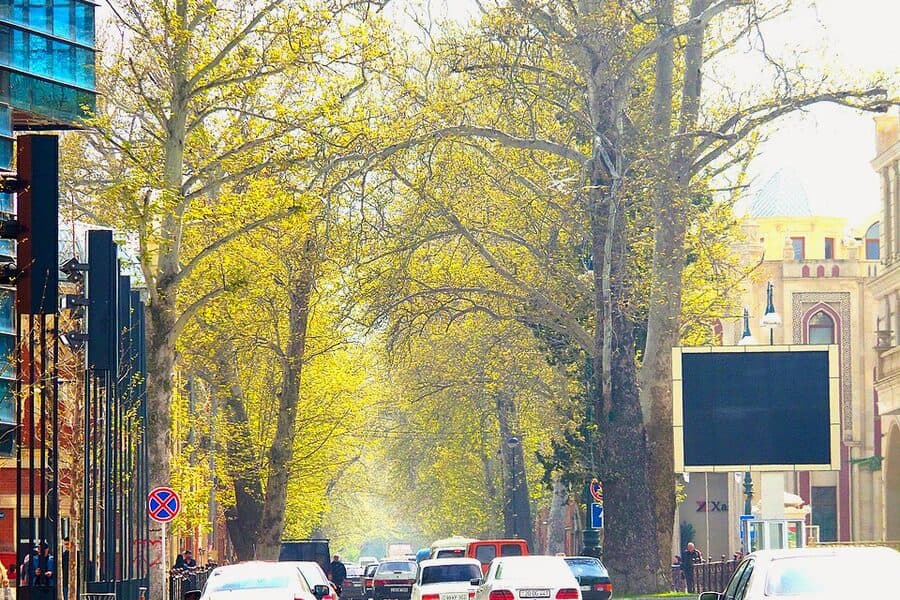
Roughly 375 kilometers west of Baku, close to the foothills of the Lesser Caucasus and not far from the Georgian border, sits Ganja — Azerbaijan's second-largest city and one of its oldest. With a population of around 335,000, Ganja is the administrative and economic center of western Azerbaijan, and increasingly a subject of interest for buyers and travelers looking beyond the capital.
A City with Over a Thousand Years of History
Ganja's roots run deep. Most historical accounts trace the city's founding to the ninth century, around 859–861 AD, though the wider area was settled well before that. Over the centuries the city passed through Arab, Seljuk, Mongol, and Safavid control before becoming the seat of the independent Ganja Khanate in the eighteenth century under rulers such as Javad Khan, who died defending the city against the Russian army during the siege of 1804. After its annexation by the Russian Empire, the city was renamed Elisabethpol, and it later became Kirovabad during the Soviet period, from 1935 until 1989, when the historic name Ganja was restored. This layered history — Persian, Turkic, Russian, and Soviet — is still visible in the city's architecture and street plan today.
Birthplace of Nizami Ganjavi
Ganja's most famous native son is Nizami Ganjavi, the twelfth-century poet widely regarded as one of the greatest figures of classical Persian-language literature and a cultural icon claimed with pride across Azerbaijan. Born in Ganja around 1141, Nizami authored the Khamsa, a cycle of five epic narrative poems that includes the tragic love story of Leyli and Majnun. His mausoleum, located just outside the city center, was rebuilt in its current form in 1947 and remains one of Ganja's most visited monuments, set within a park that hosts cultural events and commemorations tied to his legacy. Statues, streets, and the state university all carry his name, underscoring how central he remains to the city's identity.
Landmarks Worth Knowing
Beyond the Nizami Mausoleum, Ganja's historic core holds several sites worth a closer look. The Juma Mosque, also known as the Shah Abbas Mosque, was built in 1606 and remains the city's principal mosque, restored with its slender minarets and brick detailing intact. The Bottle House, a private residence built almost entirely from glass bottles by a local resident over decades, has become an offbeat but genuine local curiosity. Khan's Garden, a nineteenth-century central park, functions today as the city's main green space and social hub, home to a theater, monuments, and shaded walking paths. On the northeastern edge of the city, the Imamzadeh complex draws religious visitors and pilgrims to its mausoleum grounds. Scattered remnants of the old city walls and gates, along with restored caravanserai buildings from the Shah Abbas era, round out a historic center that rewards unhurried exploration.
Economy and Industry
Ganja is one of the pillars of Azerbaijan's non-oil economy. The city is home to a major aluminum production complex, alongside long-established machine-building and compressor manufacturing plants dating to the Soviet industrial era. Agriculture plays an equally important role: the fertile plains around Ganja support extensive vineyards and orchards, and the city has been known for generations across the former Soviet space for its canned fruit, jams, and preserves, produced under the historic "Ganja" food-processing brand. Traditional carpet weaving and textile production also remain part of the local economic fabric, and the city continues to attract state investment aimed at diversifying its industrial base beyond heavy manufacturing.
Climate and Geography
Ganja sits at the edge of the Kur-Araz lowland where it meets the foothills of the Lesser Caucasus, giving it a semi-arid continental climate that is noticeably different from coastal, humid Baku. Summers are hot and dry, with July temperatures regularly reaching the high twenties Celsius, while winters are cooler and occasionally see light snow — a contrast to Baku's milder, wetter winters. The surrounding region also gives Ganja an advantage as a gateway city: Lake Goygol and Goygol National Park, formed by a major earthquake in 1139 and known for their dense forests and mountain scenery, lie roughly 30 kilometers away, as does Naftalan, the small spa town famous throughout the region for its therapeutic crude-oil treatments.
Getting to Ganja from Baku
Ganja is well connected to the capital. The M2 highway links the two cities directly, with the drive typically taking around four to four and a half hours depending on traffic and road conditions. Ganja International Airport offers domestic flights to Baku as well as periodic international routes to destinations such as Istanbul and Moscow, making the city reachable by air in well under an hour. A rail line on the historic Baku–Tbilisi corridor also passes through Ganja, offering a slower but scenic overland alternative.
Why Ganja Matters for Real Estate and Tourism
As Azerbaijan's second city, Ganja carries administrative weight, a genuine industrial base, and a growing student population anchored by Ganja State University and several affiliated institutions. Government investment in roads, the airport, and municipal infrastructure has steadily narrowed the gap with Baku over the past decade, even as property prices in the city remain a fraction of what buyers would pay in the capital. For travelers, Ganja offers a denser concentration of pre-Soviet and Soviet-era heritage sites than almost anywhere else in the country outside Baku itself, along with easy access to the mountains and Naftalan's spa tourism. That combination — historic depth, industrial substance, and comparative affordability — is what keeps Ganja on the radar of anyone looking at Azerbaijan beyond its capital.
Property types outside Baku differ from those in the city - from a holiday house to an apartment in a new development. The property type finder is a reasonable starting point for anyone still deciding.
 Azerbaijan cities & regions
Absheron's Oilfields: From Contaminated Land to Regeneration
Tens of thousands of hectares left contaminated by the Soviet oil era, a World Bank rehabilitation programme, and the White City built on the Black City
Read more →Azerbaijan cities & regionsBuying Property Near Shahdag: A Guide to Azerbaijan's Ski Real Estate
Resort apartments and chalets around Shahdag Mountain Resort - rental yield potential from ski tourism, price comparison with the Alps, and what distant owners should know
Read more → Azerbaijan cities & regions
Buying Near Tufandag: Real Estate at Gabala's Ski Resort
Chalets, hotel-apartments and two seasons of demand - what buyers should know about property near Gabala's mountain resort
Read more →