Promised vs Delivered: Auditing Sea Breeze's Completion Dates
Published on 2026-10-22 · 8 min read
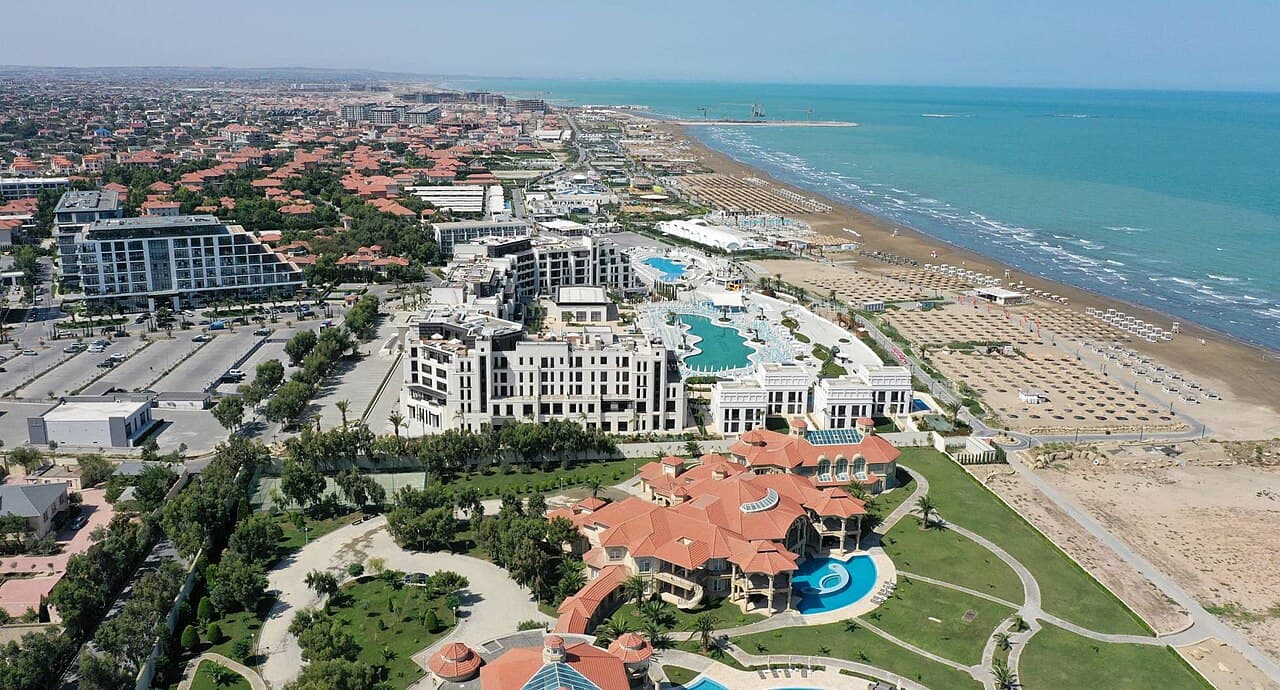
Every off-plan purchase is a bet on a date. The brochure prints it, the payment schedule is built around it, and the yield calculation you did at the sales desk assumes it. So the most useful question about Sea Breeze is not what is being built but a narrower one: when this development has published a date, what has happened to it?
This page is an audit rather than an opinion. Every item below is a documented inconsistency or an unanswered question in publicly available material - most of it produced by the developers themselves.
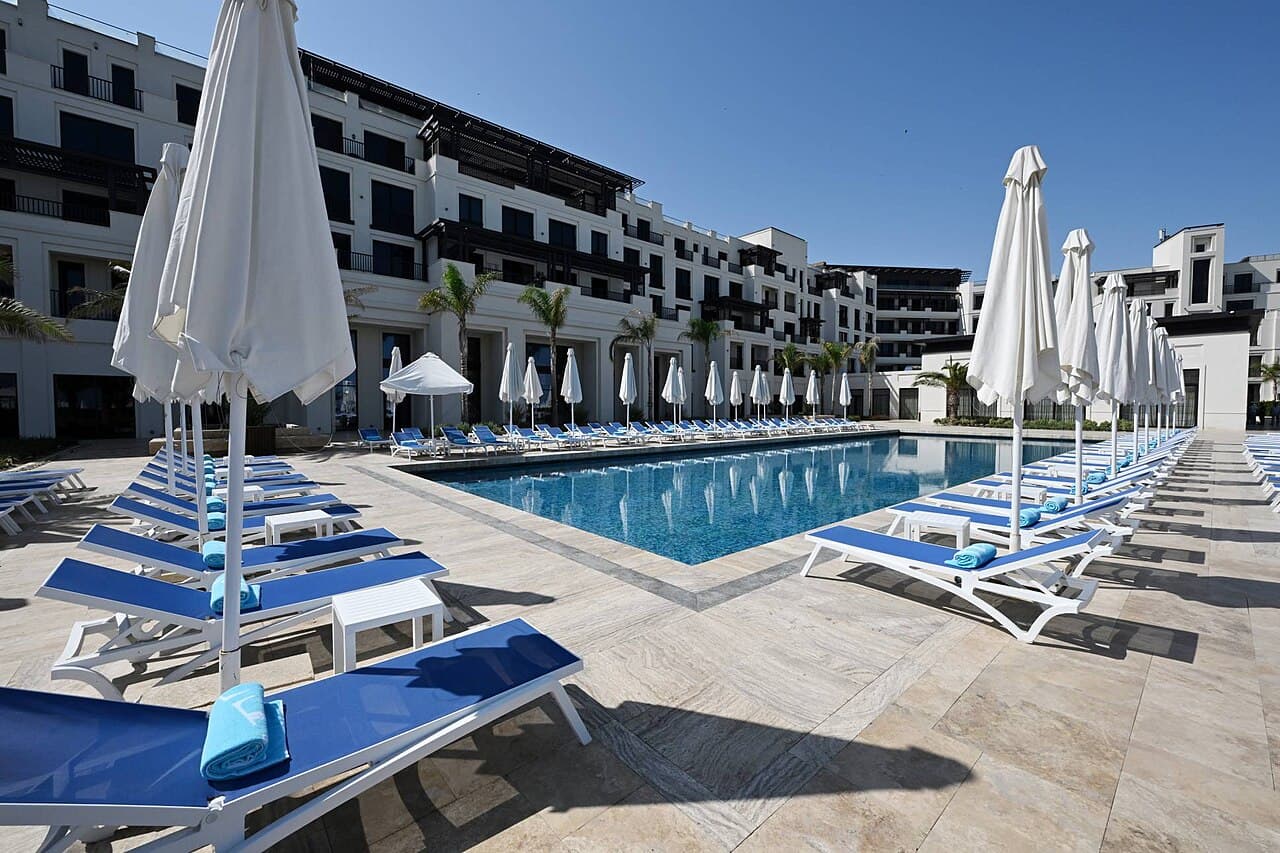
The Figure That Frames Every Date Below
Before the individual findings, one sourced sentence puts all of them in proportion. Speaking to Report.az on 26 September 2026, Emin Agalarov - the founder of Sea Breeze - said that "only 10%-15% of the planned work has been completed so far." In the same interview he described the plan as being to "implement everything designed over the next seven to eight years", which points to completion around 2033-2034.
Read that against the sales material. Buildings at this resort are being sold with 2029 and 2030 delivery dates, inside a development its own founder describes as one-eighth built with seven to eight years of work remaining. The two statements are not necessarily contradictory - individual buildings can finish long before a masterplan does - but anyone being told that the surrounding resort will be complete and mature by the time their apartment is handed over is being told something the founder has not said.
The same interview gives one more useful number: Sea Breeze has signed "around 20 agreements with various names" for branded residences, and continues to expand that list. That is the scale of the brand pipeline, and it is worth remembering that a signed agreement is not an open building.
Finding One: The Same Project, Two Completion Years
The clearest case is Park Residences 3. Two official project listings give it two different completion years - 2026 on one page, 2029 on another. Not a quarter's difference, not a rounding: three years, on the same project, in the same developer's own materials.
There are innocent explanations. Pages get updated at different times; phases within a complex complete separately; a listing may refer to a building and another to the whole cluster. But none of those explanations are printed on the pages, and a buyer comparing them has no way to know which is current. The practical conclusion is not that one page is lying. It is that a published completion year at Sea Breeze is not a figure the developer treats as fixed.
Finding Two: A Unit Count That Moves
Panorama by ELIE SAAB has been announced with 550, 579, 580 and 582 residences across four separate sources. The project broke ground in July 2026 and targets 2030.
A unit count is a simpler number than a completion date - it comes from the drawings - and it still moved four times. When a number that specific shifts in the announcements, the less specific numbers around it deserve the same suspicion.
Finding Three: Announcements Without Dates
Three of the most heavily marketed elements of Sea Breeze have no published delivery date at all.
- Nobu Hotel, Restaurant and Residences - announced October 2025 with a precise programme: 80 guest rooms, 100 residences including five villas. No opening date has been published in the year since.
- Cipriani Residences on Half Moon - agreement signed January 2026, tower stated at 323 metres. Despite the common project name, Half Moon is an artificial peninsula on the coastline rather than an island, per the project page of its contractor Evrascon, which also says construction is currently in progress. No construction timeline has been published.
- Hilton, Marriott, Radisson and Hyatt - these names appear in resort marketing and developer statements. We could not verify an opening date for any of them, and in most cases could not verify a signed agreement either.
An announcement without a date is not a defect in itself. Hotel deals genuinely take years from signature to opening. The defect is in how such announcements are used in sales conversations, where "Nobu is coming" and "Nobu opens in 2028" sound similar and mean completely different things.
Finding Four: The One Date That Is Being Met
The audit should be symmetrical, and this is the entry on the other side of the ledger. Marina Village is being handed over. More than 950 apartments across seven blocks, with handover described as running from the fourth quarter of 2025 through 2026, by Tevakol Family with Sabah Investment Group.
Note the shape of even this good news: the handover is described as a window spanning parts of two years rather than a date. That is normal for a 950-unit, seven-block project - blocks complete sequentially - but it is also the honest version of what "delivery in 2025" means in practice.
Finding Five: The Resort's Own Totals Do Not Agree
If the aggregate figures are unstable, the project-level figures that sum to them deserve scrutiny too. Published claims for Sea Breeze include:
| Measure | Competing published figures |
|---|---|
| Site area | 500 ha · 1,000 ha · 1,600 ha · 1,750 ha |
| Coastline | 18 km (masterplan architect) · 22-23 km (later reporting) |
| Residents | 20,000 · 35,000 · 40,000 · 50,000 |
| All phases complete | 2035 |
The site area and population claims all trace back to the developer or to sponsored content. Some of the gap is definitional - current site versus planned expansion, residents versus registered owners versus peak summer occupancy - but none of the sources define their terms. A development that cannot state its own size to within a factor of three is not a development whose 2029 dates should be read as commitments.
Finding Six: The Hagag Timetable, Still Running
On 24 August 2026, the Israeli listed company Hagag Group reported memoranda of understanding for two residential plots at Sea Breeze - about 3,500 units, roughly 358,000 sqm of built area, land costing up to $93 million. The reports stated that due diligence would be carried out "in the coming month", after which binding agreements and final terms would be settled.
Nearly two months later, no public announcement of binding agreements has appeared - and none of a withdrawal either. As a listed company, Hagag is obliged to disclose material developments, so the next real information will come from a filing rather than from a brochure. "No announcement" is not "cancelled", and it is equally not "proceeding". It is an open window, and it is worth watching precisely because it will be documented when it closes.
There is a relevant precedent for how this developer's timelines behave abroad. Its European arm's H East Residence phase one in Bucharest was expected to complete by end-2025; delivery was later moved to the fourth quarter of 2026. That is ordinary in development, and it is also exactly the kind of evidence that matters more than a statement of intent.
How to Audit a Date Yourself
Four steps, none of which require any special access.
- Find the same project in at least two places. The developer's page, a sales partner's page, and any press release. Dates that differ are the single most useful signal available to you.
- Ask what the date refers to. Structural completion, municipal commissioning, key handover and registration of title are four different moments, often more than a year apart.
- Check what the contract says happens if the date is missed. A delivery date with no penalty attached is a marketing statement. A delivery date with a defined grace period and compensation is a commercial term.
- Tie your money to progress, not to the calendar. Payment milestones linked to verified construction stages protect you in a way that a date in a brochure does not.
Our construction timeline review separates what is built from what is announced across the resort, the project inventory lists every published date alongside its source, and the developer map shows which company stands behind each one - because a date is only as good as the balance sheet funding the work to reach it.
Why the Date, Not the Price
Buyers usually negotiate on price and accept the date as given. In an off-plan purchase the date is frequently worth more money than the price. A two-year delay removes two years of rental income from the calculation, adds two years of mortgage payments, postpones title registration and any residency application that depends on it, and pushes your unit into competition with newer buildings in the same resort at exactly the moment you want to sell.
The arithmetic is simple. On a $150,000 apartment, an expected 6% annual yield means a two-year delay costs roughly $18,000 in forgone rent - 12% of the purchase price, far more than the discount a negotiation usually wins. Asking how the date is protected in the contract pays better than haggling over the price, and it tells you immediately what kind of seller you are dealing with.
What This Audit Does Not Say
It does not say Sea Breeze fails to deliver. Buildings there are finished, occupied and trading. Marina Village is handing over now. Twenty years of continuous construction since 2006 is itself a record, and a better one than most announced megaprojects in the region can show.
What the audit says is narrower and more useful: the published dates at Sea Breeze are intentions, they move, and the developers' own materials demonstrate that they move. Price that in. Structure your payments around it. And treat any sales conversation that presents a 2029 or 2030 date as a certainty as a conversation that has told you something useful about the seller rather than about the building.
New developmentsThe Three Palazzos at Sea Breeze: What the Catalogue Stops Publishing Once a Project Sells Out
Palazzo del Sol, della Luna and del Verdi Rosa are delivered, low-rise and unbuyable. Five of the forty Sea Breeze projects publish no price, and these are three of them
Read more → New developments
Palm Beach at Sea Breeze: the Advertised Rate That Almost Works
681 apartments, 62-486 m2, December 2027, from $185,000. Its $2,800/m2 is the closest any rate in this catalogue comes to working, and it still misses both ends
Read more →New developmentsPanorama by ELIE SAAB: Four Sources, Four Different Unit Counts
Azerbaijan's first branded residence publishes 550, 579, 580 and 582 units across four sources, two of them the companies building it. What resolves and what does not
Read more →