The US-Azerbaijan Strategic Partnership Charter: What It Changes
Published on 2026-09-24 · 4 min read
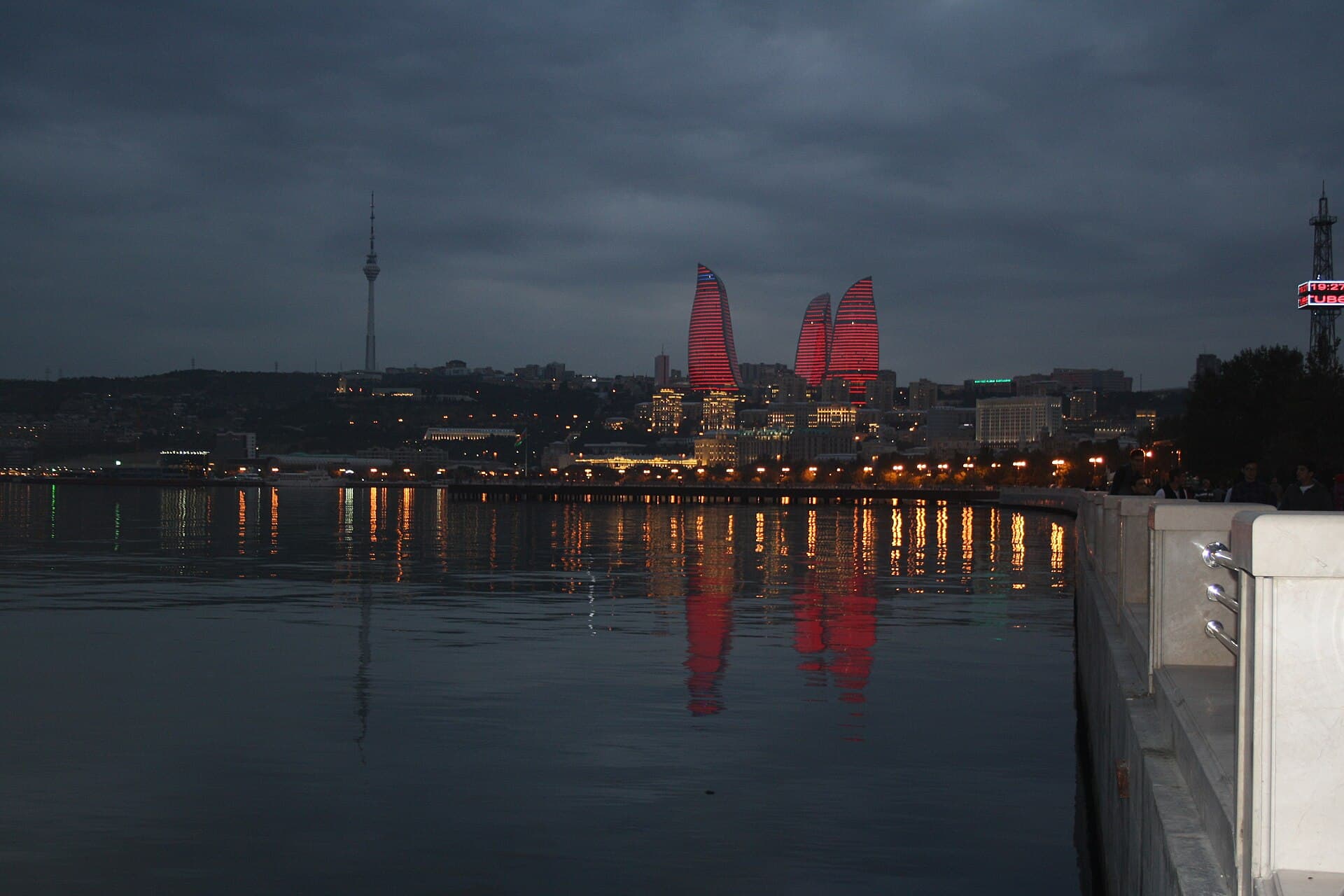
On 10 February 2026 the Charter on Strategic Partnership between the Government of the United States of America and the Government of the Republic of Azerbaijan was signed. It was not an event that gripped the world's media, and yet it is probably the most significant diplomatic shift Azerbaijan has undergone in recent years.
What a strategic partnership charter is
It matters to understand what this document is and is not.
It is not a defence alliance. It contains no American commitment to defend Azerbaijan, and no clause of the NATO kind.
It is a declared framework. Such a charter defines areas of cooperation, establishes working mechanisms, and signals that the relationship has moved from the category of "ties" to the category of "partnership" - with what that implies for access, coordination and priority.
And most importantly, it marks a category. In the diplomatic world, countries are classified. A strategic partnership charter moves a country onto a shorter list.
Why now
The charter did not appear in a vacuum. It is part of a sequence:
| Date | Event |
|---|---|
| August 2025 | The peace agreement with Armenia initialed under Trump's mediation |
| February 2026 | The Strategic Partnership Charter signed |
| Following it | Vice President JD Vance visits both countries |
| March 2026 | Talks announced on trilateral cooperation with Israel |
That sequence tells one story: the United States is entering the South Caucasus actively, and Azerbaijan is the anchor point of that entry.
The practical engine is the TRIPP corridor - the American-led transport project Vance came to advance.
What preceded this
To see why the signing is not self-evident, it helps to recall that relations between Washington and Baku have not been smooth over the years.
Azerbaijan was for a long period an important energy partner but not a declared ally. The conflict with Armenia, human rights questions, and an influential Armenian lobby in Congress all made the relationship more complicated than with its neighbours.
What changed the equation was a combination of three things: the end of the Karabakh conflict, which removed the central obstacle; the war in Ukraine, which raised the value of energy routes bypassing Russia; and American interest in limiting Chinese and Russian influence in the region.
That matters to an investor because it explains what the relationship rests on. It rests on strategic interest rather than on shared values - which is usually a more stable basis, but also one that can shift if the interest shifts.
What it actually does
Three real effects, none of them dramatic in the short term.
First, access. A formal framework eases commercial contact, development finance and company-to-company cooperation. It does not change law, but it changes how many doors are open.
Second, a signal to institutional investors. Western investment bodies classify countries by risk, and that classification is influenced by formal relationships. This is a change expressed in a risk premium over years, not in a headline.
And third, balance against the neighbours. Azerbaijan runs a policy of balance between Türkiye, Russia and Iran. A charter with the US adds counterweight on one side. That strengthens its room to manoeuvre - and also strains it. We covered this in Azerbaijan and Iran.
What the charter does not do
It does not guarantee security. There is no defensive commitment in it, and a country that signs one is no more protected than the day before.
It changes nothing for a private investor. Not taxation, not property rights, not registration procedures, not entry conditions. Those are set in local law rather than in an inter-state charter. We covered this distinction in the triangle with Israel and the US.
And it is reversible. Charters of this kind depend on an administration, a policy and circumstances. A relationship set out in one document can change as the parties change.
How to read this as an investor
Do not price it as an event. It does not raise prices or lower risk in the short term.
Do take it as confirmation of a direction. It confirms that Azerbaijan's orientation is westward, which is relevant to anyone assessing where the market goes over a decade.
And track delivery rather than signature. A charter is a framework; what fills it is projects, investment and joint ventures. Those are the data you can measure.
Anyone wanting to check whether the market is pricing any of this can look at the price per square metre index by district.
A note
The picture describes September 2026. Inter-state relations change, particularly those tied to a specific administration.
Related articles
 Real estate investing
The TRIPP Corridor: the Trump Route and What It Does to Baku
What the corridor linking Azerbaijan to Nakhchivan through Armenia actually is, why Iran sees it as a threat, where it really stands, and what it means for property
Read more → Real estate investing
The New Transport Map of the South Caucasus After Peace
The Middle Corridor, TRIPP and the gas pipelines - three systems redrawing the region's economic geography. What already exists, what is planned, and what it means for Baku
Read more →Real estate investingHow Oil Money Becomes Infrastructure - and Infrastructure Becomes Value
The chain linking a barrel of oil to the price of a flat runs through infrastructure. How it works, how long it takes, and the three points where it breaks
Read more →