How Oil Money Becomes Infrastructure - and Infrastructure Becomes Value
Published on 2026-09-24 · 4 min read
In two earlier articles we showed that the link between the oil price and the price of a flat runs through the currency and that the sovereign fund smooths the swings. What remains is the third part, and the slowest of them: how oil money actually becomes property value.
The answer is infrastructure - and unlike the currency, which moves in a week, this is a chain that takes years.
The chain, link by link
1. Oil revenue enters the fund. Not the budget directly.
2. The fund transfers a limited sum to the budget - 12.835 billion manat in 2026, under a rule set in 2018.
3. Part of the budget goes to capital spending. Transport, energy, water, public institutions.
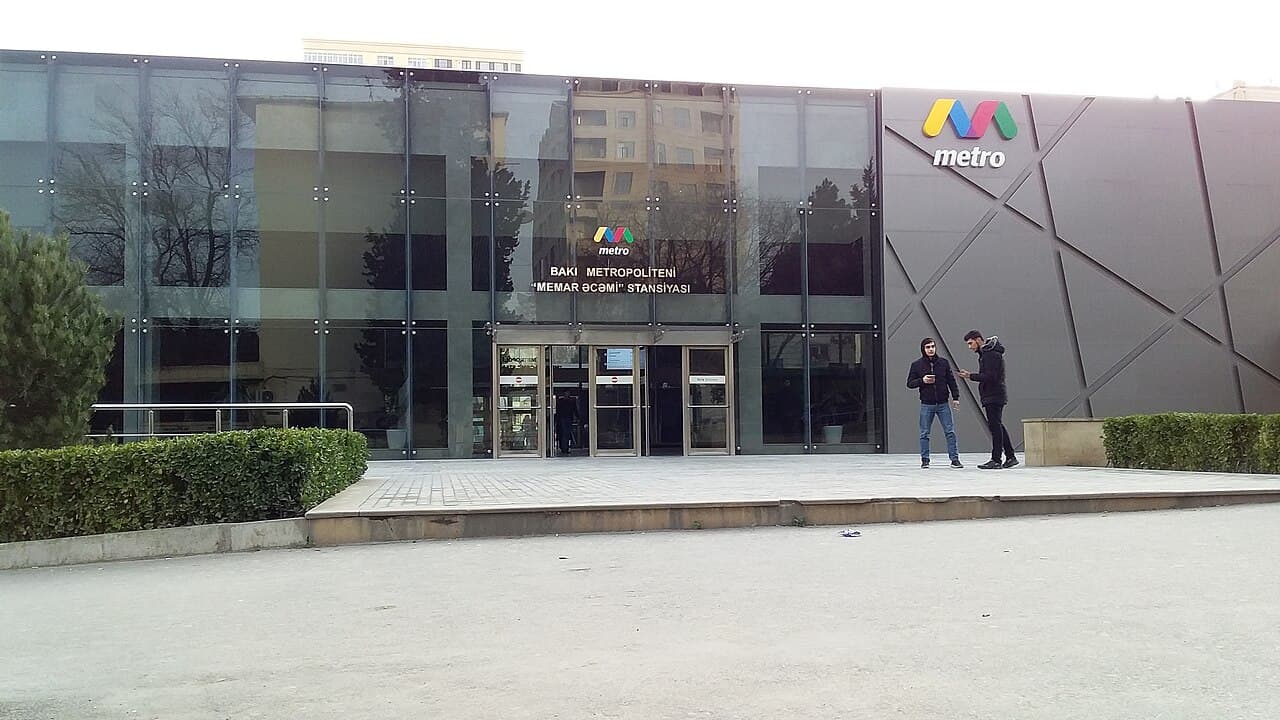
4. Infrastructure changes accessibility. A new road, a metro station, a power upgrade - each shortens a journey or removes friction.
5. Accessibility changes demand. An area that was far becomes near, and an area that was near becomes more convenient.
6. Demand changes price.
Six links. Each adds time and blunting, which is why you cannot time a purchase off the oil price.
Where the strongest link sits
Of the six, the one where the effect is most measurable is between 4 and 5: accessibility.
That is not unique to Baku. In any city, proximity to public transport and main routes is among the strongest variables in price. What is distinctive here is the rate of change: in a country spending a high share of its budget on development, the accessibility map shifts faster than in a mature market.
The practical implication for an investor: an area can change category within a single investment cycle. That is opportunity and risk together - a district can improve, but it can also be left behind if the spending went somewhere else.
Where the chain breaks
Three failure points worth knowing, because they explain why not every infrastructure investment translates into value.
Infrastructure that does not reach completion. A road built but not connected, a line planned and never finished. Value is created when the service runs, not when it is announced.
Infrastructure that serves somewhere else. Not every national project improves the accessibility of your property. A port upgrade or a freight rail line can be highly economic and change nothing for a flat in the centre.
And infrastructure that arrives alongside supply. If the same development that improves accessibility also opens land for new construction, the added demand meets added supply. The net result can be zero. We covered the supply side in Baku's housing supply pipeline.
The infrastructure already built, and what it teaches
The best way to assess this chain is to look back at a case that completed.
Today's Baku looks different from the Baku of the early 2000s, and the difference was funded with oil money: metro expansion, road upgrades, the coastal boulevard, the airport, and entire urban districts. The White City built on the old industrial zone is perhaps the sharpest example - land that was worthless for housing became a residential and business quarter, at a cost of billions in decontamination before construction. We covered it in Absheron's oilfields.
What that case teaches is not that "infrastructure raises value" - that is trivial - but how long it takes. The decree setting out the White City was signed in 2006. The project was formally launched in 2010. The first districts completed years after that.
Twenty years from decision to populated quarters. That is the right scale to have in mind when assessing an infrastructure project announced today.
What is specific to Azerbaijan right now
Two things change the picture today.
First, a large share of capital spending is directed at one region. Around 30% of the capital budget to 2029 goes to the liberated territories. That is money not going to Baku. We covered it in Karabakh reconstruction.
And second, the transfer from the fund is falling deliberately. From 12.835 billion manat in 2026 to 11.9 billion in 2027. Less money entering the budget means pressure on spending lines, and capital spending is usually the first to slow when savings are needed.
Together these say it would be unwise to assume a constant infrastructure pace in Baku over the coming decade.
How to use this in practice
Do not buy on a promise. An announced project is not a delivered project. The gap between them is measured in years, and sometimes in projects that never happened.
Do check what already works. An operating metro station is worth more than a planned one, and disproportionately so.
Ask what happens to supply in parallel. If the project improving the area also adds thousands of units, the arithmetic is entirely different.
And plan for a horizon that matches the pace. A six-link chain does not suit someone planning to sell in two years. It does suit someone holding for a decade.
Anyone wanting to see how prices distribute across districts today - which is to say what this chain has already produced - can look at the price per square metre index by district.
Related articles
 Real estate investing
The TRIPP Corridor: the Trump Route and What It Does to Baku
What the corridor linking Azerbaijan to Nakhchivan through Armenia actually is, why Iran sees it as a threat, where it really stands, and what it means for property
Read more →Real estate investingThe New Transport Map of the South Caucasus After Peace
The Middle Corridor, TRIPP and the gas pipelines - three systems redrawing the region's economic geography. What already exists, what is planned, and what it means for Baku
Read more → Real estate investing
Oil Price vs Price per m² in Baku: Is There a Correlation?
What happened to Baku's property market when oil collapsed in 2015, why the transmitting link is the currency rather than the oil, and how long recovery took
Read more →