Primary vs Secondary Market in Baku: The Price Gap
Published on 2026-09-08 · 5 min read
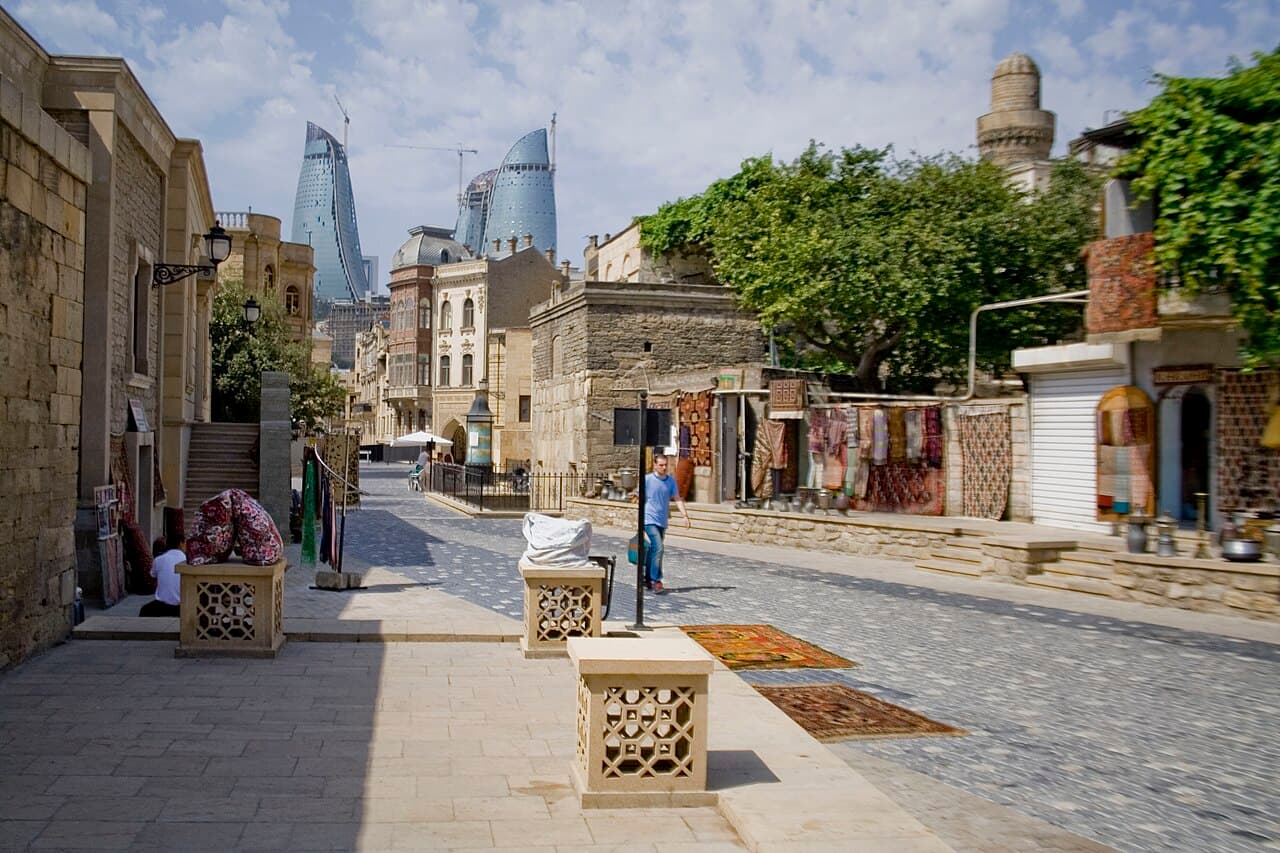
One of the first decisions an investor in Baku faces is whether to buy in the primary market — from a developer, usually during construction — or in the secondary market, from a previous owner. The difference is not only price: these are two entirely different risk profiles, with implications for timing, liquidity and yield.
The Gap in Numbers
According to recent market data, the average price per square metre in Baku stands at around 1,800 manat at the off-plan stage against around 2,700 manat for a completed property. The implied gap is large, but it should be interpreted carefully.
The reason is that this comparison is not between the same property in two states but between two different groups of properties. Completed properties in the secondary market include stock in central, established locations; off-plan properties are often concentrated in newer development areas. Part of the gap reflects location rather than construction stage.
What Has Happened to Prices Recently
Recent data shows the primary market leading the rate of increase: the price per square metre in new construction in the primary market rose by around 15.7% against the previous year. In the secondary market, new construction rose by around 14.9% and older Soviet-era stock by around 11.3%.
The picture that emerges is consistent: the newer the property, the faster the rate of price growth. This is a familiar pattern in developing markets, where demand tends to migrate from older stock to modern stock as incomes rise.
The Advantages of the Primary Market
A lower entry price — this is the clear advantage. Buying at an early stage allows entry at a price substantially below the price at completion.
Staged payments — developers in Baku usually offer payment schedules across the construction period. For an investor without access to local financing, this is a de facto financing mechanism. We expanded on this in financing a property purchase in Azerbaijan.
Modern specification — new construction includes higher-standard services, insulation and lifts, which affects appeal to tenants and future value.
Appreciation potential during construction — the gap between off-plan and completed price is in practice the return on the construction phase.
The Risks of the Primary Market
Execution risk — this is the central risk. Construction delays are common, and in extreme cases projects are not completed. In a market where regulatory enforcement is less developed than in the West, choice of developer is the single most important decision. We expanded on this in a checklist for choosing a developer in Baku.
No cash flow during construction — a property under construction produces nothing. An investor buying off-plan funds two to three years without income.
A gap between specification and reality — what is shown in a rendering is not always what is delivered. Reviewing the same developer's previous projects is essential.
Local supply risk — when several large projects complete simultaneously in the same area, prices and rents can come under pressure. We expanded on this in the new supply pipeline in Baku.
The Advantages of the Secondary Market
Immediate cash flow — a completed property can be let straight away. That is a significant advantage for an investor seeking running income rather than appreciation alone.
Physical inspection — you can see the property, the building, the neighbours and the state of maintenance. That is genuine risk reduction.
No execution risk — the building exists.
Established locations — secondary stock is often in mature areas with proven infrastructure, rather than in development zones that have yet to prove themselves.
The Disadvantages of the Secondary Market
A higher price — you pay for the certainty.
Full capital required — there is no payment schedule. Without access to local financing, that means paying in full upfront.
Property condition — older Soviet-era stock may require substantial renovation, and those costs tend to be underestimated.
Which Route Suits Whom
The primary market suits an investor with a long horizon of five years or more, who does not need immediate cash flow, is prepared to absorb execution risk, and can conduct thorough due diligence on the developer.
The secondary market suits an investor seeking immediate running income, who prefers certainty to potential, is operating with full capital, and wants to see with their own eyes what they are buying.
Important Caveats
The gap between the markets is not fixed. In periods of strong demand, developers raise off-plan prices and the gap narrows. In periods of slowdown, it widens.
In addition, price data in both markets rests on sources with limited transparency and is not an official transaction register. Cross-reference sources and conduct independent local verification before any commitment.
Summary
Choosing between the primary and secondary market in Baku is a choice between a low price with execution risk and a higher price with certainty and immediate cash flow. The data shows the primary market has recently led the rate of price growth, but that is a historical figure and not a forecast. The decision should rest on investment horizon, the need for cash flow and the ability to conduct due diligence on the developer — not on the numerical gap alone.
Related Articles
 Real estate investing
The Israel-Azerbaijan-US Triangle in 2026
An AI memorandum, an American strategic charter and talks on a trilateral format. What is actually new here, what was already in place, and what it means for buyers
Read more →Real estate investingHow Dependent Is Azerbaijan's Economy on Oil, Really?
The non-oil sector reaches 75.8% of GDP in 2026, but that share is rising for two different reasons. The official figures, the IMF's view, and what it means for buyers
Read more → Real estate investing
The Armenia-Azerbaijan Peace Deal: Where It Stands
The agreement was initialed in August 2025 but remains unsigned. What was agreed, what is blocking signature, what the Armenian election changed, and what it means for owners
Read more →