Price per Square Metre in Baku by District: 2026 Data
Published on 2026-09-08 · 4 min read
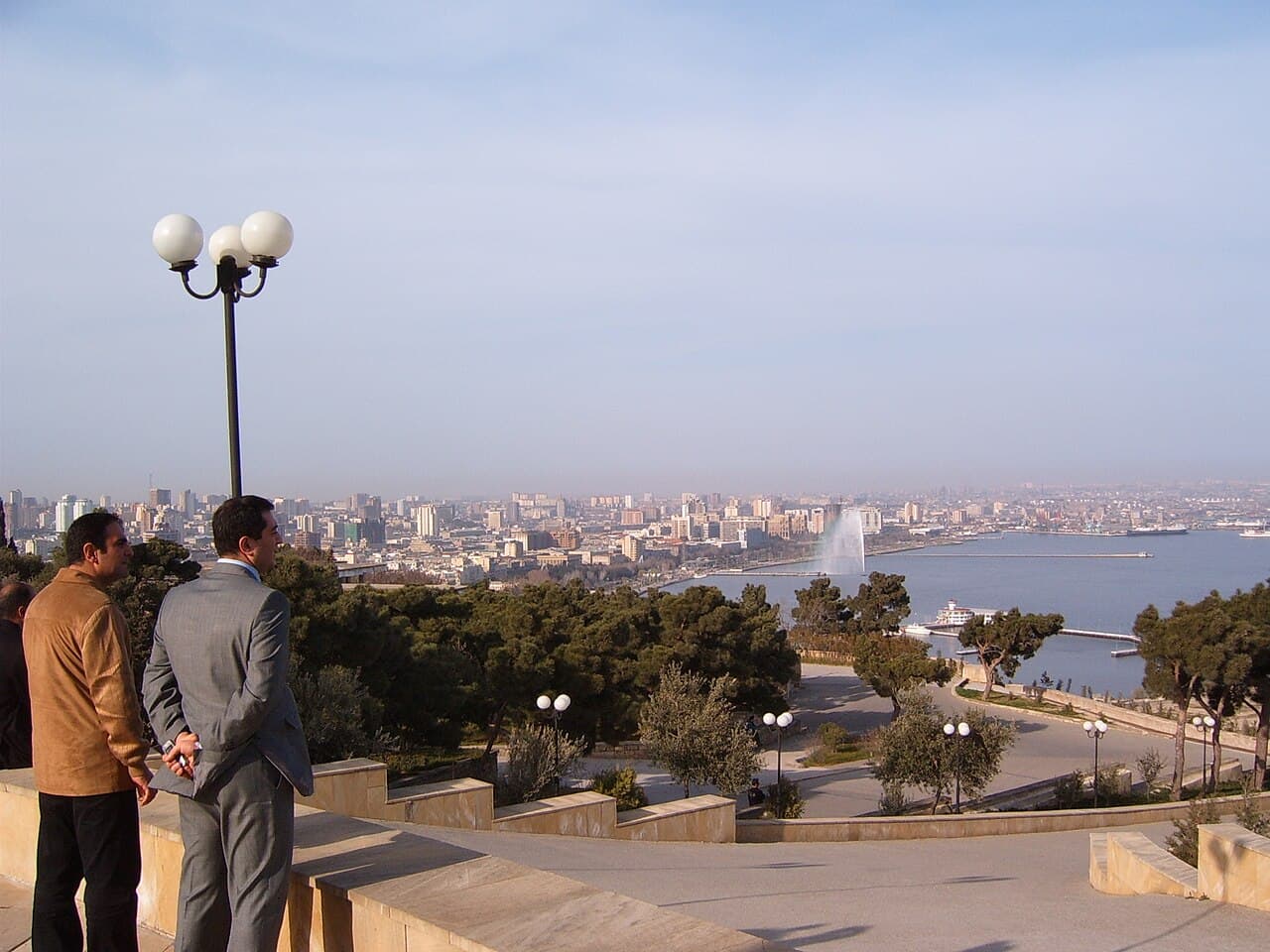
The first question every investor asks is what a square metre costs in Baku. The answer depends on the district, the condition of the building and the construction stage — and the gaps between the ends of the market are very wide. This article summarises the city's price structure and explains how to verify the data yourself rather than relying on a single figure.
The Headline Numbers
According to recent market data, the average price per square metre in Baku sits at around 1,800 manat at the off-plan stage and around 2,700 manat for a completed property — roughly 1,050 to 1,600 US dollars per square metre.
It is important to understand what those figures represent: they are citywide averages blending expensive and cheap areas together. They are useful as an anchor point but unsuitable for pricing a specific property.
The Price Structure by Area
Baku's market divides in practice into four price tiers.
Top tier — Sabail and the city centre. The most expensive area in the city, encompassing the business district, the seafront boulevard and the prime districts. Prices here sit substantially above the citywide average, particularly in new buildings with sea views. We expanded on this in the Sabail neighbourhood guide.
Upper-secondary tier — Icherisheher and Badamdar. The Old City prices high on heritage value and location, but stock is limited and sometimes old. Badamdar is a hillside district with views, sought after among an affluent local audience. We expanded on this in the Badamdar neighbourhood guide.
Mid tier — Khatai, Nasimi, Nizami and the development districts. Established areas with good infrastructure and a mixed stock of Soviet-era and new construction. This is the centre of gravity of the market and where most transactions close. We expanded on this in the Khatai neighbourhood guide.
Lower tier — suburbs and Absheron Peninsula districts. Binagadi, Ahmadli, Surakhani, Qaradagh and others. Substantially lower prices, infrastructure of varying quality, and a predominantly local tenant base. We expanded on this in the Binagadi neighbourhood guide and the Ahmadli neighbourhood guide.
A separate category — the coastal resort areas. Mardakan, Bilgah, Buzovna, Novkhani. Pricing here works entirely differently, determined by proximity to the sea rather than urban centrality. We expanded on this in the Absheron Peninsula suburbs.
What Explains the Gaps
Four factors explain most of the variation between districts.
Proximity to the sea — a Caspian view is the single strongest price parameter in Baku, at times more significant than centrality.
Metro access — proximity to a metro station materially affects property value, particularly in the suburbs. We expanded on this in getting around Baku: a transport guide.
Building age and condition — the gap between older Soviet-era construction and new build is significant, reflecting differences in services, insulation and lifts.
Public realm quality — areas that received investment through urban projects enjoy a persistent premium.
Primary Versus Secondary Market
An important distinction many miss is between the primary market — buying from a developer, usually off-plan — and the secondary market, meaning buying from a previous owner.
The gap between the two is neither fixed nor one-directional: an off-plan price is lower but carries execution risk and a waiting period. We expanded on this in the primary versus secondary market in Baku and the Baku off-plan market report 2026.
How to Verify Prices Yourself
This is the most important section of the article. Avoid relying on a single figure from a single source, and cross-reference three types of source.
Developer price lists — accessible but representing an asking price, not a transaction price. They are usually the highest figure available.
Local property portals — showing sale listings. These are also asking prices, but they allow comparison between similar properties and tracking of how long a property has been on the market.
Market reports — banking and research institutions publish periodic reviews of Baku's property market. These are the most reliable source for trends, though at a lower level of detail than Western norms.
The practical method: take the asking price, check how long the listing has been running, and compare with three similar properties on the same street. We expanded on this in a guide to tracking the Baku property market.
Important Caveats
Transaction data transparency in Baku is lower than in developed markets. There is no accessible public register of actual transaction prices, so every figure quoted — including in this article — is an estimate based on available sources rather than a verified official statistic.
In addition, a potential pricing gap exists between what is offered to a local buyer and what is offered to a foreign buyer. Independent local verification before any transaction is essential.
Summary
Property prices in Baku span a very wide range depending on district, building age and proximity to the sea, with the citywide average sitting around 1,050 to 1,600 US dollars per square metre by construction stage. The gap between expensive and cheap areas is significant and justifies analysis at neighbourhood level rather than city level. In any case, cross-referencing sources and local professional support are required before deciding.
Related Articles
 Real estate investing
The Israel-Azerbaijan-US Triangle in 2026
An AI memorandum, an American strategic charter and talks on a trilateral format. What is actually new here, what was already in place, and what it means for buyers
Read more → Real estate investing
How Dependent Is Azerbaijan's Economy on Oil, Really?
The non-oil sector reaches 75.8% of GDP in 2026, but that share is rising for two different reasons. The official figures, the IMF's view, and what it means for buyers
Read more →Real estate investingThe Armenia-Azerbaijan Peace Deal: Where It Stands
The agreement was initialed in August 2025 but remains unsigned. What was agreed, what is blocking signature, what the Armenian election changed, and what it means for owners
Read more →