If Oil Collapses, What Happens to Baku Property? Three Scenarios
Published on 2026-09-24 · 5 min read
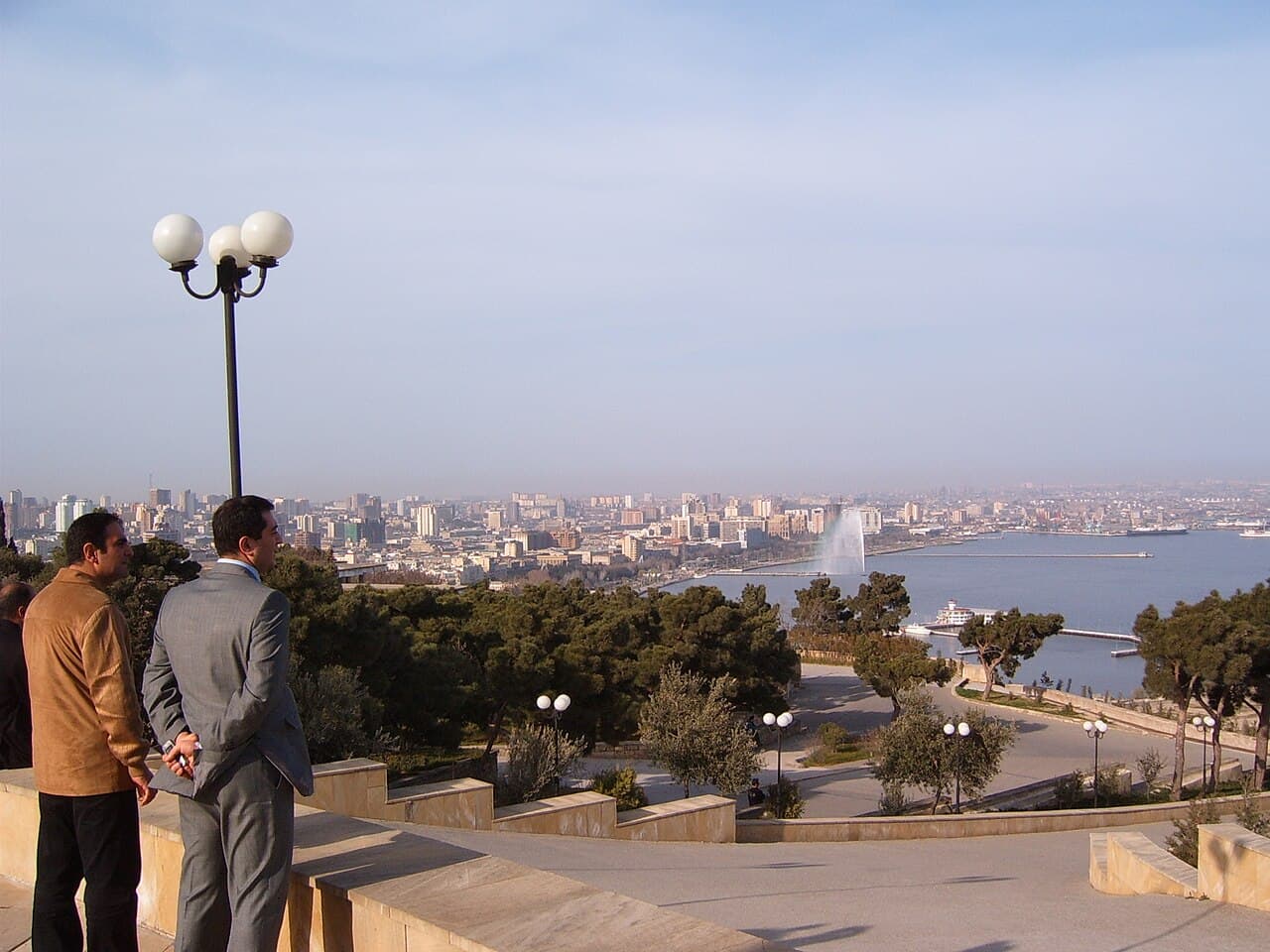
In the article on the correlation between oil and price per square metre we saw that the link runs through the currency rather than directly. The next question is practical: what actually happens if oil collapses again?
What follows is not a forecast. These are three scenarios showing the mechanism - which link breaks first, what responds next, and what absorbs it. Anyone looking for a future number will not find it here, and probably will not find it anywhere credible.
The starting point: where things stand
Before the scenarios, two facts that determine how hard any shock lands:
The budget is less oil-dependent than it was. In 2026 around 57% of state budget revenues and 63% of the consolidated budget come from non-oil sources.
The oil and gas sector is already contracting regardless of price. The 2026 projection is a 2.4% real decline in oil and gas, alongside 3.1% growth in the non-oil sector. Oil output fell 4.3% in the first quarter of 2026.
In other words: the decline is already priced to some degree. A price shock would be an addition to it, not a complete surprise.
Scenario 1: price stable or rising
What happens: the budget receives revenues as planned. The oil fund keeps accumulating. Spending on infrastructure and on Karabakh reconstruction continues at pace.
For the currency: stability. No devaluation pressure.
For housing: the boring scenario, and the most likely in the near term. Local demand rests on employment and public spending, and both continue. What sets prices will be local factors - new supply, seasonality, interest rates - not oil.
What to do: don't look to oil for a signal. Check supply in the specific area.
Scenario 2: a moderate, sustained decline
This is the scenario easiest to overlook, because there is no drama in it.
What happens: the price drifts down over several years. No collapse, just erosion.
For the budget: mounting pressure on the non-oil side to deliver. The fiscal consolidation the IMF recommends becomes more urgent. Spending on new projects is likely to slow before anything existing is cut.
For the currency: this is the scenario where everything depends on policy. A stable rate can be defended with reserves for a meaningful period - which is precisely what happened from 2014 until the devaluation. The question is how long, and at what cost.
For housing: a gradual slowing of local demand, before anything happens to prices. The early sign is a fall in transaction count, not in the exchange rate.
What to do: track transaction volume in the market, not asking prices. Falling volume is the early warning.
Scenario 3: a sharp collapse
What happens: a fast, steep fall, in the style of 2014-2015.
Following the 2015 script - and that is the only script we actually have: the defence of the rate holds for a while, then breaks. Devaluation arrives in steps, not as a slide. And then:
| What happens | What was observed in 2015-2016 |
|---|---|
| Market turnover | fell from 320 to 243 million manat |
| Sales volume | down about 13.9% |
| Office market | 25%-30% vacancy |
| Recovery period | roughly three to four years |
What matters to understand in this scenario: the first casualty is liquidity, not price. The market freezes before it falls. An owner who needs to sell at exactly that point finds there are no buyers - and that is real damage even if the asking price never dropped.
And for a foreign investor there are two sides: a holder absorbs a sharp decline in dollar terms. Someone entering after the devaluation with foreign currency buys at a substantial discount.
What the three scenarios say together
Note that in all three, the price of a flat is the last thing to move. Ahead of it move the budget, the currency, employment and transaction count.
That implies two practical things.
First: there is time. Anyone watching the early links - the manat, central bank policy, transaction volume - sees the shock coming before it reaches price.
Second: the real exposure is to your horizon, not to the scenario. Someone holding with a seven to ten year horizon passes through all three without drama, because historic recovery took three to four. Someone buying with a need to realise within two years is exposed to scenario 3 in a way that has nothing to do with the quality of the property they chose.
Which is why "will oil fall" matters less than "how long can I hold". The other side of that equation - holding costs and running yield - can be examined in the rental yield calculator.
What can actually be done in advance
Four things, all of them decided before the purchase rather than after.
Choose a horizon rather than a timing. If your plan survives a seven-year hold, none of these scenarios is existential. If it requires realising within two years, scenario 3 is a live risk.
Understand your currency exposure. Income in manat with liabilities in dollars or another currency carries a double risk. Both in the same currency carries less.
Prefer a property that actually lets over one waiting for appreciation. Cash flow absorbs a frozen period; expected capital gain absorbs nothing.
And check the liquidity of the category, not only of the property. A standard flat in a sought-after area sells even in a weak market. A unique asset in a narrow category may not sell at all.
A caveat
The scenarios here describe mechanisms, not probabilities. We have not tried to assess which is more likely, because doing so requires forecasting oil prices - a field in which people are consistently wrong. History is no guarantee of the future, and one case from 2015 is not a rule.
Related articles
 Real estate investing
The TRIPP Corridor: the Trump Route and What It Does to Baku
What the corridor linking Azerbaijan to Nakhchivan through Armenia actually is, why Iran sees it as a threat, where it really stands, and what it means for property
Read more → Real estate investing
Oil Price vs Price per m² in Baku: Is There a Correlation?
What happened to Baku's property market when oil collapsed in 2015, why the transmitting link is the currency rather than the oil, and how long recovery took
Read more → Real estate investing
The Clean Beach Premium: What It Does to Occupancy and Rent
Over 100,000 visitors in a season at Sea Breeze, 70-80% of them Russian, and a five-month season. How water quality becomes rental demand - and where the sums break
Read more →