The Clean Beach Premium: What It Does to Occupancy and Rent
Published on 2026-09-24 · 5 min read
We have covered where you are allowed in the water, what the testing found and how long the season lasts. What remains is the question that makes all of it interesting to an investor: does a clean beach actually translate into money?
The answer is yes, but not in the way most people assume - and it carries one condition that collapses the arithmetic if ignored.
That the demand exists is demonstrated
There is no need to argue theory when there are numbers.
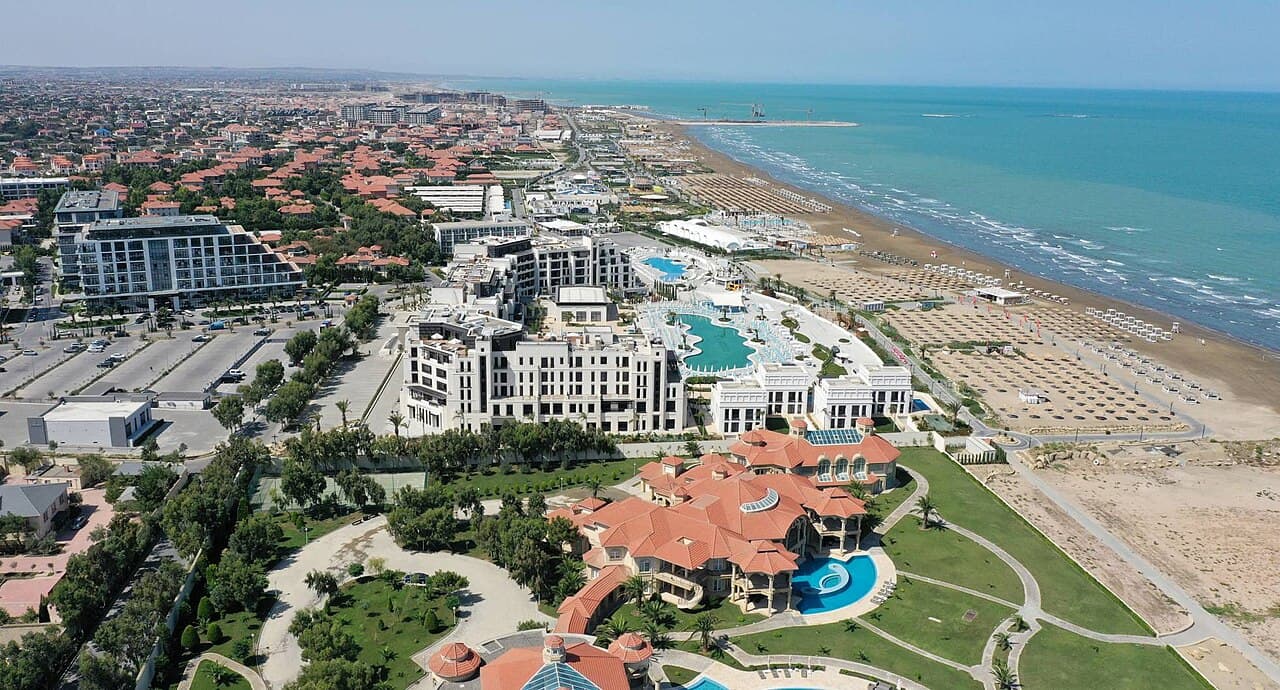
The Sea Breeze area received more than 100,000 visitors in the last summer season. That is not a theoretical figure but actual footfall, and it shows a real visitor market exists for a managed beach on Absheron.
And it contains a detail that matters more still: 70% to 80% of those visitors are Russian.
Why that composition changes everything
An investor reading that number should pause on it, because it shifts the assumptions.
Short-let demand in the area is not driven mainly by Westerners or Israelis - it is driven by a Russian-speaking market. That affects three practical things:
How you market. A property advertised only in English misses most of the market. Platforms, listing language and guest service need to match who actually arrives.
When they arrive. The Russian holiday calendar, not the Western one, sets the demand peaks.
And what the risk is. Demand resting on a single source market is concentrated demand. A change in relations, in flights, or in that market's economy feeds straight into occupancy.
The arithmetic that breaks the yield
Here comes the condition that people get badly wrong.
The swimming season runs June to October - about five months. Which means a property whose entire demand rests on the sea works less than half the year.
A rough calculation: a property at high occupancy for five months and very low occupancy for seven produces an annual yield far below what the peak-season rate suggests. Anyone computing August rate × 12 arrives at a number that does not exist.
This is the most common error in pricing a coastal property on Absheron.
What breaks the seasonality
The difference between a property that works five months and one that works all year is not water quality - it is what else is there.
A venue with restaurants, an events calendar, a spa, a gym, a market and services operating year-round generates reasons to come in February too. A traditional coastal village does not generate them.
This is precisely the distinction set out in the comparison of the two models, and it turns an experience comparison into a cash-flow one.
It also explains why water quality alone is not enough. Clean water is a necessary condition for a strong summer. It is not a sufficient condition for a full year.
Where water quality does matter directly
Three points where the effect is clear and measurable:
The peak season opens or closes. A beach where bathing is banned in summer loses the months in which the short-let market earns. That does not dent the yield - it deletes it.
The mix of who comes. Families with children are especially sensitive to water quality, as set out in family-safe beaches. That is a segment which books longer stays and pays more - and precisely the segment deterred by a beach with a question mark over it.
And liquidity on sale. A future buyer will ask the same questions. A property on a stretch with a history of closures sells more slowly.
The other side: overall tourism is falling
It is important to set the favourable numbers beside the less comfortable ones.
Total foreign visitor arrivals to Azerbaijan in January-July 2026 stood at about 1.34 million - a fall of around 9.2% against the same period the previous year. Foreign tourist spending also dropped: roughly 1.55 billion manat against about 2 billion in the comparable period of 2025.
So while a single resort area reports a hundred thousand visitors, the national market is contracting.
Both readings are plausible: either tourism is concentrating into fewer strong destinations at the expense of the rest, or the general decline will in time reach areas that are currently strong.
What that means for an investor: do not lean on a national trend to price a property, and do not assume a favourable local figure cancels an unfavourable national one. Both are true, and they measure different things. The figure relevant to you is the actual occupancy of comparable properties in that area - information to request rather than infer.
And one detail that runs the other way for an Israeli audience: the number of Israelis visiting Azerbaijan rose by over 110% in early 2026 against the prior year. That is from a low base, but it is a trend running opposite to the average.
How to calculate this properly
Do not calculate off peak season. Take a realistic occupancy for each month separately and sum it. The gap against an August-based calculation is usually tens of per cent.
Separate the two engines. Sea demand (seasonal, strong, short) and services demand (steady, weaker, year-round). A property with both behaves entirely differently from one with either.
And price the market concentration. If 70% to 80% of visitors come from one source, that is a risk factor belonging in the calculation rather than in a footnote.
The calculation itself can start in the rental yield calculator, with one caveat: enter a true average annual occupancy, not August's.
A caveat
The visitor figures relate to the resort area as a whole and not to the performance of an individual property; occupancy or yield for a particular flat cannot be inferred from them. Tourism numbers move year to year. History is no guarantee of the future.
Related articles
 Real estate investing
The TRIPP Corridor: the Trump Route and What It Does to Baku
What the corridor linking Azerbaijan to Nakhchivan through Armenia actually is, why Iran sees it as a threat, where it really stands, and what it means for property
Read more → Real estate investing
Oil Price vs Price per m² in Baku: Is There a Correlation?
What happened to Baku's property market when oil collapsed in 2015, why the transmitting link is the currency rather than the oil, and how long recovery took
Read more → Real estate investing
If Oil Collapses, What Happens to Baku Property? Three Scenarios
Three oil price scenarios and what each does to the manat, the budget, local demand and liquidity in Baku's housing market - with no price forecasts and no promises
Read more →