Absheron's Oilfields: From Contaminated Land to Regeneration
Published on 2026-09-16 · 5 min read
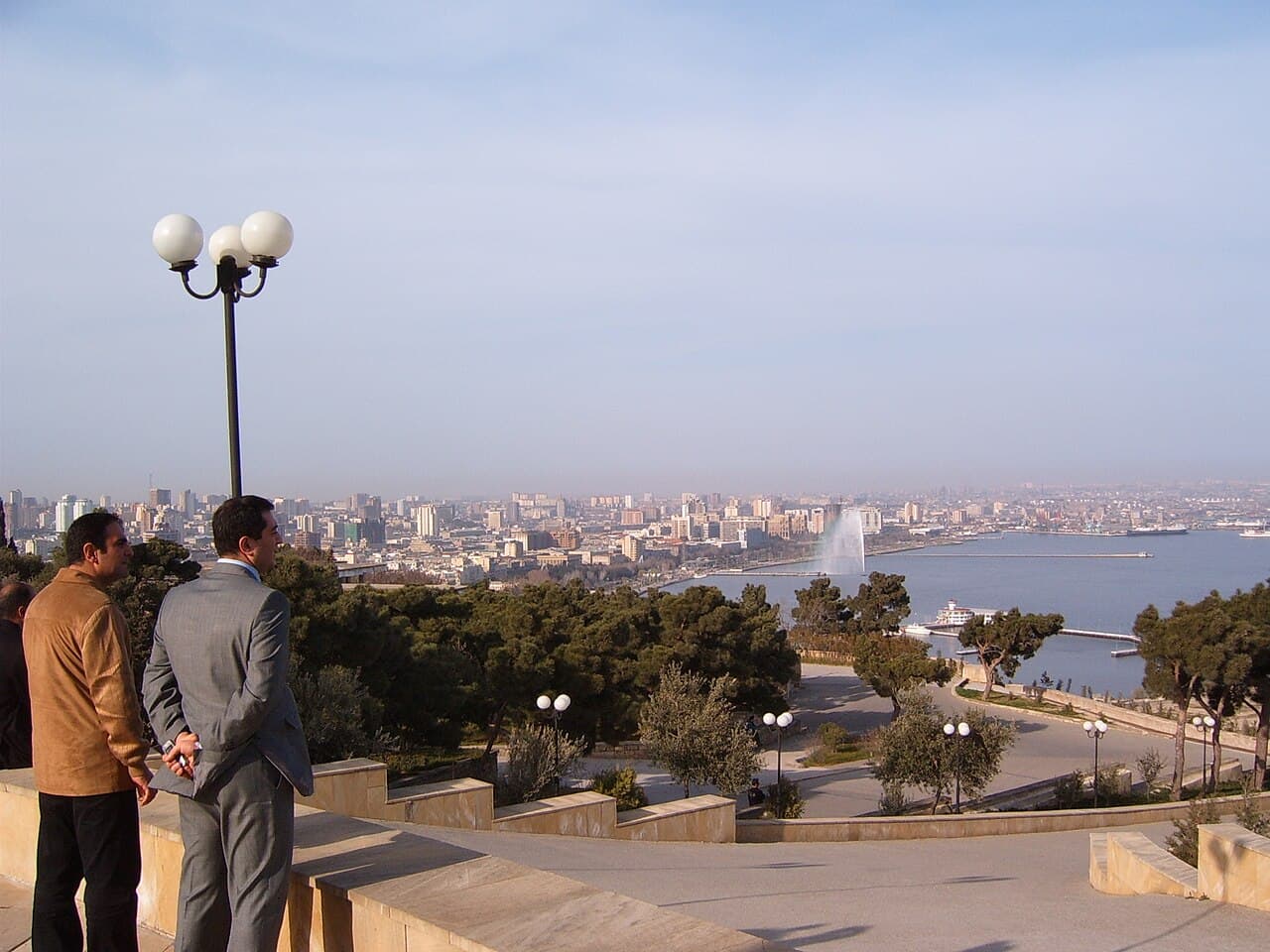
Baku is one of the world's oldest oil cities, and that has left a mark you cannot see from a hotel window but cannot ignore when buying property: large areas of the Absheron Peninsula are contaminated with hydrocarbons after more than a century of extraction. The interesting story is not the contamination itself - it is what is being done with it now, and why that has become one of the city's more significant property development engines.
The scale
Estimates vary between sources, and it is better to give the range than a single number.
Commonly cited figures put roughly 20,000 to 22,000 hectares of Absheron as contaminated with oil and petroleum hydrocarbons, alongside domestic and industrial waste. The World Bank points to a possible figure above 30,000 hectares. Another assessment attributes to Soviet-era extraction the contamination of 35,000 hectares, of which the situation is particularly grave on 15,000.
The state oil company holds around 7,500 hectares of oil-polluted land, of which some 2,800 are more heavily contaminated.
Where it is concentrated
The most heavily contaminated areas are concentrated in the Garadagh, Binagadi, Sabunchu, Surakhani, Azizbeyov and Sabail districts.
Precision is needed here, because that list can be read wrongly. It does not say those districts are contaminated throughout. It says the industrial legacy sites are located within them. Sabail, for instance, contains both the city centre and the Bibi-Heybat field - two entirely different worlds in one district.
The practical implication is that the relevant level of scrutiny is not the district but the plot. The site has guides to Surakhani, Binagadi, Garadagh and Sabail, and each describes a whole district containing a wide range.
The rehabilitation programme
Since the early 2000s the Azerbaijani government has run the Absheron Rehabilitation Programme in partnership with the World Bank, launched proactively in 2006. It addresses oil-polluted soils through excavation, treatment and reclamation.
On the research side, bioremediation - using microbial associations that actively break down petroleum hydrocarbons - has been identified as the most promising, economically advantageous and environmentally safe route to cleaning contaminated soils.
It is a slow process. But there is one example showing what happens when it runs all the way through.
The Black City that became the White City
East of central Baku, an industrial district handled oil refining, storage and transport for more than a hundred years. The soot and smoke the plants emitted gave it its name: the Black City. Oil terminals loading railway tankers added further soil contamination.
On 28 September 2006, a decree set out the plan: moving industrial uses to the edge of the city, decontaminating the land, and upgrading the coastal boulevard. Redevelopment was discussed between 2007 and 2009, and in 2010 the Baku White City project was formally launched as part of a national strategy of urban and environmental regeneration.
The site covers around 1,650 hectares.
What it takes to turn land like that into property
This is the part worth understanding, and it also answers the question "if the land is cheap, why isn't everyone doing this".
Layers of contaminated soil were removed, isolated or replaced. Critical areas underwent chemical and physical stabilisation processes. That work consumed billions of dollars before the first residential building went up.
Today several White City districts are complete - residential neighbourhoods and a central business area, with cafés, schools and offices alongside new apartment blocks.
Sumgayit: a separate case, and a graver one
Not all of Absheron's industrial legacy is oil. Sumgayit, founded in the Soviet period as a chemical and petrochemical centre, carries a different problem: soil contaminated with persistent organic pollutants, the family of substances that breaks down very slowly in the environment and is the subject of dedicated remediation research.
That explains a figure which also showed up in the sea testing: in the Ministry of Ecology's summer 2025 monitoring, sea water at Sumgayit was found unsuitable for use. We covered the city itself in the Sumgayit guide.
The lesson is the same: the relevant level is the specific site, not the city's name. But in a city whose industry was chemical and not only petroleum, the question about a plot's past becomes more important still.
What this means when assessing a property
Three practical conclusions, all of them about checking rather than fear.
First, land history is a genuine due diligence item in Azerbaijan. In most markets nobody asks what stood on a plot sixty years ago. In Baku it is a legitimate question, particularly for a new project in a formerly industrial area. That is not a reason to avoid - it is a reason to ask.
Second, remediation done properly is an asset, not a liability. The White City shows that treated land becomes a sought-after residential area. But it also shows the price: billions in clean-up before construction. A developer offering an unusually low price on land with an industrial past is worth asking exactly what was done there, and who signed it off.
Third, it explains the development map. Whole areas of Baku went unbuilt for decades not for want of demand but because of what was in the ground. As rehabilitation advances, land supply enters the market - a real supply factor worth weighing in any long-term forecast.
To see where prices stand across districts, there is the price per square metre index by district.
Related articles
 Azerbaijan cities & regions
Buying Property Near Shahdag: A Guide to Azerbaijan's Ski Real Estate
Resort apartments and chalets around Shahdag Mountain Resort - rental yield potential from ski tourism, price comparison with the Alps, and what distant owners should know
Read more → Azerbaijan cities & regions
Buying Near Tufandag: Real Estate at Gabala's Ski Resort
Chalets, hotel-apartments and two seasons of demand - what buyers should know about property near Gabala's mountain resort
Read more → Azerbaijan cities & regions
Buying Property in Sumgayit: A Practical Guide
Lower prices than Baku, Soviet-era apartment stock, and a market driven by industry and commuters - what to know before buying real estate in Sumgayit
Read more →