Hagag Group in Israel vs. Baku: What the Move Into a New, Unconfirmed Deal Actually Means
Published on 2026-08-25 · 5 min read

Hagag Group is a well-known, publicly-traded Israeli real estate developer, associated among other things with large-scale projects such as the urban-renewal development at Sde Dov in Tel Aviv — a former airport site being turned into a new neighborhood. On August 24, 2026, the company signed memoranda of understanding — not binding agreements — for two residential projects within the Sea Breeze resort development on Azerbaijan's Caspian coast, near Baku. This is the company's first reported move into that market. This article isn't here to decide whether the move will succeed or fail; it's here to separate what is actually known from what remains unknown, and to lay out a few angles worth weighing before drawing conclusions.

What Hagag Group Is Known for in Israel
In the Israeli context, Hagag is primarily known as a publicly-traded company operating at large scale, with a strong association to the Sde Dov urban-renewal project — turning a former airport site into a new residential neighborhood in Tel Aviv. That's a very specific kind of project: urban residential development in a mature, regulated, familiar market, where demand is driven mainly by local housing need rather than tourism or vacation buying. This article won't list additional projects, financial figures, or executives here — only what identifies the company to the general public: a large, established, publicly-traded developer operating primarily in Israel's urban real estate space.
What Was Actually Signed in Baku
The reported deal is a memorandum of understanding (MOU) — an early-stage step expressing shared intent, but not a binding contract. It covers two residential projects within Sea Breeze, an existing, large resort development on the Caspian coast that began construction in 2006, built mainly by a separate, unrelated company (Agalarov Development). In other words, Hagag isn't acquiring or developing Sea Breeze as a whole — only specific plots within it. The reported scope: roughly 3,500 residential units in total (about 2,475 in one project and about 1,000 in the other), across roughly 358,000 square meters of built area. Land cost is reported at up to $93 million, with Hagag holding roughly 80% ownership and an undisclosed local partner holding the remaining roughly 20%. Due diligence is expected "in the coming month" — meaning September 2026 — so the final completion, exact terms, and ultimate scope of the project are not guaranteed. Reported entry prices for apartments in the project start around $150,000.
Two Different Business Models Under One Company
The central point worth understanding: domestic Israeli urban development and foreign resort real estate development are two very different business models, even under the same parent company. A project like Sde Dov relies on relatively stable local housing demand, a regulatory framework the company already knows well, and planning and construction processes it has navigated many times before. A resort project in a foreign country, by contrast, depends on an entirely different set of factors: demand from foreign or tourism-driven buyers, the regulatory and legal stability of another country, a different currency environment, and limited familiarity with local players — contractors, authorities, and brokers. Success in one arena doesn't necessarily guarantee success in the other, even for an experienced, well-established company. That doesn't mean the move is inherently problematic — it means it carries a different kind of risk than the one Israeli investors and the public typically associate with Hagag.
What Could Support the Move — and What Remains Unproven
There are a few concrete reasons the move could suit Hagag well: its status as a publicly-traded company may suggest access to capital and financing capacity appropriate to a project of this scale, and years of experience building at large scale — even in a different context — is an asset that can, at least in theory, transfer between markets. Project management, construction logistics, and quality control are skills that are less geography-dependent. On the other hand, several significant things remain unproven. This is the company's first move into this specific Azerbaijani market, with no prior local track record to draw on. The company is relying on a local partner holding roughly 20% ownership whose identity hasn't been disclosed — a partnership like that can be an advantage (local market knowledge) or a source of risk (dependence on a party the Israeli public has no way to evaluate). And above all, this is still only a memorandum of understanding, not a final agreement — the due diligence expected in September could, in principle, change or unwind the terms reported so far.
What to Read Into This — and What Not To
The reasonable Israeli reader should avoid two opposite mistakes. The first is treating the news as confirmation — "Hagag is building 3,500 apartments in Baku" isn't accurate yet, since this is still an early-stage memorandum, ahead of due diligence and a binding agreement. The second is dismissing the move outright simply because it differs from the company's familiar line of business — entering a new market is a legitimate strategic step for a large, established company, not necessarily a sign of trouble. The balanced approach is to track what actually happens next: whether due diligence concludes with a signed binding agreement, whether the reported scope (unit count, built area, land cost) holds steady or changes, and who is ultimately identified as the local partner. Until then, the available information is enough to understand the direction the company is heading — but not enough to judge its chances of success.
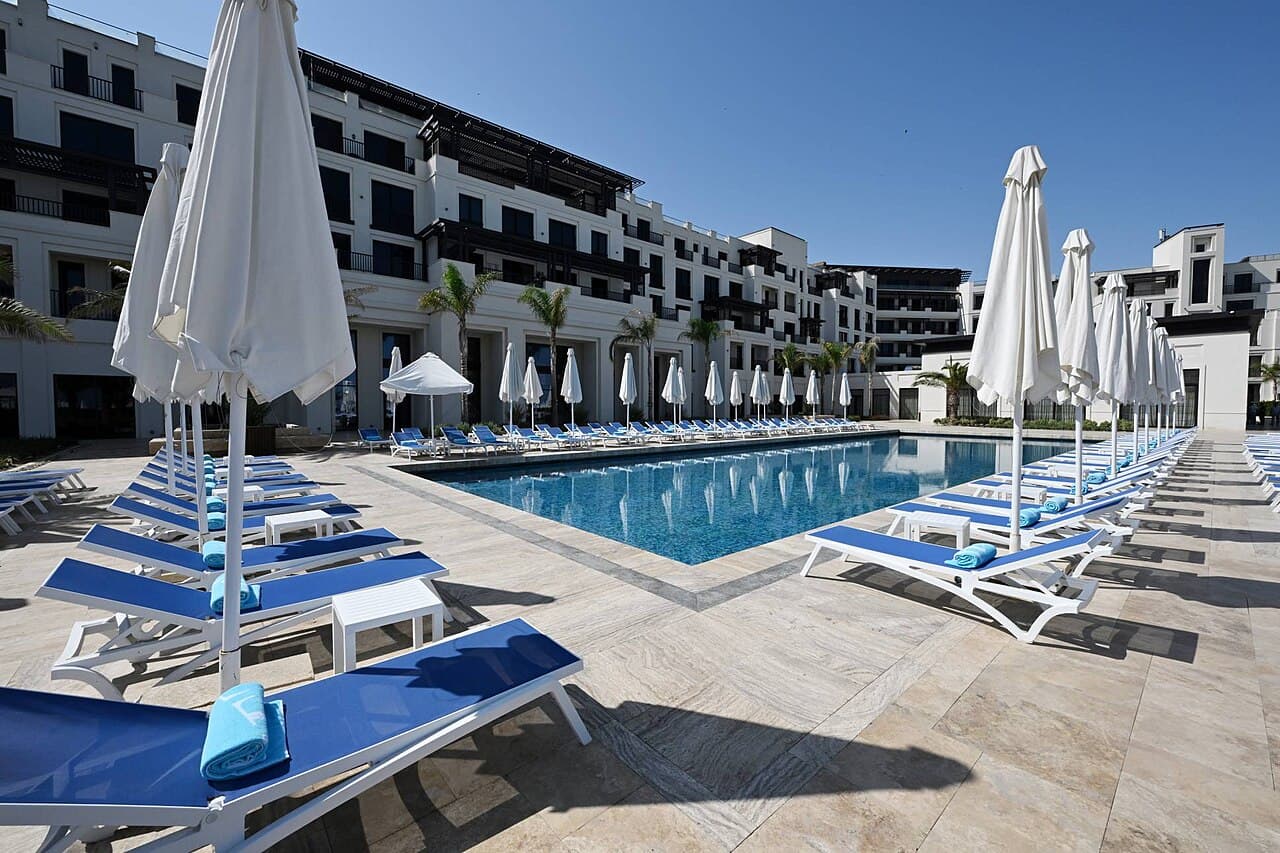 New developments
Sea Breeze Beach vs a Public Beach in Baku
On the northern coast the water is the same water. What actually differs between a managed resort beach and a public one, where each wins, and what it means for buyers
Read more →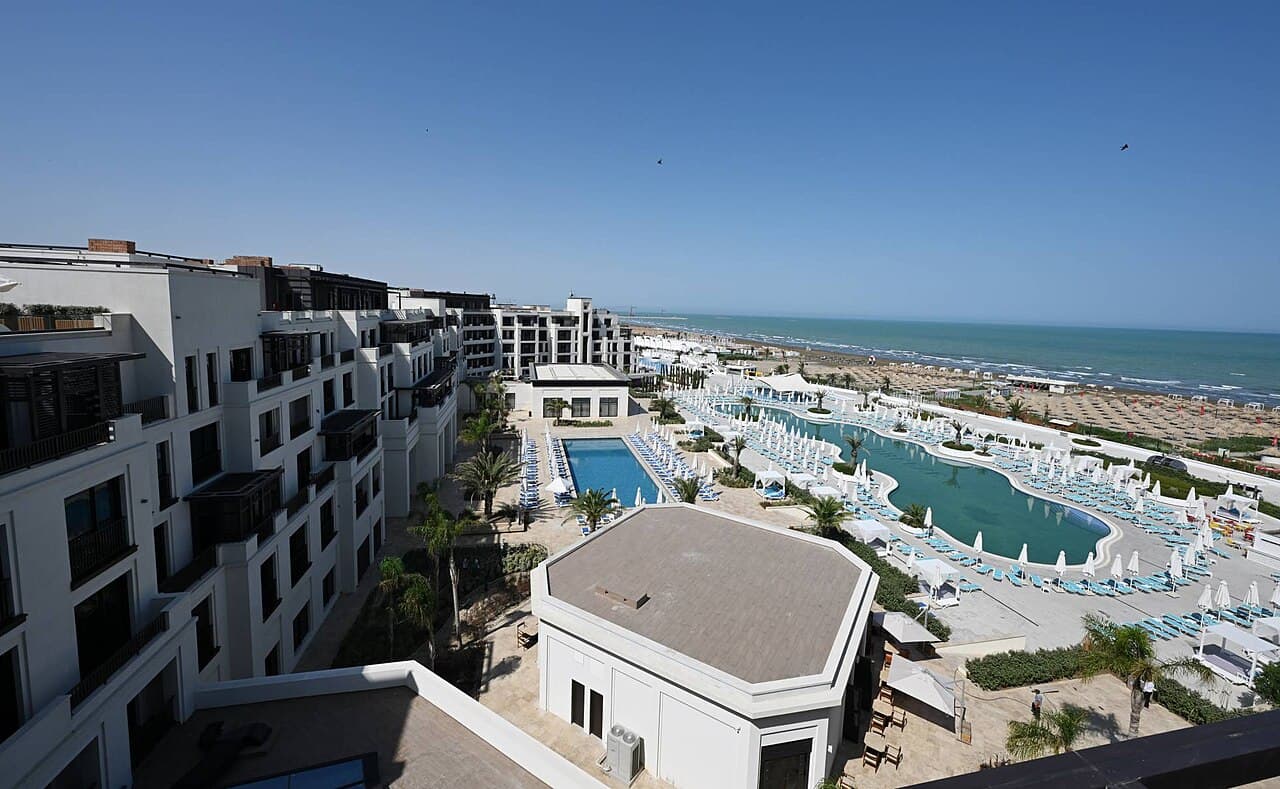 New developments
Who Is Hagag Group? The Israeli Developer Entering Sea Breeze in Baku
A factual look at Hagag Group, the publicly-traded Israeli developer that signed a memorandum of understanding for a project within Sea Breeze in Azerbaijan
Read more →New developmentsHagag Group Signs MOU for Major Sea Breeze Development
Israeli developer Hagag Group has signed non-binding memoranda of understanding for two residential projects totaling roughly 3,500 units at Sea Breeze, pending due diligence
Read more →