Nakhchivan: Inside Azerbaijan's Isolated Exclave
Published on 2026-07-22 · 5 min read
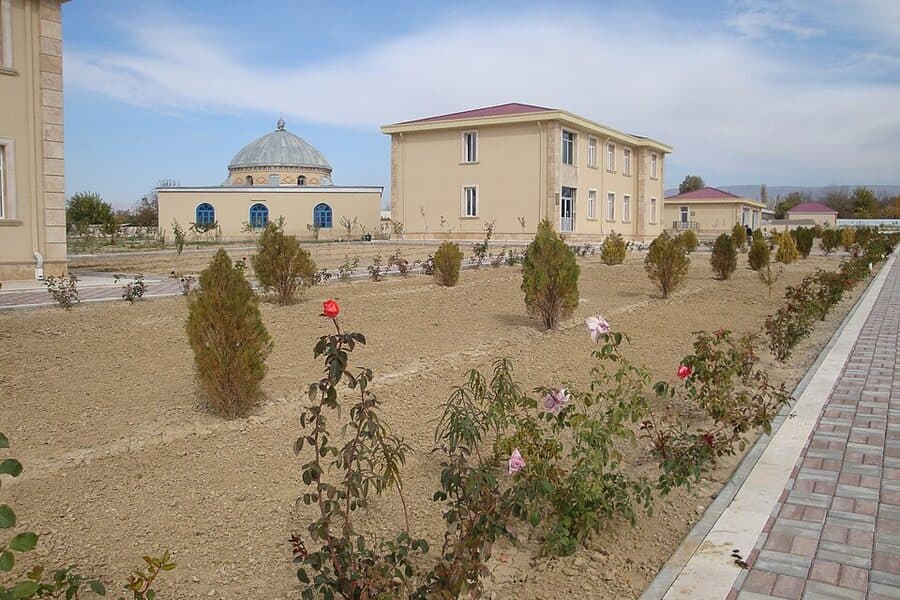
Most people who look at a map of Azerbaijan for the first time assume they're looking at one contiguous country. They aren't. Roughly 450 kilometers southwest of Baku, separated from the rest of Azerbaijan by Armenian territory, sits the Nakhchivan Autonomous Republic — an exclave of about 5,500 square kilometers and roughly 460,000 people that functions, in practical terms, as a country apart from the country it belongs to.
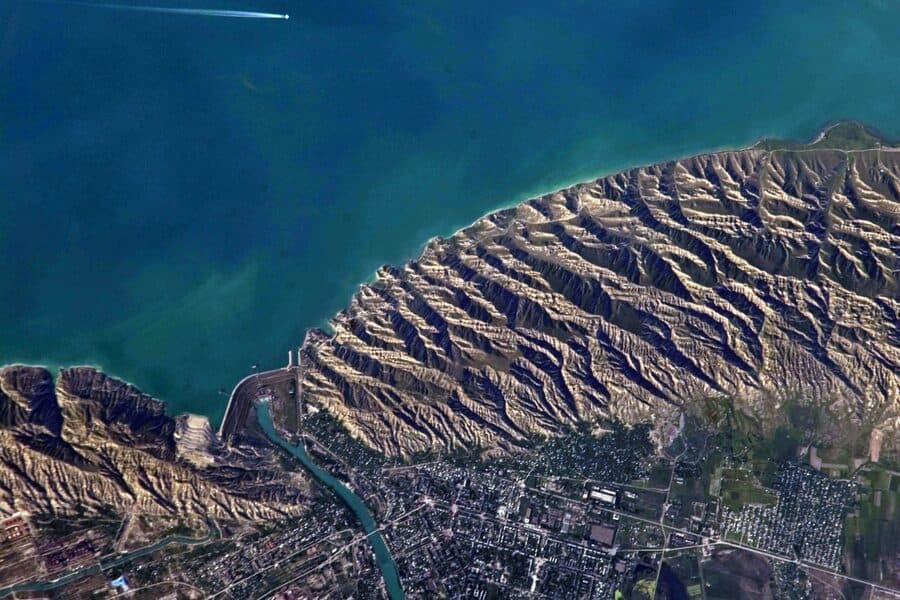
A Republic Surrounded
Nakhchivan's borders tell the whole story. To the north and east it borders Armenia. To the south, along the Aras (Araz) River, it borders Iran. To the west, a strip of land barely 11 kilometers long gives it a border with Turkey, near the town of Sadarak. What it does not have is a land connection to the rest of Azerbaijan. The two territories were split administratively during the Soviet period, when Nakhchivan was carved out as an autonomous region within the Azerbaijan SSR, but the real rupture came after the Soviet collapse, when the first Nagorno-Karabakh war closed the Armenian border and severed the overland route between Baku and Nakhchivan that had existed for decades. That border has remained closed ever since, making Nakhchivan one of the more unusual exclaves on the planet — a piece of a country you cannot drive to from that same country.
Nakhchivan City, the regional capital with a population of around 90,000, is the administrative and economic center. Other towns of note include Julfa on the Iranian border, Ordubad with its preserved 18th- and 19th-century old town, and Sadarak, the district that touches Turkey.
Momine Khatun and the Legend of Noah
Nakhchivan's age shows in its monuments, and its centerpiece is the Momine Khatun Mausoleum in Nakhchivan City. Built in 1186 by the architect Ajami Abubakr oglu Nakhchivani for Momine Khatun, wife of the Eldiguzid ruler Shams ad-Din Eldiguz, the ten-sided brick tower is covered in intricate turquoise and cobalt geometric tilework that has survived, in fragments and restoration, for over eight centuries. It is arguably the most recognizable piece of medieval Islamic architecture in Azerbaijan and appears on the national currency. A short walk away stands the same architect's earlier work, the Yusif ibn Kuseyir Mausoleum, a cylindrical tower dated to 1162.
The region's deeper claim to fame is older still, at least in legend: local tradition holds that Nakhchivan is where Noah's Ark came to rest after the flood, and a folk etymology — disputed by linguists but deeply embedded in local identity — reads the city's name as "the place where Noah descended." A tomb attributed to Noah sits in Nakhchivan City and draws religious and cultural visitors. Beyond the capital, Alinja Castle near Julfa, a mountaintop fortress with a dramatic restored staircase, and the Duzdag salt mine, an underground speleotherapy sanatorium used to treat respiratory conditions, round out a list of sites that see relatively few foreign visitors compared to their historical weight.
Getting There: Flights, Not Highways
Because the Armenian border is closed, there is no practical overland route between Baku and Nakhchivan. The alternative land path — through Georgia and Iran — runs well over 1,000 kilometers and is not something ordinary travelers or freight operators use. In practice, everyone moves between the two parts of Azerbaijan by air. AZAL, the national carrier, operates multiple daily flights between Heydar Aliyev International Airport in Baku and Nakhchivan International Airport (NAJ), a flight of roughly an hour and fifteen minutes. The Sadarak-Dilucu crossing into Turkey offers a second, land-based way in and out for those approaching from the west, and occasional flights connect Nakhchivan directly with Istanbul.
The Zangezur Corridor and What It Could Change
The most consequential development shadowing Nakhchivan's future is the so-called Zangezur Corridor, a proposed transport link that would run through Armenia's southern Syunik province — including the town of Meghri — to connect mainland Azerbaijan directly to Nakhchivan and, from there, to Turkey. The idea traces back to the trilateral ceasefire statement that ended the Second Karabakh War in November 2020, which included language on restoring regional transport links. Years later, the corridor remains more a subject of negotiation, diplomacy, and periodic announcements than an operating reality, with questions of sovereignty, control, and security still unresolved between Baku, Yerevan, and outside parties involved in the talks. If it is eventually built and opened, it would end Nakhchivan's isolation in a single stroke, turning a costly one-hour flight into a road and rail trip and reshaping the exclave's economic prospects. Until then, it remains a geopolitical story to watch rather than a fact on the ground.
A Market Apart from Baku
All of this — the closed border, the reliance on flights, the small population, the distance from Azerbaijan's main economic engine — makes Nakhchivan a genuinely different market from mainland Azerbaijan, and Baku in particular. Development here is driven by local administration, agriculture, and a modest tourism trade tied to the historical and religious sites, not by the international investment flows that shape the capital. Anyone approaching Nakhchivan expecting a smaller version of Baku will be disappointed; anyone approaching it as its own distinct territory, with its own logic, will find a region worth understanding on its own terms.
Property types outside Baku differ from those in the city - from a holiday house to an apartment in a new development. The property type finder is a reasonable starting point for anyone still deciding.
 Azerbaijan cities & regions
Absheron's Oilfields: From Contaminated Land to Regeneration
Tens of thousands of hectares left contaminated by the Soviet oil era, a World Bank rehabilitation programme, and the White City built on the Black City
Read more → Azerbaijan cities & regions
Buying Property Near Shahdag: A Guide to Azerbaijan's Ski Real Estate
Resort apartments and chalets around Shahdag Mountain Resort - rental yield potential from ski tourism, price comparison with the Alps, and what distant owners should know
Read more → Azerbaijan cities & regions
Buying Near Tufandag: Real Estate at Gabala's Ski Resort
Chalets, hotel-apartments and two seasons of demand - what buyers should know about property near Gabala's mountain resort
Read more →