Sheki: Azerbaijan's UNESCO Mountain City
Published on 2026-07-22 · 4 min read
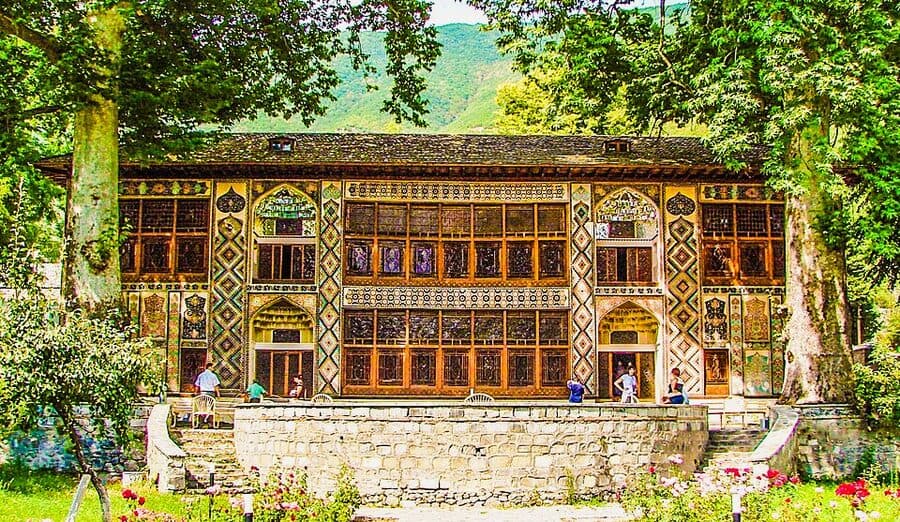
Roughly 325 kilometers northwest of Baku, tucked into the southern foothills of the Greater Caucasus at an elevation of around 700 to 900 meters, sits Sheki (Şəki) — one of Azerbaijan's oldest continuously inhabited cities and, since 2019, a UNESCO World Heritage Site. Where Baku's real estate story is largely about oil-era towers and Caspian waterfront, Sheki's is about silk caravans, khans, and a walled historic core that has survived more or less intact for two and a half centuries.
A UNESCO-Listed Historic Centre
In 2019, UNESCO inscribed the "Historic Centre of Sheki with the Khan's Palace" on the World Heritage List — fittingly, the decision was made at the 43rd session of the World Heritage Committee, held in Baku itself. The listing covers the old town's dense fabric of traditional courtyard houses, workshops, and public buildings, built largely after a devastating 1772 flood forced the city to relocate and rebuild on higher ground at its current site, closer to the Kish River. Unlike Baku's Icherisheher, which is a walled enclave inside a modern metropolis, Sheki's historic centre is the city — a mountain town of roughly 60,000 residents where 18th- and 19th-century architecture is still simply where people live and work.
The Khan's Palace
The undisputed centerpiece is the Sheki Khan's Palace (Şəki Xan Sarayı), built between 1762 and 1797 as the summer residence of the Sheki Khanate's rulers, founded by Haji Chalabi Khan in 1743. The two-story palace is famous above all for its shebeke windows — intricate stained-glass lattices assembled from thousands of small pieces of colored glass and wood without a single nail or drop of glue, a technique still practiced by artisans in the city today. The palace's interior walls and ceilings are covered in elaborate murals depicting hunting scenes, battles, and floral motifs, painted by local masters and largely preserved in their original form. It remains the most-visited single site in the city and the anchor of Sheki's tourism economy.
Caravanserais on the Silk Road
Sheki's other defining architectural legacy is its caravanserais — fortress-like stone inns built in the 18th century to house merchants and their goods along the branch of the Silk Road that passed through the city, a hub for the region's silk trade. The Yukhari (Upper) Karvansaray, the larger of the two surviving structures, has been converted into a hotel with roughly 200 rooms arranged around its original vaulted stone courtyard, giving visitors a rare chance to sleep inside a genuine medieval trade building. The smaller Ashagi (Lower) Karvansaray, closer to the bazaar, has seen more limited restoration but remains a striking example of the same building type. Both structures illustrate a pattern that runs through much of Sheki's real estate potential: heritage buildings adapted for hospitality use rather than demolished or left derelict.
Silk City
Sheki's wealth was built on silk. By the 19th century the city was one of the Caucasus's major centers of silk production and weaving, and in 1861-1862 a mechanized silk-reeling factory was established here under Russian industrial investment — one of the first of its kind in the region. Though the industry has shrunk considerably since Soviet times, silk weaving survives as a craft, and Sheki is also famous across Azerbaijan for a very different local product: Sheki halva, a dense, syrup-soaked confection layered with nuts that remains one of the city's best-known exports.
Getting There
Sheki is roughly a four-and-a-half to five-hour drive from Baku along the M4 highway, passing through Ismayilli and Qabala. For those flying, Sheki International Airport, opened in 2012 about 12 kilometers from the city center, offers short domestic flights from Baku of under an hour, making weekend and short-stay visits considerably more practical than the drive alone would allow.
Why It Matters for Tourism and Investment
Sheki draws a different visitor than Baku's business and beach tourism: travelers seeking history, mountain scenery, and traditional Azerbaijani architecture, many of them on multi-day circuits that also take in nearby Qabala and the Albanian church at Kish village, a few kilometers outside the city and among the oldest Christian churches in the Caucasus. That steady, heritage-driven tourism flow — combined with a historic building stock that lends itself naturally to boutique guesthouses and caravanserai-style hotels rather than high-rise development — has made Sheki one of the more distinctive small markets for hospitality-oriented real estate outside the capital. Its UNESCO status brings both prestige and protection, a combination that shapes what can be built or renovated here, and one worth understanding in detail before considering a purchase in the old town.
Property types outside Baku differ from those in the city - from a holiday house to an apartment in a new development. The property type finder is a reasonable starting point for anyone still deciding.
 Azerbaijan cities & regions
Absheron's Oilfields: From Contaminated Land to Regeneration
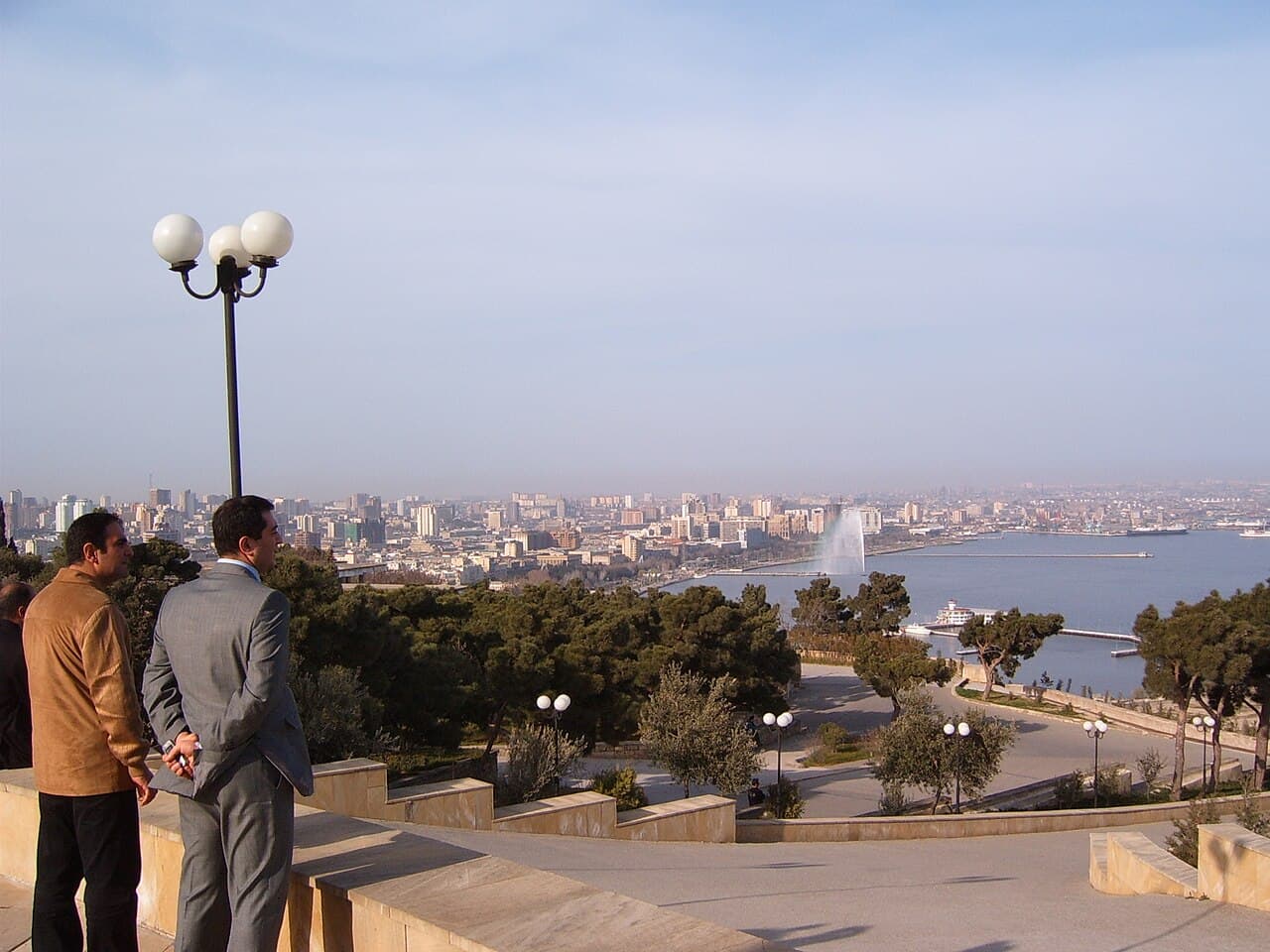
Tens of thousands of hectares left contaminated by the Soviet oil era, a World Bank rehabilitation programme, and the White City built on the Black City
Read more →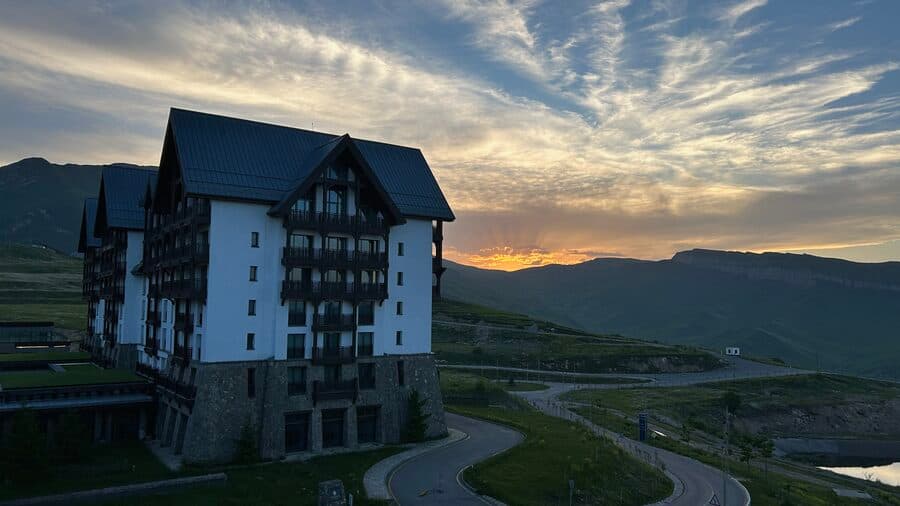 Azerbaijan cities & regions
Buying Property Near Shahdag: A Guide to Azerbaijan's Ski Real Estate
Resort apartments and chalets around Shahdag Mountain Resort - rental yield potential from ski tourism, price comparison with the Alps, and what distant owners should know
Read more → Azerbaijan cities & regions
Buying Near Tufandag: Real Estate at Gabala's Ski Resort
Chalets, hotel-apartments and two seasons of demand - what buyers should know about property near Gabala's mountain resort
Read more →