The Currency and Cost Advantage Behind Investing in Baku
Published on 2026-08-04 · 5 min read
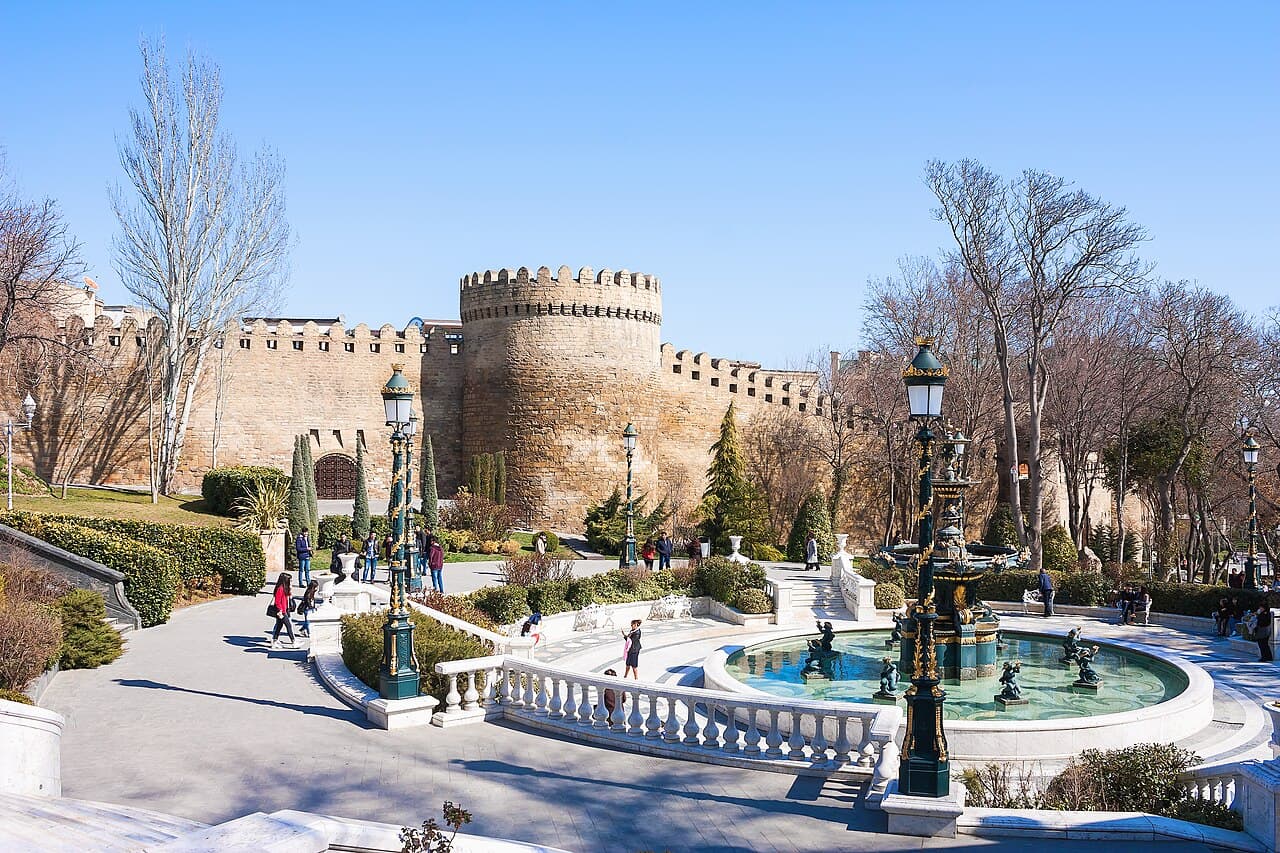
For investors comparing where their capital stretches furthest, the conversation about Baku often shifts quickly from purchase price alone to a broader question: how much can a given amount of dollars, euros, or shekels actually build, renovate, or acquire once converted into local currency and spent on the ground? That combination of currency valuation and lower absolute costs is one of the more practical, if less glamorous, reasons investors keep circling back to the city.

Manat Valuation and What It Buys
The Azerbaijani manat (AZN) has generally traded in a way that keeps foreign currency going further in local terms than it would in many higher-cost European or Gulf markets. This isn't about betting on a currency to appreciate - it's a more basic observation about relative price levels. When a foreign investor converts hard currency into manat to pay contractors, buy materials, or settle a purchase, the exchange itself doesn't erode value the way it might in a market with runaway inflation or a currency in freefall. Combined with the fact that many local costs are priced in manat rather than dollars, that stability translates into more predictable budgeting from the day funds are converted to the day a project is complete.
It's worth being clear-eyed here: currency valuations move in both directions, and no responsible investor should treat today's rate as fixed forever. The point isn't that the manat is uniquely favorable in some permanent sense - it's that the current combination of exchange rate and local price levels has, for a meaningful stretch, given foreign capital more relative purchasing power than it would command in several nearby or comparable markets.
Construction and Labor Costs
One of the more concrete parts of the cost advantage shows up in construction. Skilled labor, from general contractors to electricians and finishing crews, is generally available at costs well below what the same work would command in Western Europe, Israel, or the Gulf states. For an investor planning to renovate an older apartment in areas like the Old City or Nizami district, or to finish a unit purchased in shell condition in a newer development, this gap can be the difference between a renovation budget that's comfortable and one that's tight. It also means that a given renovation budget - say, converted from a fixed amount in shekels - simply covers more square meters of work than it would locally.
Material costs add a second layer to this. While imported fixtures and premium finishes carry international pricing regardless of location, a large share of a typical renovation - structural work, basic finishes, tiling, plumbing, electrical - draws on regional supply chains where costs remain comparatively low. Investors who plan realistically, sourcing higher-end finishes selectively rather than importing everything, tend to see the cost advantage most clearly.
What This Means for Renovation and Development Strategies
The practical implication is that a "buy and renovate" strategy - purchasing an older or undervalued unit and upgrading it to a modern standard before renting or reselling - can be more financially efficient in Baku than in a market where labor and materials eat up a much larger share of the total budget. The gap between the cost of an unrenovated unit and a fully finished one tends to be wider in relative terms, which is exactly the spread investors pursuing this strategy are trying to capture. The same logic applies, at a larger scale, to investors or developers considering ground-up construction, where lower per-square-meter build costs can improve overall project economics compared to higher-cost markets, assuming demand for the finished product holds up.
Where This Advantage Has Limits
None of this should be read as a claim that costs are simply "cheap" in a way that removes financial risk. Currency exposure runs in both directions - a manat that strengthens against your home currency over the life of a project would reduce the very advantage described here, and importers of higher-end materials remain exposed to international price shifts and shipping costs regardless of local labor pricing. Renovation projects in any market, including Baku, are also prone to underestimated timelines and scope creep, and managing a project remotely - or hiring the wrong local contractor - can offset a favorable cost base fairly quickly. Cost advantage is a tailwind, not a substitute for careful project management and a realistic budget with contingency built in.
Bottom Line for Investors
The combination of a currency that has generally kept foreign capital's relative purchasing power intact, and construction, labor, and renovation costs that run meaningfully below several comparable markets, gives investors a genuine structural advantage when their strategy involves upgrading or building rather than simply buying and holding. It's a reason many investors describe their capital as going further in Baku than in higher-cost alternatives. As with any cost-driven strategy, the advantage is real but not automatic - it depends on realistic budgeting, reliable local contractors, and treating today's favorable cost and currency environment as a present condition to be verified project by project, not a permanent guarantee.
Related Articles
- Low Entry Prices: Baku's Competitive Edge for Real Estate Investors
- Investing in Baku: How a Lower Cost of Living Drives Housing Demand
- Why Political and Economic Stability Make Baku Worth a Look
- How Foreign Buyers Finance a Property Purchase in Azerbaijan
- Government Mortgage Programs Fueling Azerbaijan's New Housing
 Real estate investing
The Israel-Azerbaijan-US Triangle in 2026
An AI memorandum, an American strategic charter and talks on a trilateral format. What is actually new here, what was already in place, and what it means for buyers
Read more → Real estate investing
How Dependent Is Azerbaijan's Economy on Oil, Really?
The non-oil sector reaches 75.8% of GDP in 2026, but that share is rising for two different reasons. The official figures, the IMF's view, and what it means for buyers
Read more →Real estate investingThe Armenia-Azerbaijan Peace Deal: Where It Stands
The agreement was initialed in August 2025 but remains unsigned. What was agreed, what is blocking signature, what the Armenian election changed, and what it means for owners
Read more →