Sumgayit: Azerbaijan's Industrial City on the Caspian Coast
Published on 2026-07-22 · 5 min read
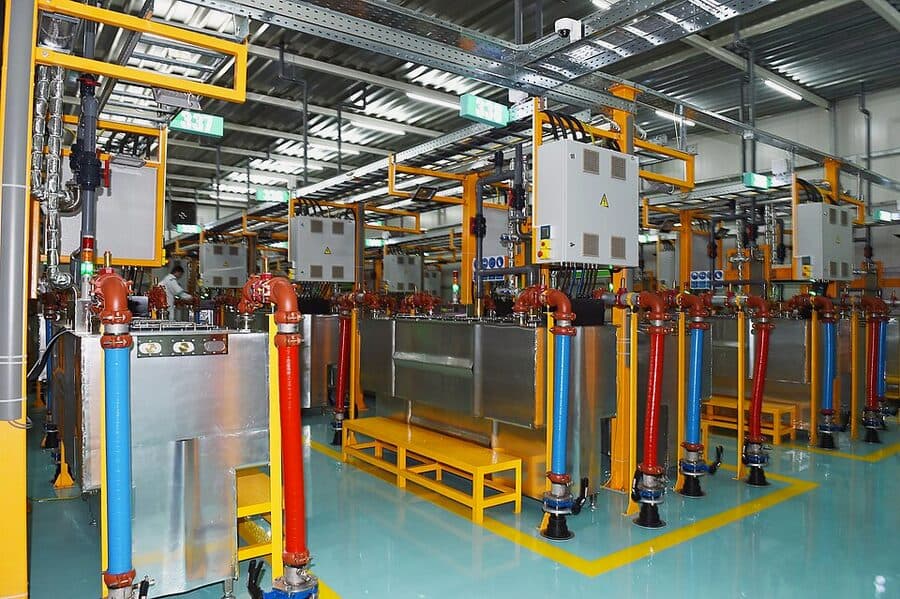
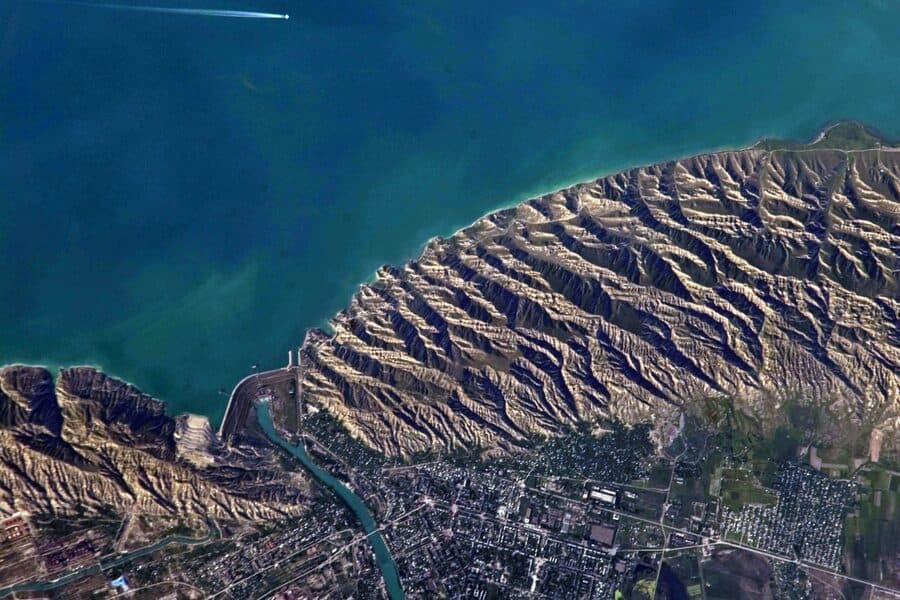
About 30 kilometers north of central Baku, where the Absheron Peninsula meets the mainland along the Caspian shore, sits Sumgayit — Azerbaijan's third-largest city, with a population of roughly 340,000. Built essentially from scratch by Soviet planners starting in 1949, Sumgayit has spent more than seventy years as the country's heavy-industry center, and today it occupies an unusual position: close enough to Baku to function as part of its commuter belt, yet distinct enough — economically, socially, and architecturally — to remain a separate real estate market entirely.
A City Built for Industry
Sumgayit did not grow organically around a historic settlement the way Baku or Ganja did. It was designed and constructed as a Soviet industrial satellite city, chosen for its flat coastal terrain, deep-water access, and proximity to Baku's oil infrastructure and rail lines. Construction began in 1949, and within a few decades the city had grown into one of the largest chemical and metallurgical production centers in the entire Soviet Union. Its economy was built around an aluminum smelter, synthetic rubber and chlorine plants, and a large complex producing superphosphate fertilizers, alongside pipe-rolling and other heavy manufacturing facilities. At its Soviet-era peak, Sumgayit accounted for a significant share of the USSR's chemical output, and the city's entire layout — wide industrial zones separated from densely packed apartment microdistricts — still reflects that single-purpose planning today.
The Environmental Legacy
That industrial concentration came at a real cost. Decades of largely unregulated chemical and metallurgical production left Sumgayit with serious soil, air, and water contamination, and by the 1990s the city had gained international notoriety as one of the most polluted places on earth, appearing on lists compiled by environmental organizations such as the Blacksmith Institute alongside sites like Chernobyl. The collapse of the Soviet Union actually helped in one narrow sense — many of the oldest, least regulated plants shut down in the economic contraction of the 1990s, sharply cutting emissions even before any deliberate cleanup began. Since then, Azerbaijani state investment has gone into remediating contaminated sites, modernizing surviving industrial facilities to current environmental standards, and rerouting new heavy industry into purpose-built, regulated zones rather than leaving it scattered through residential areas. The legacy is still visible in parts of the city and in its reputation, but the trajectory over the past two decades has been steadily toward cleanup rather than further decline.
Sumgayit Chemical Industrial Park and Technologies Park
The clearest sign of that shift is the pair of modern industrial zones the government has built on Sumgayit's outskirts. The Sumgayit Chemical Industrial Park (SCIP), established in 2011, was designed specifically to house chemical and petrochemical production under contemporary environmental and safety standards, replacing the informal, unregulated sprawl of the Soviet era with a fenced, monitored industrial estate offering tax incentives to resident companies. Nearby, the Sumgayit Technologies Park (STP), launched in 2013, took a different approach — steering the city's industrial base toward machine-building, electrical equipment, and other higher-value manufacturing rather than raw chemical production. Together, these two parks represent Azerbaijan's attempt to keep Sumgayit's industrial identity while changing its character: fewer smokestacks scattered through the city, more concentrated, modern, and regulated production on its edges.
Part of Greater Baku, Yet Its Own City
Despite its industrial identity, Sumgayit functions in many practical respects as an outer district of the Baku metropolitan area rather than a fully independent city. The drive to central Baku takes around 30 to 45 minutes along the Baku–Sumgayit highway, and a suburban electric rail line connects the two cities directly, making a daily commute entirely realistic for Sumgayit residents who work in the capital. Administratively, Sumgayit is its own city with its own municipal government, separate from Baku's city administration, and it retains a distinct civic identity — its own university, its own football club, its own downtown core built around Sumgayit's central boulevard and seafront park. But economically and demographically, it is increasingly folded into the broader Absheron-Baku agglomeration, absorbing commuters and workers who find Baku proper too expensive or too crowded.
Coastal but Not a Resort
Sumgayit sits directly on the Caspian Sea, and its seafront includes a landscaped boulevard and beach area that residents use for recreation. But the city's coastline has none of the resort character found along the Absheron Peninsula's dacha towns to the east, or in Azerbaijan's mountain and spa destinations elsewhere in the country. Sumgayit's shore developed alongside its port and industrial facilities, and while cleanup efforts have improved water quality and public green space along the boulevard in recent years, the city's identity remains industrial and residential rather than touristic. This matters for real estate: buyers are not purchasing into a seasonal or vacation-driven market here, and prices are shaped by local wages, industrial employment, and Baku commuter demand rather than by tourism or second-home buying.
Why This Makes Sumgayit a Distinct Market
All of this adds up to a real estate market that behaves differently from both Baku and Azerbaijan's resort towns. Housing demand in Sumgayit is driven primarily by people who work locally in industry, logistics, or the public sector, and by Baku commuters priced out of the capital but unwilling to move further afield. There is no meaningful tourism or vacation-rental segment pulling prices upward, no seasonal swings tied to summer visitors, and comparatively little foreign speculative buying. Instead, prices track the fortunes of the local industrial economy and the ongoing pull of Baku's job market — a more grounded, utilitarian dynamic than what shapes property values in the capital or along the coast to its east.
Takeaway
Sumgayit is a city defined by its industrial founding purpose, its complicated environmental history, and its evolving relationship with Baku. It is close enough to the capital to serve as a practical commuter alternative, distant enough to maintain its own economy and identity, and shaped by a chemical and manufacturing base that continues to modernize rather than disappear. For anyone trying to understand Azerbaijan's real estate landscape beyond the capital, Sumgayit is worth knowing not as a smaller version of Baku, but as a genuinely different kind of city altogether.
 Azerbaijan cities & regions
Absheron's Oilfields: From Contaminated Land to Regeneration
Tens of thousands of hectares left contaminated by the Soviet oil era, a World Bank rehabilitation programme, and the White City built on the Black City
Read more → Azerbaijan cities & regions
Buying Property Near Shahdag: A Guide to Azerbaijan's Ski Real Estate
Resort apartments and chalets around Shahdag Mountain Resort - rental yield potential from ski tourism, price comparison with the Alps, and what distant owners should know
Read more → Azerbaijan cities & regions
Buying Near Tufandag: Real Estate at Gabala's Ski Resort
Chalets, hotel-apartments and two seasons of demand - what buyers should know about property near Gabala's mountain resort
Read more →