Wine Tourism and Real Estate in Shamakhi and Gabala
Published on 2026-08-08 · 5 min read
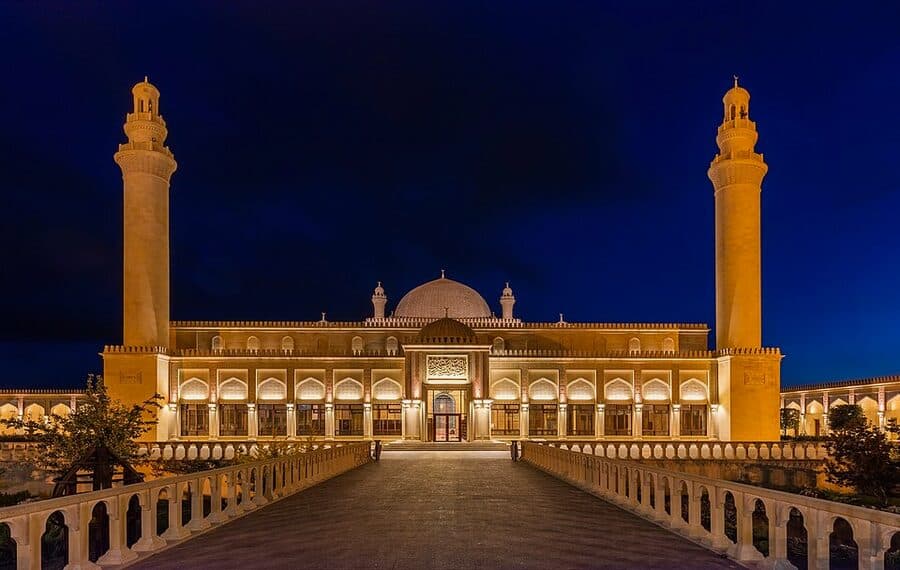
Azerbaijan is not a country most international buyers associate with wine, but the hills around Shamakhi and Gabala have produced grapes for centuries, and a small, growing wave of boutique wineries and vineyard-stay tourism is now reshaping how some of that land is being bought, used, and marketed. For property investors, it represents a category distinct from both a standard residential purchase and a straightforward agricultural land deal — one built around hospitality, brand, and experience as much as around the vines themselves.
A Historic Wine Region, Modern Revival
Shamakhi, roughly 120 kilometers west of Baku in the foothills of the Greater Caucasus, has been Azerbaijan's historic center of viticulture for centuries, its moderate elevation and mineral-rich soils supporting organized wine production that expanded significantly under Soviet-era state vineyards and processing facilities. Gabala, further northwest, developed its own significant vineyard base under the same Soviet-era expansion of Azerbaijani viticulture, and its cooler, wetter mountain-foothill climate gives it a distinct growing profile from the drier Shamakhi hills. In the post-Soviet decades, large-scale state vineyard production in both regions declined sharply along with the broader collapse of the Soviet wine trade, leaving a landscape of old vineyard land, some still cultivated and much of it not, that is now attracting fresh private investment.
The Rise of Boutique Wineries
Over the past decade, a small number of private wineries have opened in both regions, several explicitly positioned around tourism rather than bulk production — tasting rooms, cellar tours, and, increasingly, overnight stays built into or alongside the winery itself. This mirrors a pattern familiar from emerging wine-tourism regions elsewhere in the world: production quality and scale matter less to the business model than the overall visitor experience, and a well-designed tasting room or guesthouse can generate meaningful revenue on a relatively small vineyard footprint. Azerbaijan's own tourism promotion efforts have leaned into this, presenting Shamakhi and Gabala's wine heritage as part of a broader push to diversify visitor interest beyond Baku and the ski resorts further north.
Why This Differs from a Purely Residential Purchase
A vineyard-stay or boutique-winery property is priced and evaluated on a different set of factors than an ordinary house or apartment in the same district. Soil quality, slope orientation, and existing vine age matter in a way irrelevant to residential buyers, and an existing licensed winery operation carries value tied to its brand, distribution relationships, and production history that has nothing to do with square meters or finish quality. The building itself, if there is one, is usually secondary to the land and the operation built on it. A buyer purchasing a Shamakhi hillside house purely to live in evaluates it on privacy, views, and proximity to the city; a buyer purchasing the same hillside with a working vineyard attached is really buying a small agribusiness with a residence attached, and the two should not be priced or negotiated the same way.
Why This Also Differs from a Purely Agricultural Land Purchase
At the same time, a wine-tourism property is not simply agricultural land in the conventional sense either. A buyer purchasing raw farmland is generally focused on soil quality, water rights, and yield potential for a commodity crop, with limited regard for aesthetics, road access, or proximity to any particular town. A vineyard-stay investment inverts several of these priorities: road access and drive time from Baku matter enormously, since the entire business model depends on visitors being able and willing to make the trip; views and setting carry real commercial value, since the visitor experience is part of the product; and proximity to existing tourism infrastructure — Gabala's hotel base and music festival crowds, or Shamakhi's day-trip accessibility from the capital — directly affects viability in a way it would not for a farmer growing grapes purely for bulk wholesale.
Practical Realities
Both regions remain accessible enough to make a vineyard-stay business genuinely workable rather than purely aspirational. Shamakhi is about a two-hour drive from Baku along the Baku-Shamakhi highway, comfortably within range of a weekend visit or a day trip combined with a tasting. Gabala is farther, roughly three to three and a half hours by road or around 40 minutes by domestic flight to Gabala International Airport, but benefits from an already well-developed hotel and tourism base built up around Tufandag Mountain Resort and the Gabala International Music Festival, which brings visitor traffic a standalone winery in a less-developed area would have to generate entirely on its own. In both regions, anyone evaluating a vineyard or winery property should verify existing production licensing, any restrictions on land use tied to agricultural zoning, and — critically — water access, since irrigation reliability affects vineyard viability as much as it does any other form of agriculture in Azerbaijan's semi-arid interior.
Scale and Who This Suits
As with other niche hospitality-adjacent property categories in Azerbaijan, this is a small and still-developing market rather than an established asset class with deep liquidity or a broad resale pool. It suits buyers with a genuine interest in wine and hospitality who are prepared to operate or closely oversee a small agribusiness, not those looking for a passive real estate holding. For that buyer, though, the combination of centuries-old viticultural land, low land costs relative to comparable wine regions in Europe, and a tourism sector actively promoting the category gives Shamakhi and Gabala a genuine, if early-stage, opportunity — one that rewards patience and hands-on involvement rather than a simple buy-and-hold approach.
 Living & visiting guide
The Absheron Peninsula Water Quality Map
What the Ministry of Ecology's monitoring found suitable and what it did not, why the infrastructure list and the test results disagree, and how the Khazri wind changes things
Read more →Living & visiting guideWhy You Can't Swim in Baku Bay — and Where You Can
Swimming is banned in Baku Bay and Shikhov closes most summers, while the northern Absheron beaches stay clean. Here is why, and how to check before you go in
Read more →Living & visiting guideBaku Beaches: A Practical Guide to the Coast
Bilgah, Buzovna, Mardakan, Novkhani and Amburan - what to expect at each beach, how to get there, and why some charge entry when the law says they are free
Read more →