Baku vs Cyprus and Greece: Where to Invest
Published on 2026-09-08 · 5 min read
Cyprus and Greece captured a substantial share of foreign property investor attention over the past decade, largely thanks to golden visa programmes and access to the European Union. Baku offers something entirely different. Comparing these markets reveals just how far "overseas property investment" can be an umbrella term for two completely separate strategies.
What You Are Actually Buying in Each Market
In Cyprus and Greece, a substantial share of investors are not buying yield — they are buying access. A golden visa granting European Union residence, freedom of movement within Schengen, and a potential future route to citizenship. The property itself is often a means rather than an end.
In Baku, there is no equivalent golden visa programme, so buyers arrive with a simpler motive: a low entry price, ongoing yield, and appreciation potential in a market at an early stage of its development. These are two entirely different investment equations, and they cannot be compared directly.
Entry Prices: The Large Gap
European golden visa programmes set a minimum investment threshold — in Greece the threshold has risen substantially in sought-after areas such as Athens, Santorini and Mykonos, and in Cyprus it is high as well. That means entering the European market requires significant equity, typically hundreds of thousands of euros.
In Baku, there is no regulatory minimum. An apartment in a reasonable location can be purchased for considerably less — in the range of 1,050 to 1,600 US dollars per square metre depending on construction stage. We expanded on this in low entry prices as an advantage of investing in Baku.
Taxation: Azerbaijan's Advantage
This is the gap that surprises people most. In the European Union, the tax burden on property is considerably higher: transfer tax or VAT on new-build that can reach double-digit percentages, income tax on rent at European rates, annual municipal tax, and sometimes inheritance tax.
In Azerbaijan, transfer tax is very low — around one percent — and income tax on rental income is relatively modest. Ongoing maintenance costs and municipal taxes are far lower. We detailed this in property taxes and ownership costs in Azerbaijan.
An important caveat: most investors remain liable to report and pay tax at home on foreign income in either case, and tax treaties affect the final calculation. Consult a tax adviser before deciding.
Seasonality and Occupancy
Greece and Cyprus are distinctly seasonal tourism markets. A property on a Greek island or a Cypriot coastal strip can achieve very high occupancy in summer and sit nearly empty in winter. An investor calculating yield on peak months alone gets a distorted picture.
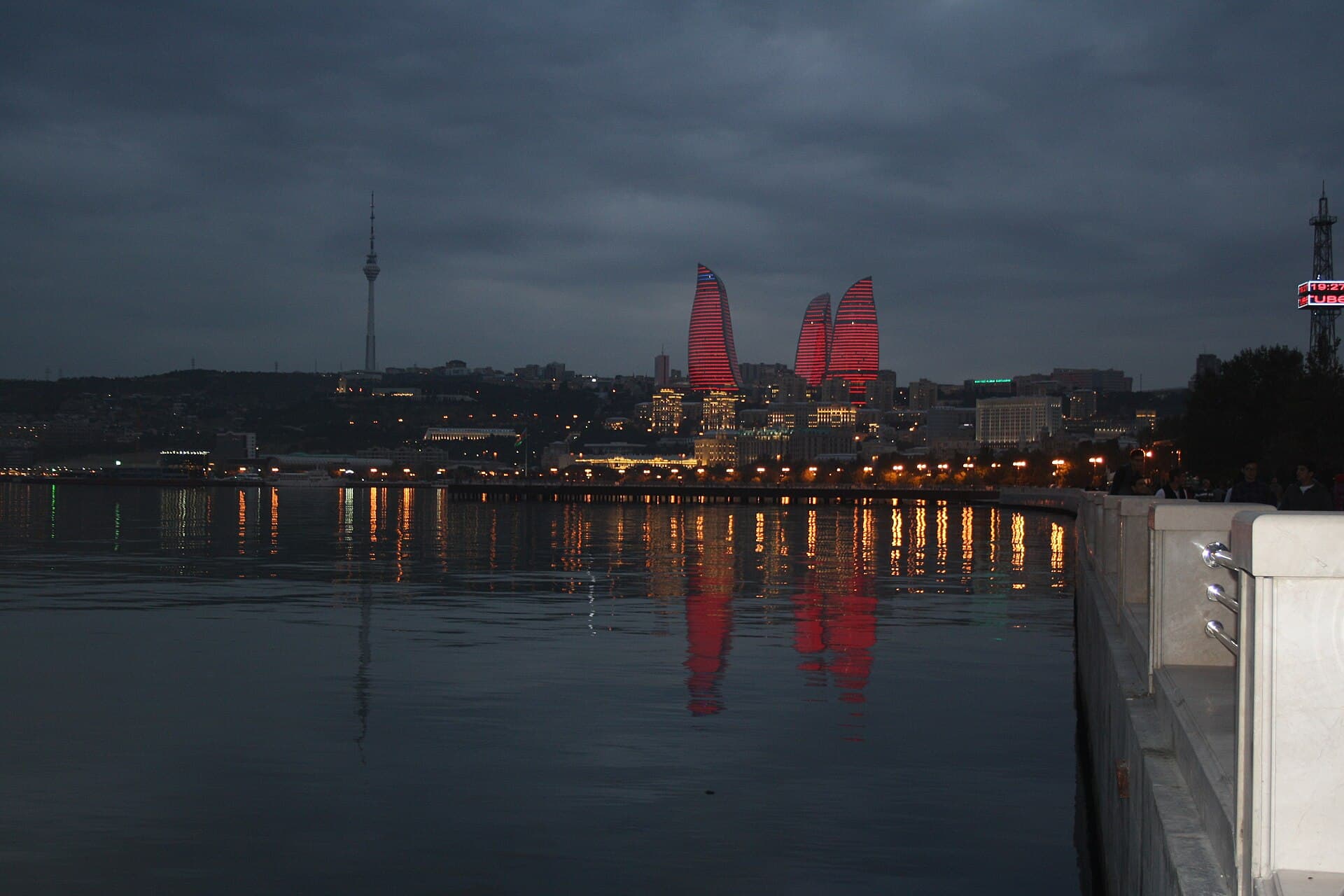
Baku is a capital city that operates year-round: a working population, students, an international business community, and tourism spread across many seasons thanks to events such as the Formula 1 Grand Prix, festivals and conferences. The full seasonality picture appears in the seasonal calendar of Baku tourism and rental demand.
Actual Yields
In Greece and Cyprus, gross yields in sought-after areas have recently sat around 3% to 5%, after prices rose substantially. In distinctly touristic areas higher figures are achievable, but with sharp seasonality and high management costs.
In Baku, the accepted gross yield range sits around 6% to 8%, and maintenance costs are lower — bringing net yield closer to gross. Full data is in rental yields and the investment outlook in Baku.
Liquidity and Market Maturity
Here the European advantage is clear. Greece and Cyprus are developed markets with transparent land registries, a European legal system, public transaction data and a large international buyer pool. Selling a property there is easier and legally safer.
In Baku, the market is young, transparency is lower and the buyer pool is small and predominantly local. This is the central risk of investing in Baku and there is no point downplaying it. We expanded on it in exit strategy: how to sell a property in Baku.
Geopolitical Risk
Greece and Cyprus benefit from the protection of the European framework — institutional stability, the euro, and a familiar legal system. That is a genuine risk-reduction advantage.
Azerbaijan sits in a more complex regional environment, between Russia, Iran and Türkiye. Internal political stability is high, but regional risk exists and must be priced in. We expanded on this in political stability risk assessment in Azerbaijan for investors.
So Which Is Better?
Cyprus and Greece suit those seeking European residence, high legal security and good liquidity, and willing to pay for it through a high entry price, heavy taxation and relatively low yield.
Baku suits those focused on ongoing yield and appreciation potential, working with a mid-sized budget, and willing to accept a less liquid and less transparent market in exchange for a low entry price and light taxation.
Summary
This is not a comparison of "which is better" but of "what you are buying". In Europe you buy access, security and status — at a high cost and a low yield. In Baku you buy yield and potential — at higher risk and lower liquidity. Both strategies are legitimate, and both require independent due diligence and professional advice before any commitment.
Related Articles
Real estate investingThe Israel-Azerbaijan-US Triangle in 2026
An AI memorandum, an American strategic charter and talks on a trilateral format. What is actually new here, what was already in place, and what it means for buyers
Read more → Real estate investing
How Dependent Is Azerbaijan's Economy on Oil, Really?
The non-oil sector reaches 75.8% of GDP in 2026, but that share is rising for two different reasons. The official figures, the IMF's view, and what it means for buyers
Read more → Real estate investing
The Armenia-Azerbaijan Peace Deal: Where It Stands
The agreement was initialed in August 2025 but remains unsigned. What was agreed, what is blocking signature, what the Armenian election changed, and what it means for owners
Read more →