Baku vs Dubai Real Estate Investment: 2026 Comparison
Published on 2026-09-08 · 5 min read
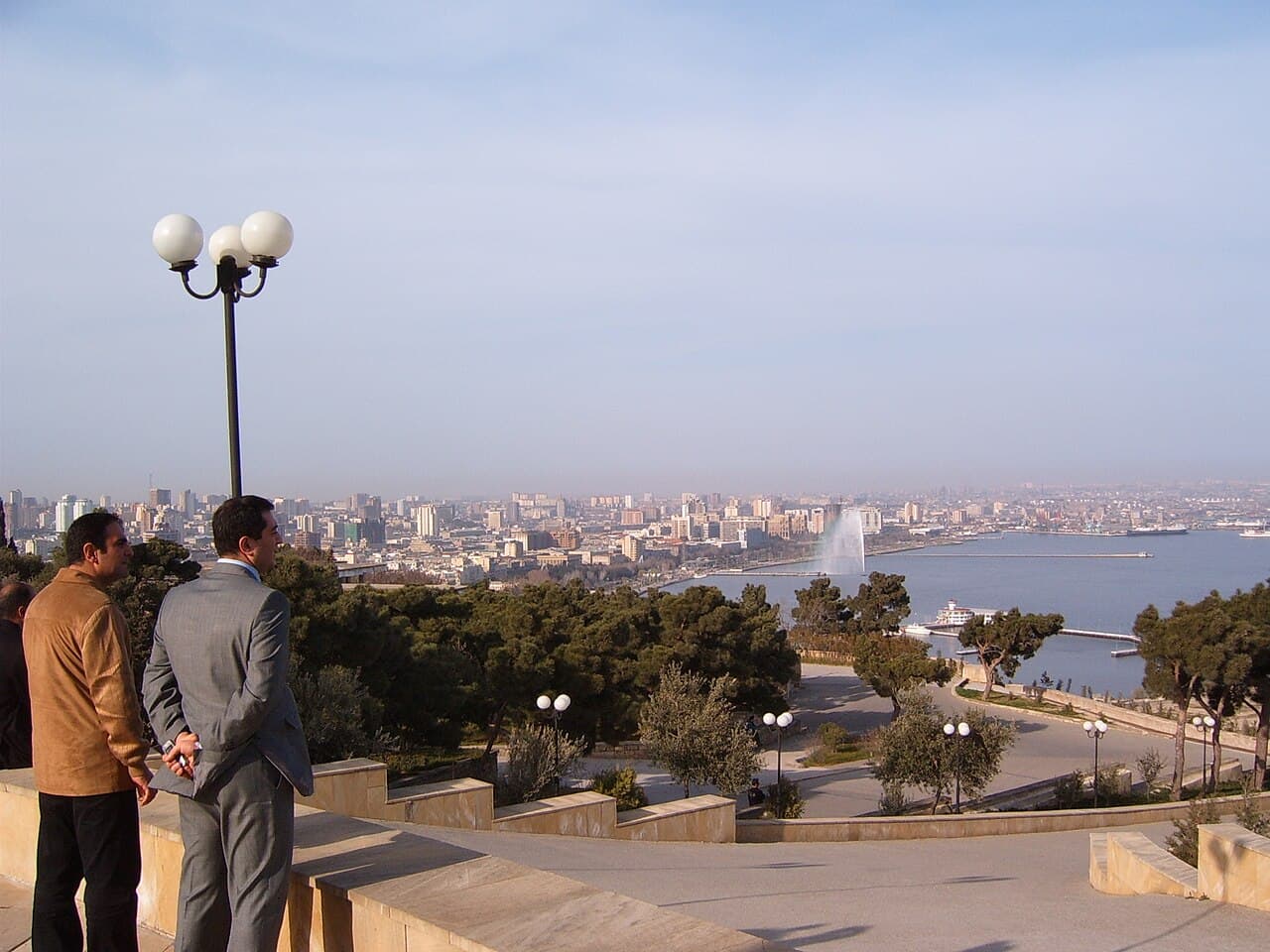
When an overseas investor starts looking at property beyond their home market, Dubai is almost always on the table. It is the recognised brand, with aggressive marketing and enormous international presence. Baku entered the conversation later, and the question that comes up again and again is simple: if you are investing in the region anyway, why not just go with Dubai? The answer depends less on which market is "better" and more on what kind of investor you are.
Entry Price: The Single Biggest Gap
This is the most striking difference between the two markets. In Baku, new-build pricing sits at roughly 1,800 manat per square metre at the off-plan stage and around 2,700 manat per square metre for a completed property — approximately 1,050 to 1,600 US dollars per square metre. In Dubai, central districts are priced three to five times higher, and prime areas such as Downtown or Palm Jumeirah sit far above that again.
The practical implication: a budget that buys a well-located three-room apartment in Baku will buy a small studio in a peripheral Dubai district. For an investor with limited equity, that is the difference between owning a whole asset and owning a small slice of an expensive market. Conversely, an investor looking at a million-dollar-plus property will find far deeper supply in Dubai. It is worth reading about Baku's low entry prices as an investment advantage before comparing budgets.
Rental Yields: The Number Versus the Reality
Both markets quote a fairly similar gross range — around 6% to 8% per year. But gross is misleading. In Dubai, building service charges can consume a meaningful share of annual income, particularly in towers with extensive amenities. In Baku, ongoing maintenance costs are considerably lower, which brings net yield closer to gross yield.
On the other hand, Dubai's rental market is far more mature, transparent and liquid: tenants are easier to find, reliable public market data exists, and the contract framework is regulated. In Baku, the market is younger and finding a quality tenant requires local presence or a trustworthy partner. We covered this in the guide to rental yields and the investment outlook in Baku.
Taxation: Dubai's Advantage, But Not Absolute
Dubai offers zero personal income tax and zero capital gains tax — a real advantage that is hard to dismiss. In Azerbaijan, income tax on rental income sits at relatively low rates, transfer tax is very low at around one percent, and capital gains tax exists but is not dramatic by European standards.
Two things are worth remembering. First, most investors remain taxable in their home country on foreign income regardless, so Dubai's "zero tax" advantage narrows considerably once treaties and home reporting are applied. Second, Dubai carries higher transaction costs — registration fees, agency commissions and additional charges — which accumulate to a meaningful percentage of the deal. We set out the full picture in property taxes and ownership costs in Azerbaijan.
Liquidity and Exit Strategy
Here Dubai wins clearly. Its resale market is deep, international and active, and a property can typically be sold within weeks to a few months. In Baku, the buyer pool is smaller and predominantly local or regional, which lengthens time to sale and reduces pricing flexibility.
This is a critical consideration that many overlook. If your investment horizon is short, or if you might need access to the capital at short notice, this liquidity gap matters more than any yield differential. An investor with a seven to ten year horizon can absorb it; an investor with a three-year horizon can less comfortably.
Supply Risk: Dubai's Structural Weakness
Dubai has a demonstrated history of boom-and-bust cycles driven largely by supply. When thousands of new units enter the market simultaneously, both rental and sale prices come under downward pressure. An investor entering at the peak of such a cycle may wait years to return to their entry point.
In Baku, the construction pace is more moderate and the new-unit pipeline is considerably smaller relative to market size — but local supply risk exists here too, particularly in large coastal projects. The difference is one of magnitude, not of existence. A detailed review is available in the Baku off-plan market report for 2026.
Geopolitics and Risk Perception
Both markets carry regional risk, but of different kinds. Dubai is an international financial hub exposed to global market swings and Gulf tensions. Azerbaijan sits at the junction of Russia, Iran and Türkiye, with high internal political stability but a complex regional environment.
The important point: neither market is "safe" in the sense that a developed Western market is. Both are emerging or developing markets, and both warrant a measured portfolio allocation rather than concentration. We expanded on the macro picture in political and economic stability as a factor in Baku investment.
So Who Suits Which Market?
Dubai suits the investor with relatively large capital who prioritises liquidity and market transparency, is willing to pay a premium for brand and infrastructure, and wants a flexible investment horizon.
Baku suits the investor with a mid-sized budget, a long horizon of seven years or more, a willingness to accept a less liquid market in exchange for a significantly lower entry price, and an interest in entering a market at a relatively early stage of its development cycle.
Summary
The Baku versus Dubai comparison is not a contest with a single winner. Dubai is a mature, liquid and expensive market. Baku is a younger, cheaper and less liquid market sitting earlier on its development curve. An investor who understands that distinction will choose by profile rather than by brand. In either case, there is no substitute for independent due diligence and professional advice — a cheap market is not automatically a worthwhile one, and a high yield on paper is no guarantee of a yield in practice.
Related Articles
 Real estate investing
The Israel-Azerbaijan-US Triangle in 2026
An AI memorandum, an American strategic charter and talks on a trilateral format. What is actually new here, what was already in place, and what it means for buyers
Read more → Real estate investing
How Dependent Is Azerbaijan's Economy on Oil, Really?
The non-oil sector reaches 75.8% of GDP in 2026, but that share is rising for two different reasons. The official figures, the IMF's view, and what it means for buyers
Read more →Real estate investingThe Armenia-Azerbaijan Peace Deal: Where It Stands
The agreement was initialed in August 2025 but remains unsigned. What was agreed, what is blocking signature, what the Armenian election changed, and what it means for owners
Read more →