Khatai: Baku's Everyday Central-Adjacent District
Published on 2026-08-01 · 3 min read
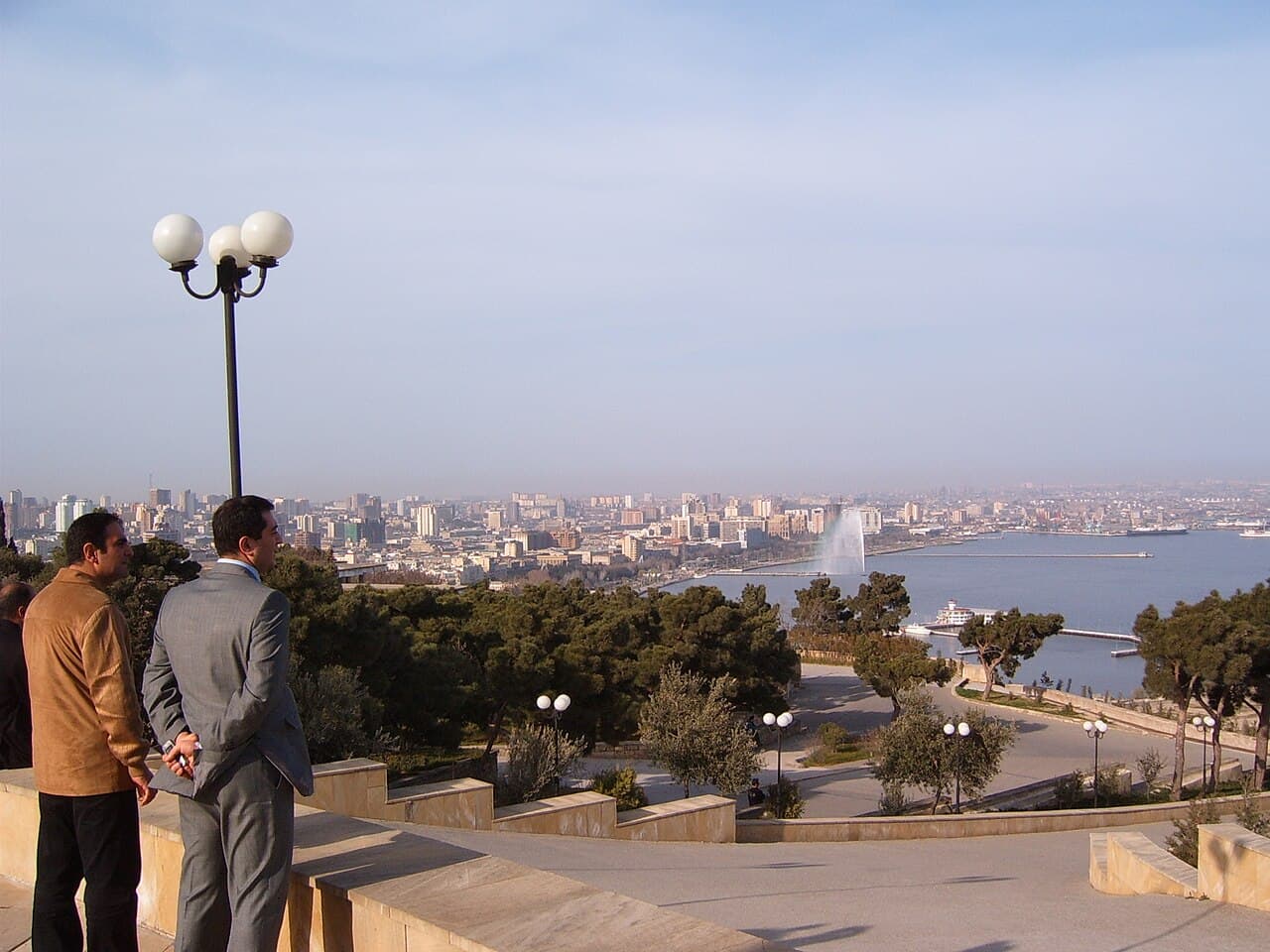
Khatai is one of Baku's twelve administrative districts, formed in its current boundaries in 1993 and named after Shah Ismail I, the 16th-century founder of the Safavid dynasty who wrote poetry under the pen name Khatai. Unlike Icherisheher's heritage tourism or Badamdar's hillside luxury, Khatai is defined by ordinary residential and commercial life — the kind of district most Baku residents actually live in.
Location
The district covers a substantial swath of eastern-central Baku, bordering the city center to its west and stretching out toward Ahmadli and the Absheron peninsula, encompassing several distinct neighborhoods and metro stations within its administrative limits, including Ganjlik and Khalglar Dostlugu.
Character
Khatai's streets combine Soviet-era five- and nine-story apartment blocks — many dating from the 1960s through the 1980s — with newer residential and mixed-use developments that have filled in vacant and redeveloped plots since the 2000s. Ganjlik Mall, one of Baku's larger shopping centers, sits within the district and functions as a commercial anchor, alongside smaller local markets, schools, and municipal offices spread across the area's neighborhoods.
Housing Stock
Khatai's housing spans a wide range within a relatively short distance. Older apartment blocks near the district's metro stations offer smaller, dated units at accessible prices, while newer complexes built over the past fifteen to twenty years offer larger floor plans, elevators, and underground parking at a proportionally higher price. Because Khatai is closer to the city center than districts like Ahmadli further east, its newer developments tend to price somewhat above the city's outer eastern districts while remaining well below central Baku or Badamdar.
Transport
Khatai benefits from strong metro coverage relative to many Baku districts, with Ganjlik and Khalglar Dostlugu stations on the Green Line serving different parts of the district and putting most of Khatai within a fifteen- to twenty-five-minute metro ride of the city center. Heydar Aliyev Avenue and several other arterial roads run through or along the district, supporting both private car commuting and the extensive local bus network that connects Khatai's neighborhoods to each other and to the center.
Daily Life
Khatai's daily rhythm is that of an established, lived-in district rather than a showcase one. Local bazaars, bakeries, pharmacies, and repair shops serve long-standing residents alongside newer arrivals drawn by relatively central pricing. Ganjlik Mall and the district's schools and clinics mean that most everyday needs can be met without traveling into the city center, while Khatai's proximity to the center keeps a commute into downtown Baku short when needed for work, dining, or entertainment.
Real Estate Market
Khatai's market sits in the middle tier of Baku's residential pricing — more expensive than the far eastern districts like Ahmadli, but well below the center, Badamdar, or the White City. This positioning, combined with metro access and the presence of a major shopping center, has made Khatai a popular choice for middle-income buyers who want proximity to the center without central-district prices. Both older apartments for renovation and new-build units are actively traded within the district.
Who It Suits
Khatai suits buyers looking for a practical, well-connected district with a genuine local character rather than a tourist or luxury profile — established local families, professionals commuting to jobs in the center, and buyers seeking value in a location closer to downtown than the city's outer residential belt. It is less suited to those specifically seeking heritage architecture, sea views, or a high-prestige address.
Takeaway
Khatai represents Baku's residential middle ground: a large, well-served district that mixes decades of housing stock without pretense, offering solid metro connections and everyday amenities at prices that remain reasonable relative to its proximity to the center. It is not a destination neighborhood, but for buyers who want practicality over prestige, that is precisely its appeal.
Anyone weighing a purchase in this area can set it against other districts of Baku in the neighbourhood comparison tool.
 Neighborhoods & areas
Baku Nightlife and Entertainment: An Investor's Guide
Baku's entertainment, restaurant and club scene by district — where activity concentrates, how it affects property values and what it means for choosing a neighbourhood
Read more →Neighborhoods & areasZabrat: Baku's Oil-Field Heritage Neighborhood
Inside Zabrat, an Absheron settlement built on Baku's early oil boom, now a residential district in Sabunchu with an industrial past still visible in its landscape
Read more → Neighborhoods & areas
Görədil: A Smaller Absheron Settlement
What is known about Görədil (Goradil), a lower-profile settlement on the Absheron Peninsula, and how it fits the peninsula's broader rural and agricultural pattern
Read more →