Quba-Qusar: Azerbaijan's Mountain Frontier in the North
Published on 2026-07-22 · 4 min read
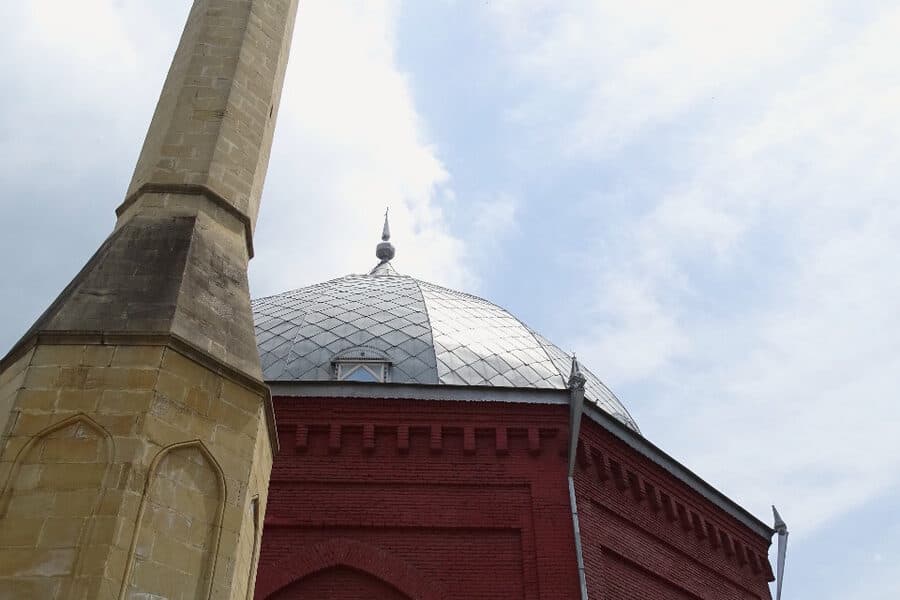
About three hours north of Baku, where the coastal plain gives way to the foothills of the Greater Caucasus, lies one of Azerbaijan's most geographically and culturally distinct regions: the districts of Quba and Qusar. Together they stretch from Caspian lowlands to Bazardüzü, Azerbaijan's highest peak at 4,466 meters, and from apple orchards in the valleys to villages perched above 2,000 meters. Few regions in the country pack this much variation — in landscape, climate, and ethnicity — into so compact an area.
Quba: Orchards and a Khanate's Legacy
Quba city, built along the Qudiyalçay river roughly 168 kilometers from Baku, is the historic capital of the Quba Khanate, an 18th-century state that under ruler Fatali Khan briefly controlled much of what is now northern Azerbaijan and Dagestan. That history is still visible in the old town's layout and in the Juma Mosque, a red-brick structure completed in 1898 by architect Hasan bey Sardarov, one of the largest and most architecturally distinctive mosques in the country.
The district is best known today, though, for apples. The valley's climate — cool mountain air moderating Caspian humidity — produces the bulk of Azerbaijan's apple crop, and orchards blanket the hillsides around the city, historically exported north into Russia in large volumes. Driving through Quba in autumn, the orchards are impossible to miss.
Qırmızı Qəsəbə: The Red Village
Across the Qudiyalçay from Quba's main town sits Qırmızı Qəsəbə — the Red Village — one of the very few settlements in the world populated almost entirely by Mountain Jews (Juhuro), a distinct Jewish community with roots in the Caucasus going back centuries. The village has its own synagogues, a museum, and a built environment of stone houses that sets it apart architecturally from the rest of Quba. Many Mountain Jewish families emigrated to Israel, the United States, and elsewhere from the late Soviet period onward, but the Red Village remains an active community and a rare living example of a self-contained Jewish town outside Israel.
Khinalug: A Village Above the Clouds
Roughly two hours by mountain road from Quba, past the town of Qonaqkənd, sits Khinalug (Xınalıq) — at around 2,200 meters, one of the highest continuously inhabited settlements in the Caucasus and among the oldest in Azerbaijan, with some estimates placing its founding well over a thousand years ago. Khinalug is home to its own distinct ethnic group, the Khinalugs, who speak a language isolate unrelated to neighboring Azerbaijani, Lezgi, or other regional languages and unwritten until the Soviet period introduced a script for it. The village's economy still centers on sheep herding, and its stone houses, stacked up the mountainside with rooftops doubling as neighbors' terraces, have changed relatively little in appearance over generations. The road up is dramatic and, in winter, frequently impassable.
Qusar: Gateway to Shahdag
North of Quba, closer to the border with Russia's Dagestan republic, lies Qusar district. Its population is predominantly Lezgin, part of a broader Lezgin community that straddles the Azerbaijan-Russia border and maintains a distinct language and culture, including the fast, dramatic Lezginka dance recognized across the Caucasus. Qusar town itself is a modest regional center, but the district has grown rapidly in profile since the 2012 opening of Shahdag Mountain Resort, Azerbaijan's largest ski and mountain tourism development, with cable cars running up the slopes of Mount Shahdag toward 3,255 meters. The resort draws visitors from Baku and abroad in both winter ski season and summer, when its cooler alpine climate offers relief from coastal heat.
A Multi-Ethnic Mosaic
Beyond Azerbaijanis, Lezgins, Tats, and Mountain Jews, the wider Quba-Qusar region is home to several of the Caucasus's smallest ethnic groups, including the Budukh and Kryz peoples, who inhabit a handful of villages in the Shahdag mountains and speak their own Northeast Caucasian languages, some with only a few thousand speakers remaining. This density of distinct peoples in a relatively small mountainous area is one of the reasons ethnographers and linguists have long studied the region.
The Border and the Coast
Qusar district borders Dagestan along the Samur River, which also gives its name to the Samur State Nature Reserve, known for a rare liana forest ecosystem unusual this far north. The border crossing at Samur is one of Azerbaijan's main land links to Russia. To the east, the region tapers toward the Caspian coastal lowlands near Khachmaz, giving the wider area a rare combination: high mountains, a militarized international border, and beach access all within a couple of hours' drive of one another.
Why the Region Stands Out
Quba-Qusar offers a version of Azerbaijan that looks nothing like Baku or the Absheron coast — alpine villages instead of apartment towers, orchards instead of oil infrastructure, and a patchwork of small, ancient ethnic communities rather than a single dominant urban culture. For travelers and increasingly for buyers, it represents the country's mountain and rural identity in its most concentrated form.
Property types outside Baku differ from those in the city - from a holiday house to an apartment in a new development. The property type finder is a reasonable starting point for anyone still deciding.
 Azerbaijan cities & regions
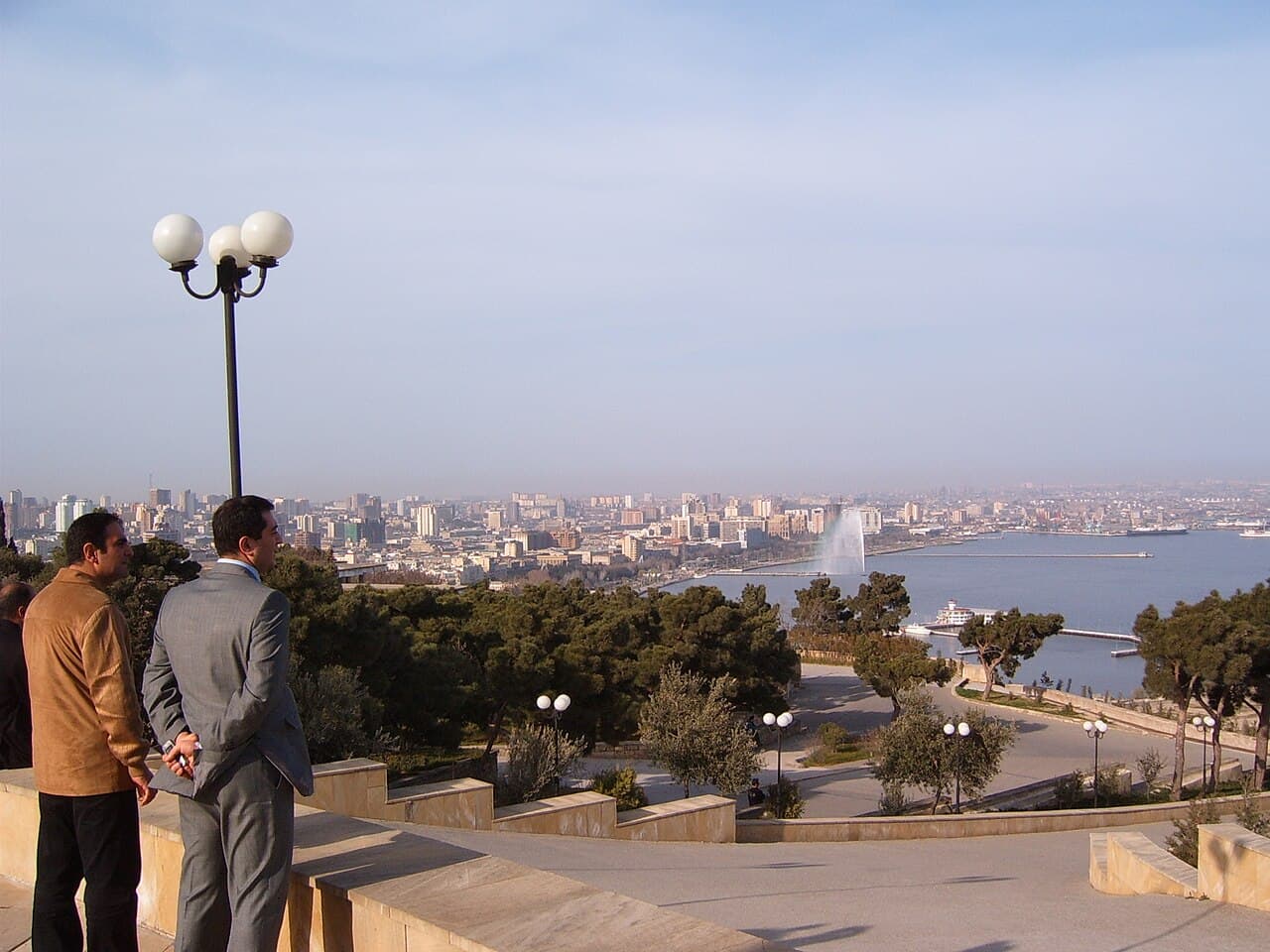
Absheron's Oilfields: From Contaminated Land to Regeneration
Tens of thousands of hectares left contaminated by the Soviet oil era, a World Bank rehabilitation programme, and the White City built on the Black City
Read more →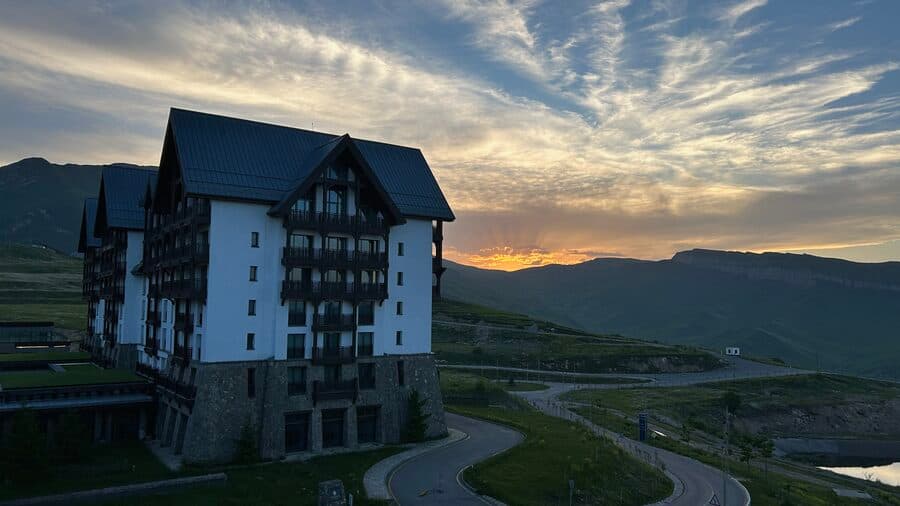 Azerbaijan cities & regions
Buying Property Near Shahdag: A Guide to Azerbaijan's Ski Real Estate
Resort apartments and chalets around Shahdag Mountain Resort - rental yield potential from ski tourism, price comparison with the Alps, and what distant owners should know
Read more →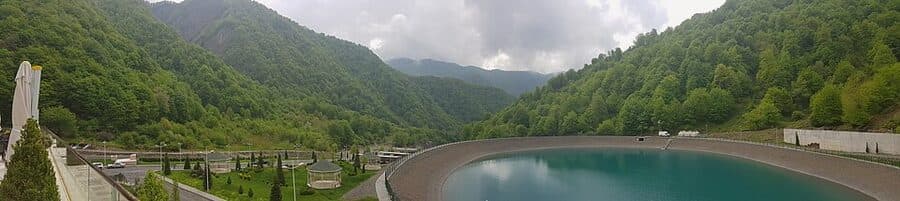 Azerbaijan cities & regions
Buying Near Tufandag: Real Estate at Gabala's Ski Resort
Chalets, hotel-apartments and two seasons of demand - what buyers should know about property near Gabala's mountain resort
Read more →