20,000 or 50,000 Residents? Fact-Checking Sea Breeze
Published on 2026-10-23 · 7 min read
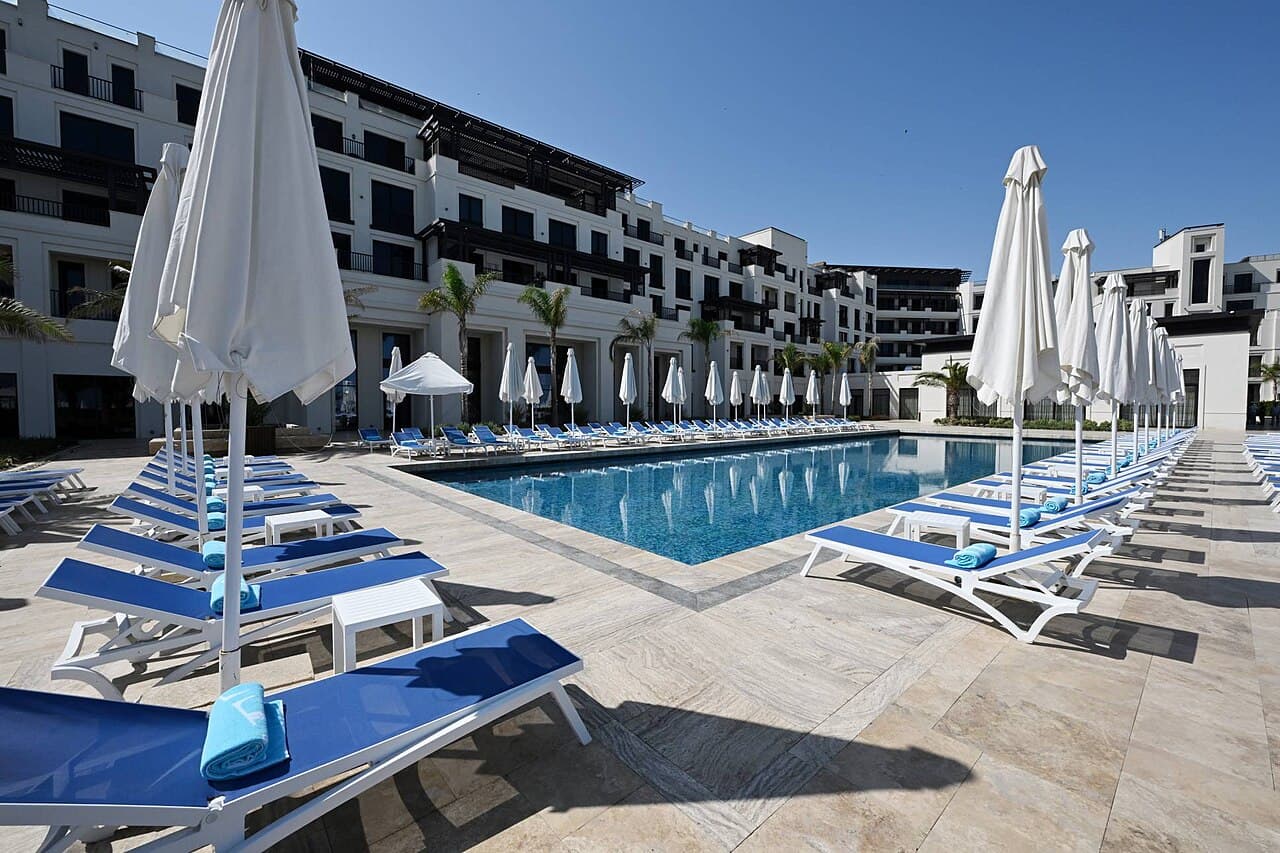
How many people live at Sea Breeze? It sounds like a question with one answer. It has four, and all of them come from sources connected to the developer.
The number matters more than it looks. A resort's resident population is the single best proxy for whether the shops stay open in February, whether a rental has a tenant pool outside July and August, and whether the place functions as a town or as a summer address. It is the figure that decides whether you are buying into a community or into a construction site with a beach.
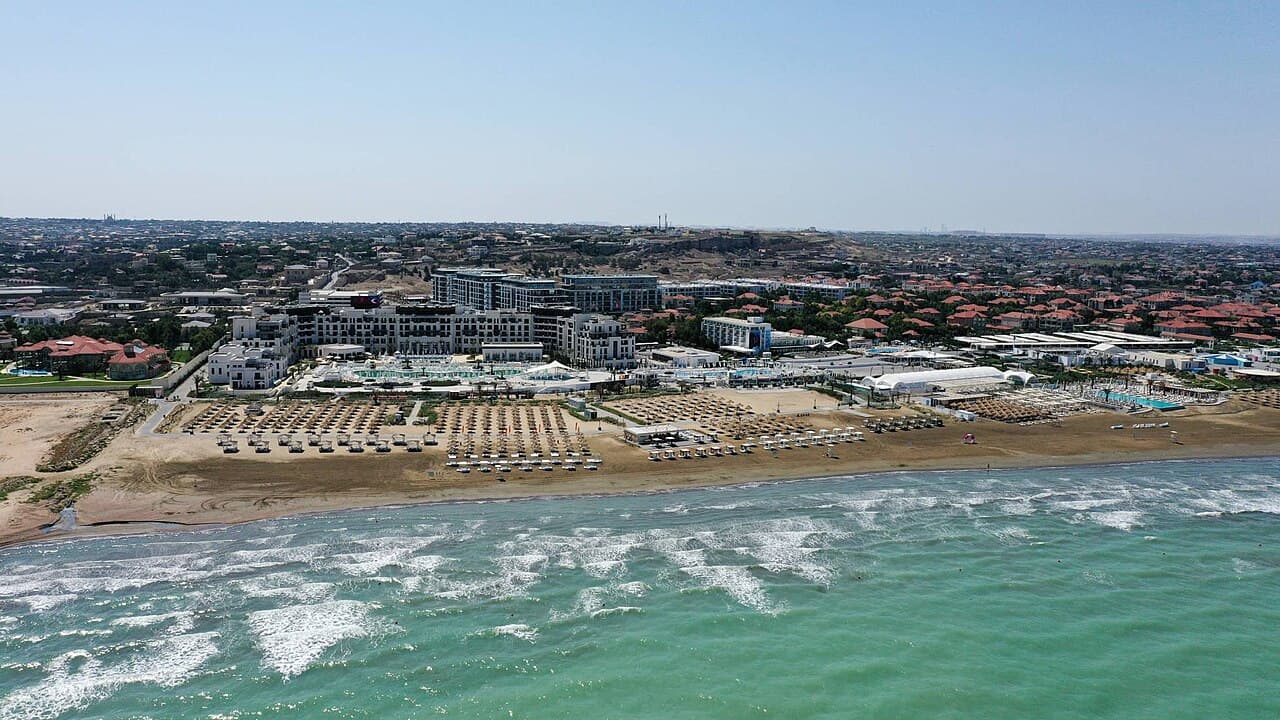
The Four Claims
| Figure | Where it appears |
|---|---|
| more than 20,000 residents | A recent sponsored feature |
| more than 35,000 residents | A fintech interview with a company representative |
| 40,000+ residents | A developer page, listed as current |
| more than 50,000 residents | The developer's own site, and an earlier news report |
That is a spread of two and a half times between the lowest and highest claim, with no source defining its terms and no independent census to settle it.
Why This Is Not a Rounding Difference
Rounding explains 48,000 versus 50,000. It does not explain 20,000 versus 50,000. Three things could produce a genuine gap this wide, and none of them is disclosed by the sources making the claims.
Residents versus owners. A registered owner who visits twice a year is not a resident, but is easy to count as one. In a resort with a large share of second homes and investment units, the two numbers can differ by a factor of several.
Permanent versus peak. A Caspian beach resort in August and the same resort in February are not the same place. A peak-season occupancy figure is a real number that answers a different question than the one a buyer is asking.
Current versus planned. Masterplans carry target populations - one report puts the long-term plan at up to roughly 500,000 people across the expanded site. A planned figure quoted without the word "planned" becomes a claim about today.
Any of these would be a legitimate way to count. The problem is that the published numbers do not say which they are using, which means none of them can be checked.
The Cross-Check That Helps
There is one figure that constrains all the others, and it comes from the developer's founder rather than from marketing. Speaking to Report.az on 26 September 2026, Emin Agalarov said that "only 10%-15% of the planned work has been completed so far", and described the intention as implementing everything designed over the next seven to eight years.
Hold the two claims side by side. A development that is 10-15% built cannot plausibly be housing the population its own masterplan projects for completion. The lower end of the resident range is the one consistent with the founder's progress figure; the upper end is consistent with a finished resort that does not exist yet.
That does not prove 20,000 is correct. It does mean a buyer who assumes 50,000 neighbours is assuming something the developer's own progress statement does not support.
What a Buyer Should Actually Do With This
The resident count is not worth resolving from a desk. It is worth replacing with three observations that are cheap to make and impossible to spin.
Count open businesses in the off season. The resort is described as having dozens of restaurants and cafes, a school, a kindergarten, pharmacies, medical services and a shopping complex. The useful question is how many of those are trading in January. Walk it, or ask for photographs dated in winter.
Check the school. An international school with a full roll is the most reliable single indicator of permanent family residence anywhere in the world. Enrolment numbers, where you can get them, outperform any population claim.
Look at the lights. The oldest method and still the best: an evening drive past the delivered blocks in the low season tells you what share of units are occupied rather than owned. Our guide on getting to Sea Breeze from Baku covers the practicalities of making that trip.
What the Number Is Used to Sell
Population claims are not decoration in a sales conversation. They do specific work, and each use has an honest counter-question.
"There is strong rental demand." Resident population is offered as proof of a tenant pool. But residents are not tenants - owner-occupiers reduce the rental pool rather than feed it. The figure you want is how many units in your cluster are let, and at what seasonal occupancy.
"The amenities are viable." Fifty thousand residents would support fifty restaurants. Twenty thousand, spread across a site this size and concentrated in summer, might not. If the resident figure is wrong on the high side, the amenity list in the brochure is a forecast rather than a description.
"You will be able to sell." Exit liquidity depends on a resale market, and a resale market depends on a population large enough to produce buyers who want to live there rather than only buyers who want to let. This is the use where an inflated figure does the most damage, because it is the one you test last - at the point of sale, years later.
The Arithmetic Anyone Can Run
You do not need the developer's cooperation to bound this number. You need the delivered unit count and an average household size, both of which are obtainable.
Work from the inventory. The complexes with the strongest evidence of being finished and occupied - the Park Residences phases, Park Lane, Polo and White Residences, the villa clusters, Prime, Premium, Deluxe, Renessans and Gardens, plus Marina Village now handing over more than 950 apartments across seven blocks - plausibly total several thousand units rather than tens of thousands. Multiply a few thousand delivered apartments by an average household of three and you reach a resident population in the low tens of thousands at absolute full occupancy, and well below that at realistic occupancy for a resort with a heavy second-home component.
That calculation does not produce a precise answer, and it is not meant to. It produces a ceiling. Any claim that sits above the ceiling your own unit count implies is a claim about the future wearing the grammar of the present, and you can identify it with a pocket calculator before anyone shows you a brochure.
Run the same arithmetic on the cluster you are actually buying into, because that is the population that determines whether your building has a doorman in winter, a tenant pool in October, and a resale buyer in 2032.
How to Read Any Population Claim
Four questions that work on any development, anywhere.
- Residents, owners, or visitors? Three different numbers with one label.
- Today or at completion? And if at completion, in what year?
- Who counted, and how? A developer, a consultant, or a statistics office are three different levels of evidence.
- Does it reconcile with the build progress? Units delivered times average household size is a sanity check anyone can run.
For the wider pattern of figures that do not agree at this resort - site area published as anything from 500 to 1,750 hectares, coastline as 18 km or 22-23 km - see our audit of Sea Breeze's completion dates, and the full project inventory for what is actually built versus announced.
The Honest Answer
Nobody outside the developer knows how many people live at Sea Breeze, and the developer has published four different answers. The defensible position is a range with the reasoning attached: the resort has a real, growing permanent population, it is almost certainly nearer the bottom of the published range than the top given a 10-15% completion figure, and the number that will matter to your rental income is not the resort total but the occupancy of the specific cluster you buy into.
Anyone quoting one of those four numbers at you as a fact - including the flattering one - is quoting a figure they have not verified, because it cannot currently be verified. That is worth knowing about the number, and it is worth knowing about the person quoting it.
 New developments
Understanding Construction Timelines for Resort Projects Like Miami Residence
General guidance on how large resort residential developments are typically phased, why announced dates shift, and what questions buyers should ask
Read more →New developmentsMiami Residence in Baku: Frequently Asked Questions
Honest answers to the most common questions about Miami Residence within the Sea Breeze resort development near Baku
Read more →New developmentsWhere Miami Residence Sits Within the Sea Breeze Resort City
Understanding Miami Residence's place within the broader Sea Breeze development on the Caspian coast near Baku
Read more →