The Caspian Swimming Season: When the Water Is at Its Best
Published on 2026-09-24 · 5 min read
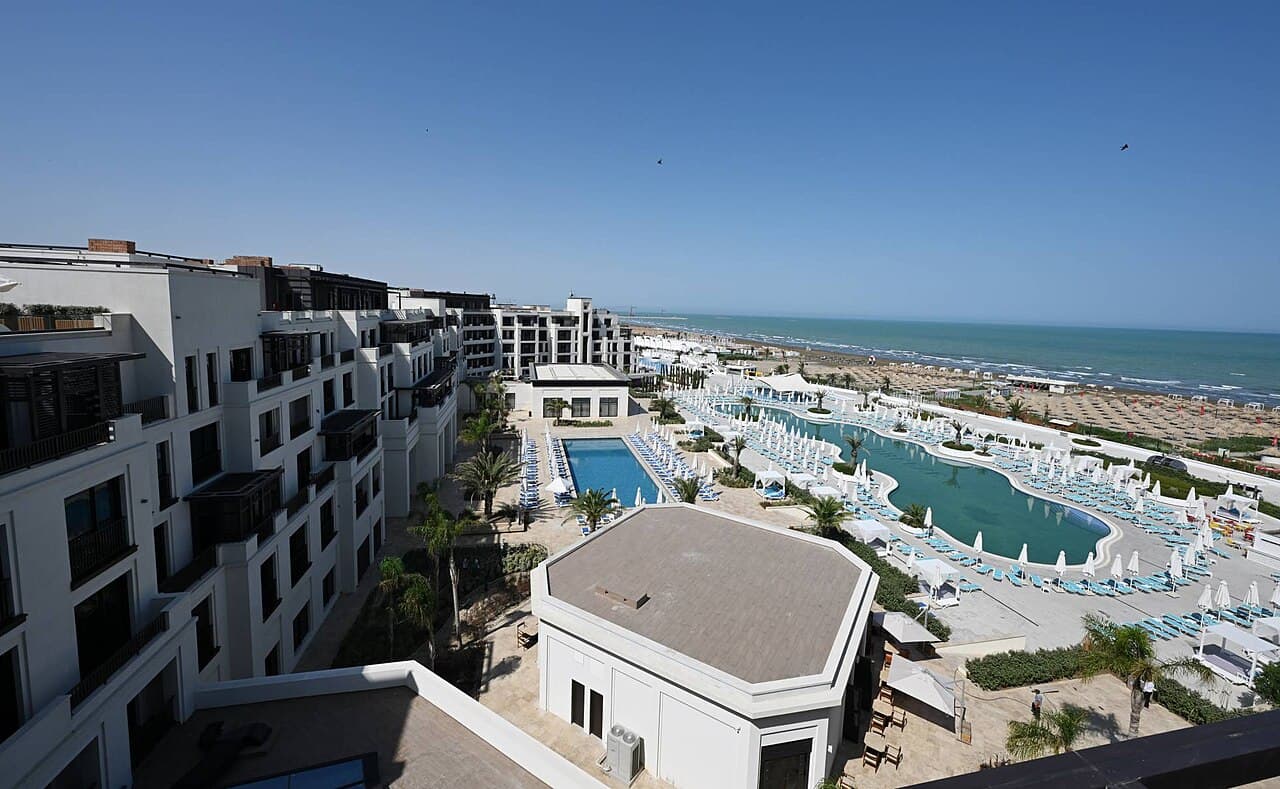
The Caspian is not the Mediterranean, and that is not only a remark about salinity. Its season is shorter, sharper at the edges, and shaped by a factor almost nobody mentions: wind. Anyone planning a beach holiday in Baku, or weighing a property whose income depends on the season, needs to know exactly when the water is good - and when it is not.
The season in one line
The swimming season in Baku runs from June to October. Across those months the water temperature does not drop below 20°C.
That is a window of about five months - longer than most people assume for a northern sea, and considerably shorter than the Mediterranean.
Month by month
| Month | Water temperature |
|---|---|
| June | around 24-26° |
| July | average 26.0°, range 23.6-28.5° |
| August | average 26.8°, range 25.6-28.0° |
| September | average 24.5°, range 20.2-28.3° |
| October | drifting towards the season's lower bound |
The July and August figures are 2026 measurements.
August is the warmest month, with both the highest average and the narrowest range - which means not only warm but consistent. If you can pick one month, this is it.
What the table does not show
September is interesting precisely because of its wide range: from 20.2° to 28.3°. It is a transitional month, and the gap between its start and its end is large. Arrive in early September and you effectively get summer; arrive at the end of it and you may find water that is noticeably cooler.
That matters especially for anyone planning a cheaper holiday "just after the season" - the saving is real, and so is the gamble.
The factor that isn't in the forecast: wind
Baku gets the Khazri, a cold northerly off the Caspian that counts among the prevailing winds of the region and can reach gale force.
The figure worth knowing: strong or moderate winds blow across the area on roughly 250 days a year, and high waves are especially common between November and March.
The practical implication is that water temperature is not the whole story. A day in August with a strong Khazri can be cold and choppy for swimming despite 27° in the water. Conversely, a calm day at the end of September can be excellent.
This is why people on Absheron check the wind forecast, not only the temperature.
How to plan in practice
For maximum certainty: August. Warmest and steadiest.
For a balance of weather and price: June or early September.
To avoid: November to March, not only for the cold but for the rough sea.
And always: check not just the temperature but the water quality at the specific site. We covered this in the Absheron water quality map, particularly the gap between what the infrastructure says and what testing finds.
The sea itself is retreating
There is a slow change here worth knowing about, and it appears in no weekly forecast.
The Caspian is shrinking. Since the mid-1990s it has lost roughly 24,000 km² of surface area and about two metres in water level, and it now sits at its lowest point in 400 years. The current rate of decline runs between 9 and 35 centimetres a year.
Along parts of Azerbaijan's coastline, including low-lying areas of the Absheron Peninsula, the retraction is already visible.
The causes divide: around 40% of the loss is attributed to increased evaporation from a warming climate, and the rest stems largely from damming and diverting rivers, and from fragmented decision-making across the five states that border the sea. The UN Environment Programme estimates the sea could recede by a further 8 to 21 metres by the end of the century.
Why this concerns swimmers and owners alike: the shoreline is not fixed. A beach that sat at the waterline a decade ago may be set back from it today, and "on the sea" is a definition that moves. This is not a near-term apocalyptic scenario - the rate is centimetres a year - but it is a real factor in long-term planning, and it is worth a question before buying a property whose entire value rests on its distance from the water.
What a five-month season means for a property
Here the difference between a traveller and an investor becomes sharp.
A traveller picks a month. An owner gets the whole year, and the shape of the season determines their income model.
Five months of swimming season is a middling season: longer than a ski destination, far shorter than a Mediterranean one. Which means a pure beach property on Absheron will work hard from June to October and sit weak the rest of the year - unless it has a second demand engine.
That is exactly the practical difference between the two models set out in the managed versus public beach comparison: a resort with restaurants, events and year-round services breaks the dependence on the season. A traditional coastal village does not.
Anyone assessing a property in the area would do well to ask what happens there in February, not only in August. The property type finder is a reasonable starting point for anyone still weighing the categories.
Related articles
 Living & visiting guide
Family-Safe Beaches Around Baku
Which beaches suit young children, what to check before going in, why the Caspian is actually convenient for families, and how managed venues differ for this purpose
Read more → Living & visiting guide
The Caspian's Oil Legacy: Where the Pollution Comes From
Most of the Caspian pollution arrives via the Volga, not from Azerbaijan. What enters the water, from where, and why a shrinking sea makes it worse
Read more →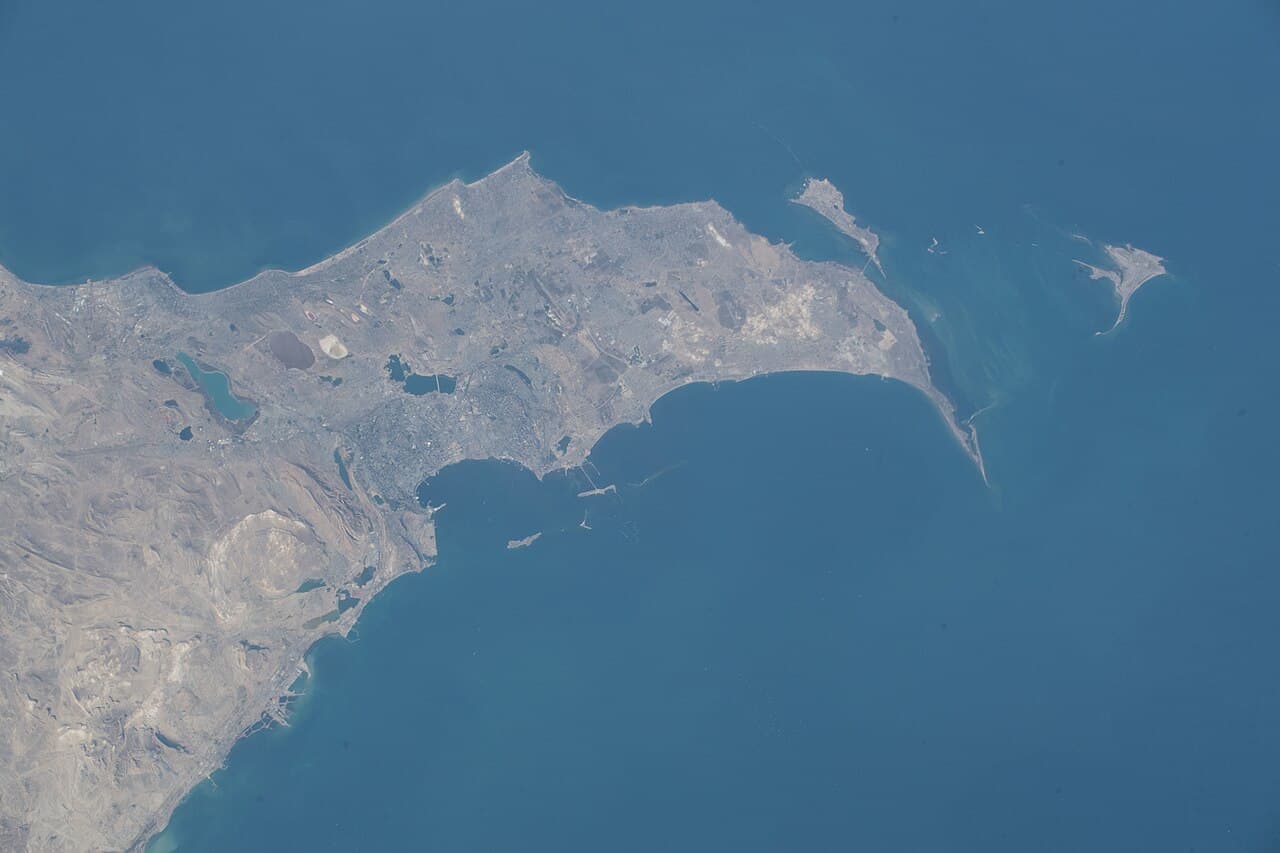 Living & visiting guide
The Absheron Peninsula Water Quality Map
What the Ministry of Ecology's monitoring found suitable and what it did not, why the infrastructure list and the test results disagree, and how the Khazri wind changes things
Read more →