37% Foreign Buyers: The One Hard Number at Sea Breeze
Published on 2026-10-23 · 8 min read
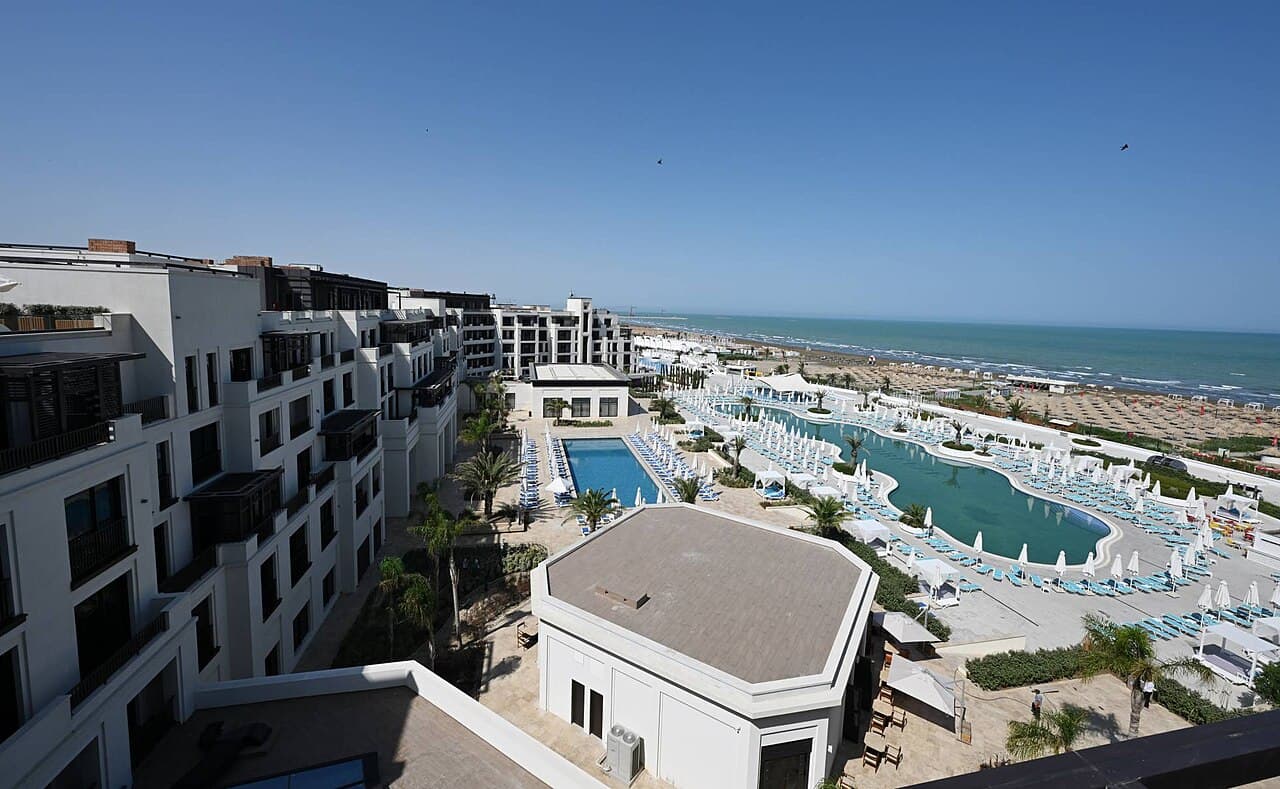
Every brochure about the Caspian coast asserts international demand. Almost none of them put a number on it. In an interview published in mid-2026, Orkhan Mustafayev of Sabah Investment Group did: foreign buyers accounted for about 37% of purchasers at Marina Village, against 15 to 17% in the same company's city projects in Baku.
That is the single hardest demand figure available anywhere on this coastline, and it deserves a page of its own - both for what it establishes and for the four things it does not.
Why This Number Is Unusual
Developers publish prices, unit counts and delivery dates. They almost never publish buyer composition, because it is commercially sensitive in both directions: a high foreign share signals international appeal but also currency and sentiment risk, while a low one undercuts the international sales pitch.
Three features make this particular disclosure worth taking seriously.
It comes with a control group. The 37% is stated against 15-17% in the same developer's Baku city projects. A single percentage with nothing to compare it to is marketing. A pair of percentages from one company's own portfolio is closer to evidence, because the sales process, the reporting method and the definition of "foreign buyer" are presumably consistent across both.
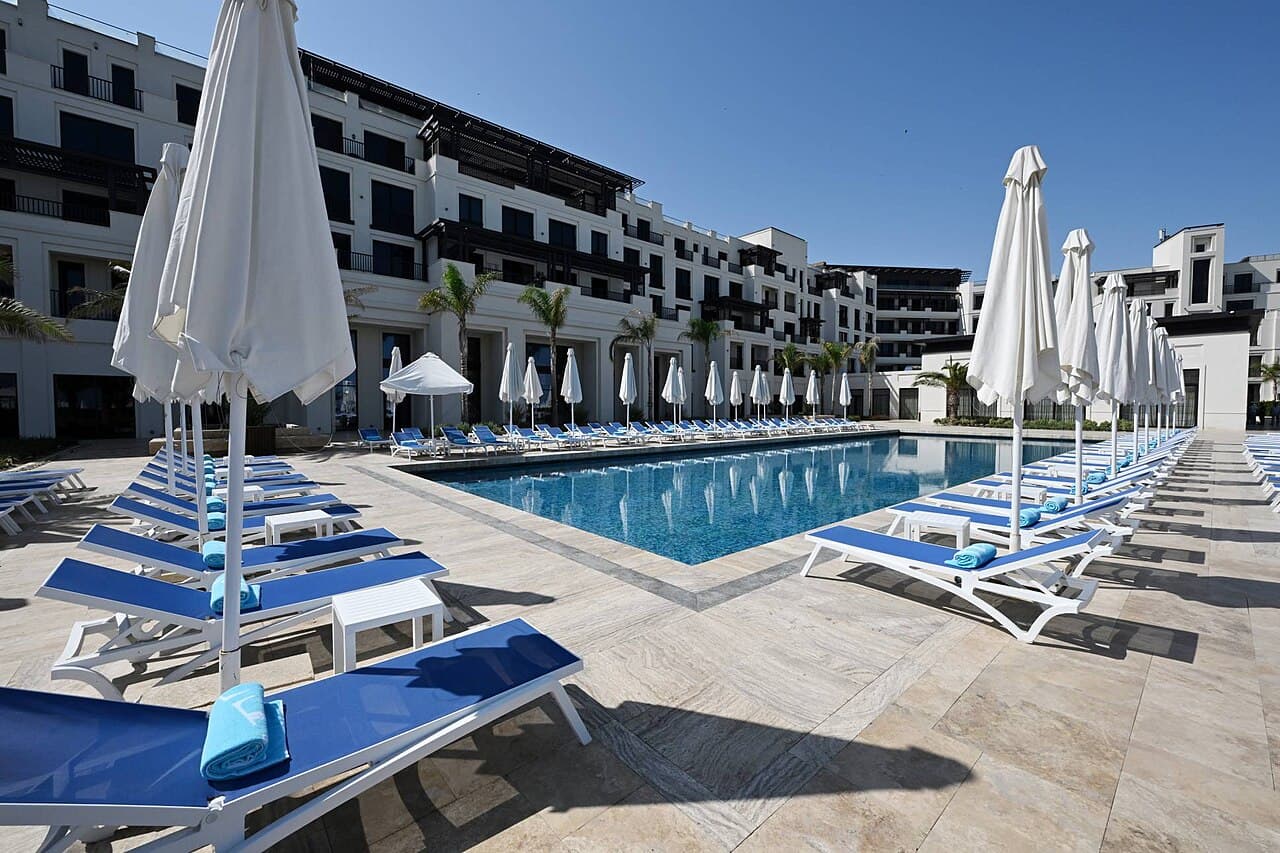
It is attached to a project that is actually delivering. Marina Village is more than 950 apartments across seven blocks, with handover described as running from the fourth quarter of 2025 through 2026. These are contracts that completed, not reservations on a launch weekend.
It is specific enough to be wrong. "Strong international interest" cannot be falsified. "37% against 15-17%" can.
What It Establishes
Non-residents do buy on this coast, at roughly double the city rate. That answers the question sitting under every enquiry about Sea Breeze: whether the foreign-buyer story is real or a sales narrative. On this project, by its developer's own count, it is real.
The coast and the city attract different buyers. A gap of 20 percentage points between a resort project and city projects by the same company is not noise. It says the resort product is doing something the city product is not - selling a lifestyle and a second home rather than an apartment in a capital.
Resort demand is less dependent on local purchasing power. This matters because local affordability is the structural weakness of the Baku market: a 65 sqm apartment at 177,775 AZN against an average wage of 1,174 AZN is not a story about local buyers. A project drawing 37% of its buyers from abroad is less exposed to that constraint than one drawing 15%.
The Four Things It Does Not Establish
It is not resort-wide. This is one project by one developer. Marina Village is a Tevakol Family and Sabah Investment Group project, not an Agalarov Development one. Applying its buyer mix to Sky Park or Caspian Dream Liner is an assumption, not a datum.
"Foreign" is undefined. The figure almost certainly includes buyers from Russia, Turkey, Israel, the Gulf and Central Asia in some unstated mix. A 37% foreign share composed mainly of one nationality carries concentration risk that the headline number hides. Our guides for Russian, Israeli, Gulf and Turkish buyers cover how differently these groups actually behave.
It says nothing about yield. Foreign buyers prove demand for purchase, not performance of the asset. A buyer who holds an empty apartment for four years contributes to this statistic and to nothing else.
It is self-reported and unaudited. No land registry breakdown corroborates it. It comes from a company with an interest in a high number, and the honest status is credible-but-unverified.
How to Use It
As a floor for the question "does anyone else buy here?" The answer is yes, documented, with a comparison group.
As a comparison benchmark. Ask any Sea Breeze seller what share of buyers in their specific project are non-resident, and how they count it. One developer has published the figure; a seller who refuses to is telling you something, and a seller who claims 80% without a method is telling you more.
As a prompt for the follow-up question that matters more. Buyer nationality mix is interesting. Occupancy and letting performance are decisive. Our rental yield calculator and the project inventory let you test a specific building rather than the resort's reputation.
Why the City Comparison Is the Real Finding
The headline is 37%. The finding is the gap.
A single foreign-buyer percentage tells you almost nothing without knowing what normal looks like in that market. Fifteen to seventeen percent in central Baku is the baseline this developer measures against, and it is a plausible one for a capital city with a modest expatriate population, limited international marketing and a local buyer base that dominates transaction volume.
Against that baseline, a resort project pulling 37% is doing something structurally different. It is not selling into the same demand pool at a higher price; it is selling into a different pool altogether. Beach frontage, a managed community, a hotel-style service layer and the implicit promise of a lettable holiday asset reach buyers who were never going to purchase a flat in Nasimi.
For an investor the consequence is uncomfortable but important: the thing that makes the resort product sell is also what makes it cyclical. Local demand for city housing is driven by wages, mortgages and household formation, which move slowly. Foreign demand for second homes is driven by sentiment, currency, flight connections and the news cycle, which move fast in both directions. A project at 37% foreign is more liquid in a good year and thinner in a bad one than a project at 15%.
What It Implies About Price
Foreign buyers are usually less price-sensitive and more specification-sensitive than local buyers, because they are comparing against prices at home rather than against local wages. That has two visible effects on a market, and both are worth checking before you accept a quoted price as market value.
The first is that the price of resort stock decouples from local affordability. A 65 sqm apartment can sell at a multiple of local annual income that looks absurd on a domestic affordability measure and entirely normal to a buyer from Tel Aviv, Dubai or Moscow. That is not a bubble by itself, but it does mean local income data is the wrong yardstick for this product - our affordability index explains why the two measures diverge.
The second is that the exit depends on the same pool continuing to exist. If you buy at a foreign-driven price, your resale market is largely other foreign buyers, because local buyers at prevailing wages cannot clear that price. A 37% foreign share is therefore a demand datum and a liquidity warning in the same sentence: the pool is real, and your exit depends on it being there in 2032.
The Arithmetic Worth Running
If 37% of roughly 950 apartments went to non-residents, that implies something on the order of 350 foreign-owned units in one project. That is a meaningful community of foreign owners in a single development, and it has two consequences a buyer can act on.
First, it means a resale market exists that is not purely local - when you sell, your likely buyer may also be a non-resident, which matters because that pool does not depend on Azerbaijani mortgage conditions. Second, it means around a third of your neighbours in that building may be absent for most of the year, which affects service charge collection, how lively the block feels in February, and how many units compete with yours when you try to let.
Neither consequence appears in any brochure. Both follow directly from the one number this page is about.
How to Ask a Seller for the Same Number
The value of this disclosure is that it gives you a question with a known good answer. Put it to any Sea Breeze seller in these terms.
"In this specific project, what share of buyers to date are non-residents of Azerbaijan? How do you define non-resident - passport, tax residence, or address on the contract? Is that share measured on signed contracts or on reservations? And how does it compare with your other projects?"
A developer that tracks its own buyer base can answer all four parts in a sentence. A sales agent who cannot will usually substitute a bigger number with no method attached, and the substitution itself is the information you were looking for. If the answer is a reservation figure rather than a contract figure, discount it: reservations on resort stock lapse at rates that nobody publishes.
The Takeaway
Thirty-seven percent is the most useful single statistic published about demand at Sea Breeze, and it is useful precisely because it is narrow: one project, one developer, one period, with a stated comparison. Treat it as proof that international demand on this coast is real and roughly double city levels, and as no evidence at all about the project you are actually being sold - until the seller of that project produces the same number with the same method.
 Real estate investing
Oil Price vs Price per m² in Baku: Is There a Correlation?
What happened to Baku's property market when oil collapsed in 2015, why the transmitting link is the currency rather than the oil, and how long recovery took
Read more → Real estate investing
How Oil Money Becomes Infrastructure - and Infrastructure Becomes Value
The chain linking a barrel of oil to the price of a flat runs through infrastructure. How it works, how long it takes, and the three points where it breaks
Read more → Real estate investing
Property Management Companies in Baku: A Full Guide
How to choose a property management company in Baku — fee models, what the service includes, how to check reliability and what must appear in the contract
Read more →