Nasimi: Baku's Railway Station and Ministries District
Published on 2026-10-11 · 4 min read
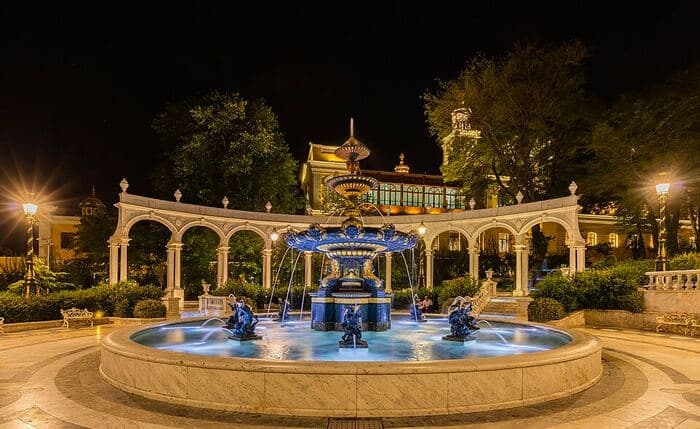
Nasimi is working Baku. Formed on 13 June 1969 and named after the Sufi poet Imadaddin Nasimi, it covers only around 10 km² - among the smallest districts in the city - and had 222,618 registered residents as of 2023. That division gives a density of roughly 23,000 people per km², the highest in Baku. It is the number that explains everything else.
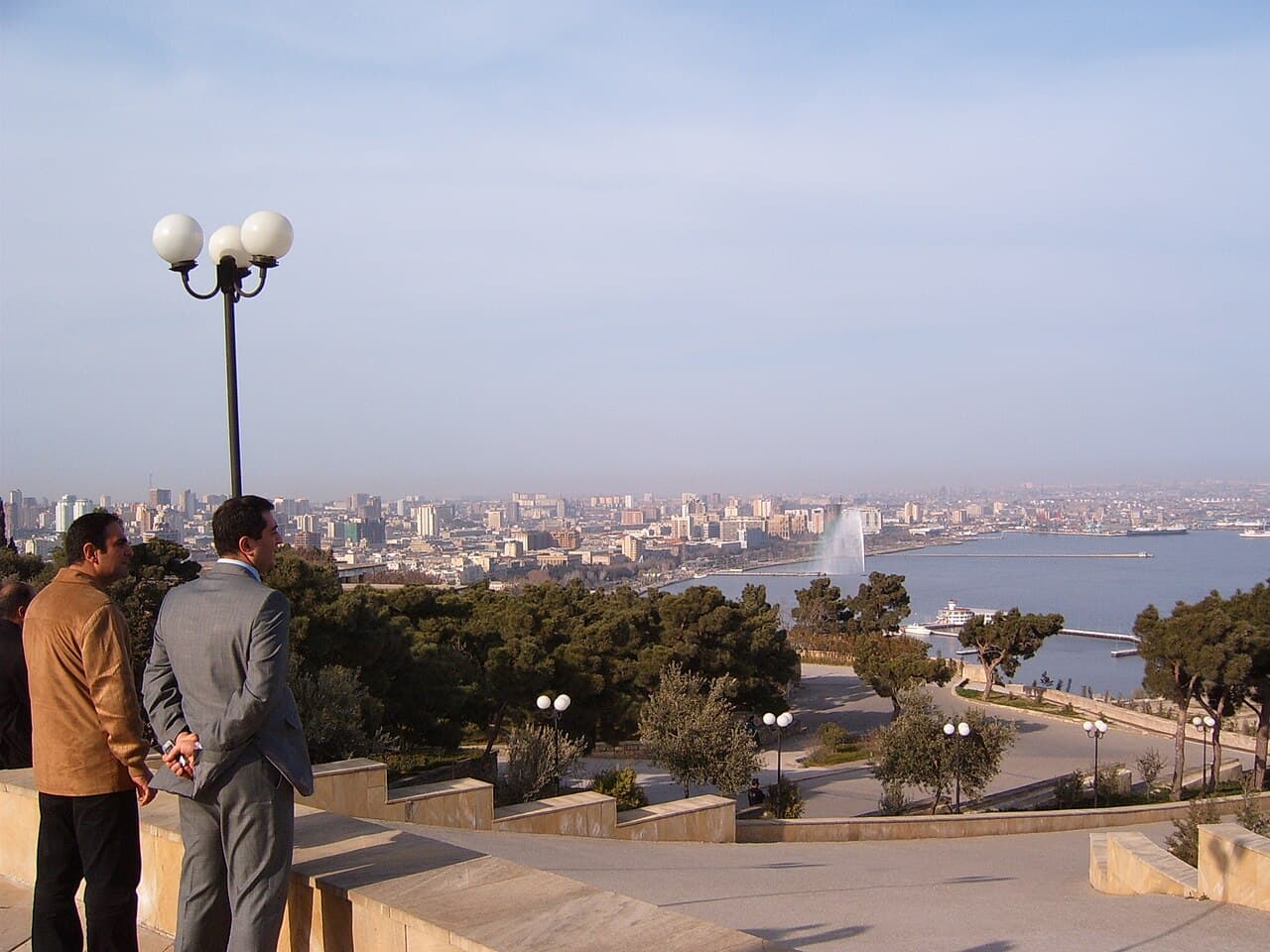
Location
Nasimi sits north of the city centre, bordering Sabail to the south, Yasamal to the west, Binagadi to the north-west and Narimanov to the east. It is not a coastal district and has no sea views, but it borders the business centre on every side where the business centre touches it.
Character: a working city, not a tourist one
Nasimi is neither a quiet residential district nor a visitor district. It is Azerbaijan's administrative plumbing. The Ministry of Finance, the Ministry of Healthcare, various state committees and the State Railway Department all sit inside its boundaries. That concentration of offices produces rental demand that behaves unlike anywhere else in Baku: steady, non-seasonal, and driven by local employees rather than tourists or diplomats.
Transport: the junction, not just the metro
Two metro stations serve the district - 28 May and Jafar Jabbarli - but the more important fact is that Baku Railway Station, built in 1846, is in Nasimi, along with the suburban rail operation. 28 May is also the main interchange of the metro network.
What that means for an investor: Nasimi is not "close to transport", it is the junction. That generates short- and medium-term rental demand with no equivalent in purely residential neighbourhoods, and also the noise, congestion and parking problems that shape whether families want to live here.
Housing stock
Because the district is small and dense, the housing stock in Nasimi tends to be older and fully exploited. Soviet-era five- to nine-storey blocks form the base, with a handful of newer towers squeezed into the remaining plots. Vacant land barely exists, so new development in Nasimi is usually replacement rather than expansion - which constrains supply structurally and supports prices.
One practical point: a large share of the stock here sits above commercial space. A second-floor flat above a shopfront in Nasimi is cheaper than an identical flat higher up, and that spread is wider here than in quieter districts.
The former Jewish quarter
Nasimi is the district where Baku's Jewish community historically lived, and a kosher restaurant - 7/40 - still operates there under the supervision of Chabad Baku. For buyers arriving from Israel this is a practical consideration: where to rent or buy is shaped by distance to community infrastructure, and in Nasimi that distance is shortest.
The property market
Nasimi sits in Baku's upper-middle price band, below the Sabail seafront and above the eastern and northern districts. The structurally limited supply - there is no free land - is what holds prices up, not the quality of the stock.
The macro context matters particularly here. According to the State Statistical Committee of Azerbaijan, in the second quarter of 2026 the primary market index rose 12.38% year on year, against 8.58% for the secondary market. In Nasimi, where almost all supply is secondary market, that gap means the district is appreciating at the slower of the two rates - precisely because there is nothing left to build on.
Rental Yield (ROI) Calculator
Calculate gross and net rental yield on an investment property and compare it to Baku's typical yield range.
Results
- Gross annual yield
- 7.20%
- Net annual yield (after expenses)
- 5.76%
Two numbers, both correct. At market level — a median rent of 11 AZN per m² per month against a median price of 2,735 AZN per m² (m2map, August 2026) — the gross yield is 4.83%. The Global Property Guide survey, which measures by district and size, gives a range of 3.57% to 12.96% averaging 6.02%. They measure different things. Cheaper areas (Ahmadli, Khatai) sit toward the top of the range with lower liquidity; prestige areas (White City, Badamdar) toward the bottom with more appreciation potential. Anyone modelling 7% needs to explain why their property will sit above the median.
Gross yield working: annual rent ÷ purchase price: 10,800 / 150,000
On yield, Nasimi offers what investors describe as the good kind of boring: moderate gross yields, short void periods, a large and stable tenant pool and reasonable resale liquidity. We go into the logic in the yield by neighbourhood guide, and into running costs in the property taxes and ownership costs guide.
Who it suits
Nasimi suits the investor who wants predictable cash flow rather than dramatic appreciation, and anyone who values proximity to the transport junction and the business district. It suits you less if you are a family looking for quiet and parking, or if you want a new-build property - because in Nasimi there is almost none.
In summary
Nasimi is the most densely populated district in Baku, and that is both its advantage and its drawback. There is no land, no quiet and no view - but there is the railway station, two metro stations, the ministries and rental demand that does not depend on the season. If you are weighing a purchase, set it against other districts with the neighbourhood comparison tool.
 Neighborhoods & areas
Surakhani District: Fire Temple Heritage and Oil History East of Baku
A guide to Surakhani, the eastern Absheron district home to the Ateshgah Fire Temple and a landscape shaped by more than a century of oil extraction
Read more → Neighborhoods & areas
Turkan: Baku's Rising Beach Resort Town on the Absheron Peninsula
A closer look at Turkan - the Absheron coastal settlement transforming from a quiet recreation zone into one of Baku's most active beach resort and new-build markets
Read more →Neighborhoods & areasYasamal: Baku's Dense Central District
A guide to Yasamal in Baku - four metro stations, the Botanical Garden, Yeni Yasamal and what property costs in the city's most populous district
Read more →