22 Minutes to Baku? Testing the Sea Breeze Commute
Published on 2026-10-23 · 7 min read
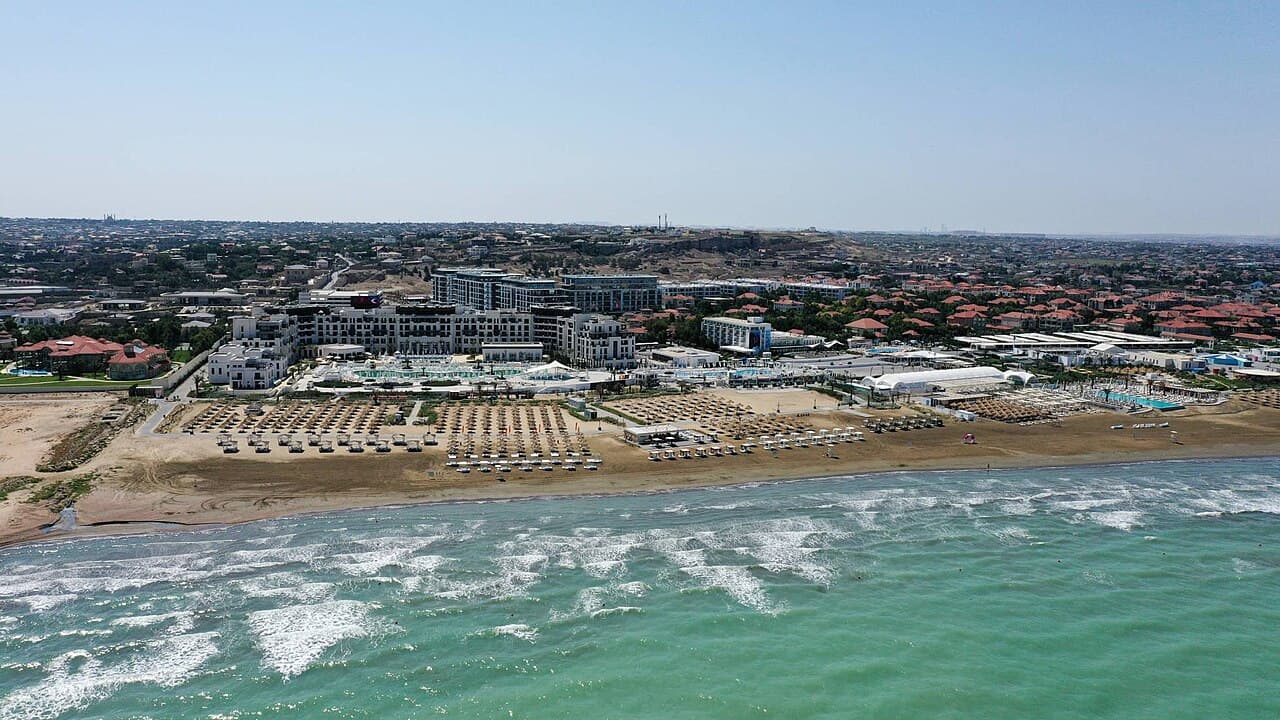
Every piece of Sea Breeze marketing carries the same two numbers: about 20 to 22 minutes to central Baku, about 30 minutes to Heydar Aliyev International Airport. They appear so consistently that they have stopped being claims and started being facts.
They are claims. They are probably honest claims, and they are also the single most consequential figures in the entire sales pitch - because they determine whether this is a commutable address or a weekend one, and that distinction changes who can live here, what the apartment is worth to a tenant, and whether a family can realistically put children in a Baku school.
What the Numbers Assume
A drive time is a function of distance, route and traffic, and a marketing drive time is almost always measured under the best of the three.
It assumes a car. Not a bus, not a shared taxi, not a combination. If you do not drive, the advertised figure is not your journey time.
It assumes a direction and a destination. "Central Baku" is a large target. The seafront boulevard, Fountains Square, the government quarter and the business corridor along Neftchilar Avenue are not the same arrival point, and the last three kilometres into a dense city centre routinely take longer than the twenty before them.
It assumes a time of day. Any resort-to-capital figure is quoted off-peak. The relevant number for a commuter is the 8am inbound and the 6pm outbound, in the rain, in February.
It assumes no stop. School drop-off, a supermarket, fuel - each adds minutes that the brochure does not.
None of this makes the figure dishonest. It makes it a floor rather than an average, and floors are what brochures quote.
The Arithmetic You Can Do Without Leaving Home
Take the claim at face value and test it for internal consistency. A 22-minute drive to a city centre implies a route of roughly 30 kilometres at an average of around 80 km/h, sustained the whole way, including the urban approach.
That is achievable on a good dual carriageway with light traffic. It is not achievable at 8am into any capital city in the world. A realistic peak-hour figure for a journey whose off-peak time is 22 minutes is commonly 1.5 to 2 times longer - which puts the honest commuting range at roughly 35 to 45 minutes each way, or 70 to 90 minutes a day.
That is a normal suburban commute in most large cities. It is also a very different proposition from "22 minutes", and it is the number a buyer should plan around.
The Transport Options, and What to Verify
This is where buyers are most often given confident answers that nobody has checked. The honest position is that the following need verifying on the ground, not from a brochure, and the questions are specific enough to get real answers.
Private car. The default, and the one the advertised times describe. Verify: is parking allocated to your unit, is it included in the price, and what does it cost annually if not.
Taxi and ride-hailing. Ask what a one-way trip to the city centre actually costs at 8am, and whether drivers reliably accept the trip in the off season. A resort that is quiet in February can be a place where cars do not wait.
Developer or community shuttle. Several large resorts run one. Ask whether it exists, its timetable, whether it runs year-round or seasonally, whether it is free, and crucially whether it is contractually guaranteed or a service that can be withdrawn.
Public transport. Verify the nearest bus route and the nearest metro station, the walking or driving distance to each, and the total door-to-door time including transfers. A 22-minute drive can be a 75-minute public transport journey, and for a tenant without a car that is the number that sets the rent.
Our guide on getting to Sea Breeze from Baku covers the routes in more detail, and the Nardaran neighbourhood guide covers the surrounding area the road passes through.
Why This Decides the Investment Case
The commute is not a lifestyle detail. It is the variable that determines which tenant pool your apartment sits in.
If it is a genuine 35-minute commute, the unit competes for year-round tenants - professionals working in Baku who want more space and a beach. That is a deep, stable, 12-month rental market, and it transforms the yield calculation because it removes the seasonality problem that defines Caspian resort property.
If it is effectively an hour, the unit is a weekend and summer asset. The tenant pool is holiday renters, the season is three or four months long, and the annual income is a fraction of the headline monthly rent multiplied by twelve. Our rental yield calculator shows how brutally occupancy assumptions change the outcome.
Most Sea Breeze sales conversations imply the first case while the pricing of nearby holiday lets implies the second. The commute test is how you find out which one you are buying.
The Airport Number Matters Separately
The 30-minute airport figure is arguably more valuable than the city one, and it is less disputed because airport roads are built for speed and the traffic is spread across the day.
For an owner who flies in for long weekends, or who lets to international visitors, a genuinely short airport transfer is a real asset - it makes a two-night stay viable in a way that a 90-minute transfer does not. Verify it the same way: ask what a taxi costs, at what hour, and how reliably it can be booked for a 5am departure in winter.
How to Test It in One Day
If you visit, the entire question can be settled in a single day, and this is the most valuable thing you can do on a viewing trip.
Drive or ride from the resort gate to the specific place you would actually go - your office, your child's school, the city centre - leaving at 8am. Note the time. Do the return at 6pm. Then do the same journey by taxi and by public transport, and record the cost and the door-to-door duration of each. Four data points, one day, and they are worth more than every brochure claim combined.
Ask three residents what they actually do, and in particular whether anyone commutes daily. If the answer is that almost nobody does, that is the finding - and no quoted drive time overrides it.
The Winter Version of the Same Journey
Every figure above is a summer figure, because that is when people visit and when brochures are photographed. The same journey in January is a different journey, and it is the one that decides whether a family can live here year-round.
Weather. A Caspian winter brings wind, rain and occasional ice to an exposed coastal road. Journeys lengthen, and the variance matters more than the average - a commute that is 35 minutes most days and 70 minutes unpredictably is harder to live with than a consistent 50.
Daylight. Leaving in the dark and returning in the dark on a route through sparsely built coastline is a different experience from the same drive in July, particularly for a driver new to the roads.
Service frequency. This is the one to ask about specifically. Resort shuttles, taxi availability and even bus frequency are often seasonal. A service that runs every 30 minutes in August and twice a day in February is not the same amenity, and nobody volunteers the winter timetable.
The test for this is simple and nobody does it: ask to see the February version of the shuttle schedule, not the current one. If it does not exist, that is your answer about year-round living, and it is more informative than any drive time.
The Honest Verdict
The advertised figures are plausible as off-peak car journeys and should not be treated as commuting times. A realistic daily commute is likely in the 35 to 45 minute range each way, which is entirely normal for a suburban address and entirely different from what the marketing implies.
That is not a reason to avoid Sea Breeze. It is a reason to buy it as what it is: a coastal address within reach of a capital, which is a good thing to be, rather than a city-centre substitute, which it is not.
 Living & visiting guide
Winter or Summer? Choosing a Seasonal Strategy for a Tourism Rental in Azerbaijan
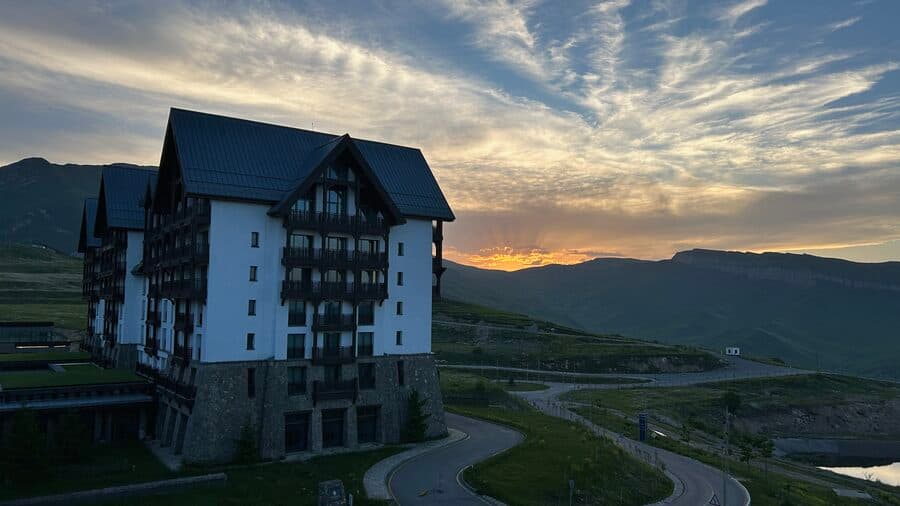
Comparing the economics of a Caspian coast summer rental, a Gabala/Shahdag winter rental, and a year-round city-center alternative
Read more →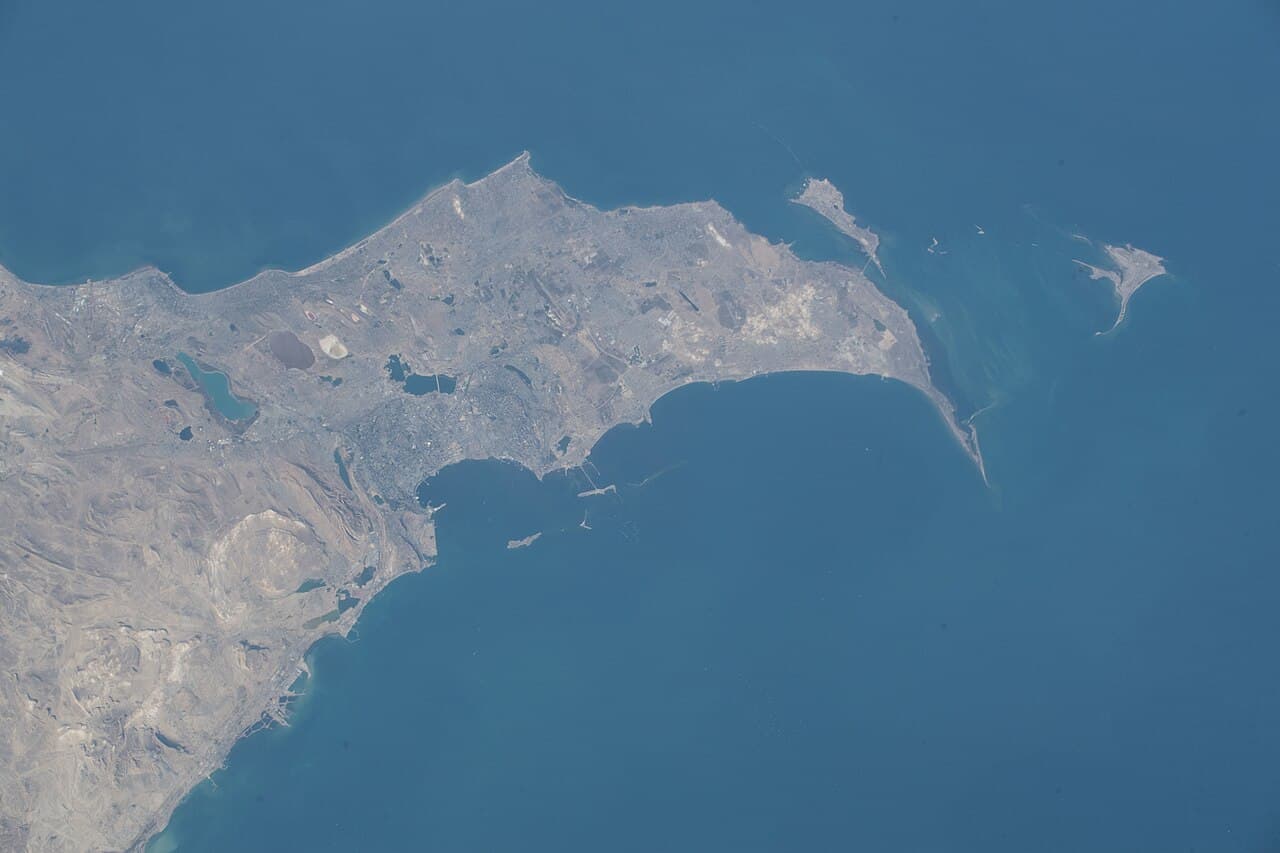 Living & visiting guide
The Absheron Peninsula Water Quality Map
What the Ministry of Ecology's monitoring found suitable and what it did not, why the infrastructure list and the test results disagree, and how the Khazri wind changes things
Read more → Living & visiting guide
From Heydar Aliyev Airport to Property Viewings: A Practical Logistics Guide
Airport transfer options, drive times to Baku's districts and nearby regions, and how to plan an efficient multi-property viewing trip
Read more →