Baku vs Other Oil Capitals: What Can Be Learned
Published on 2026-09-24 · 5 min read
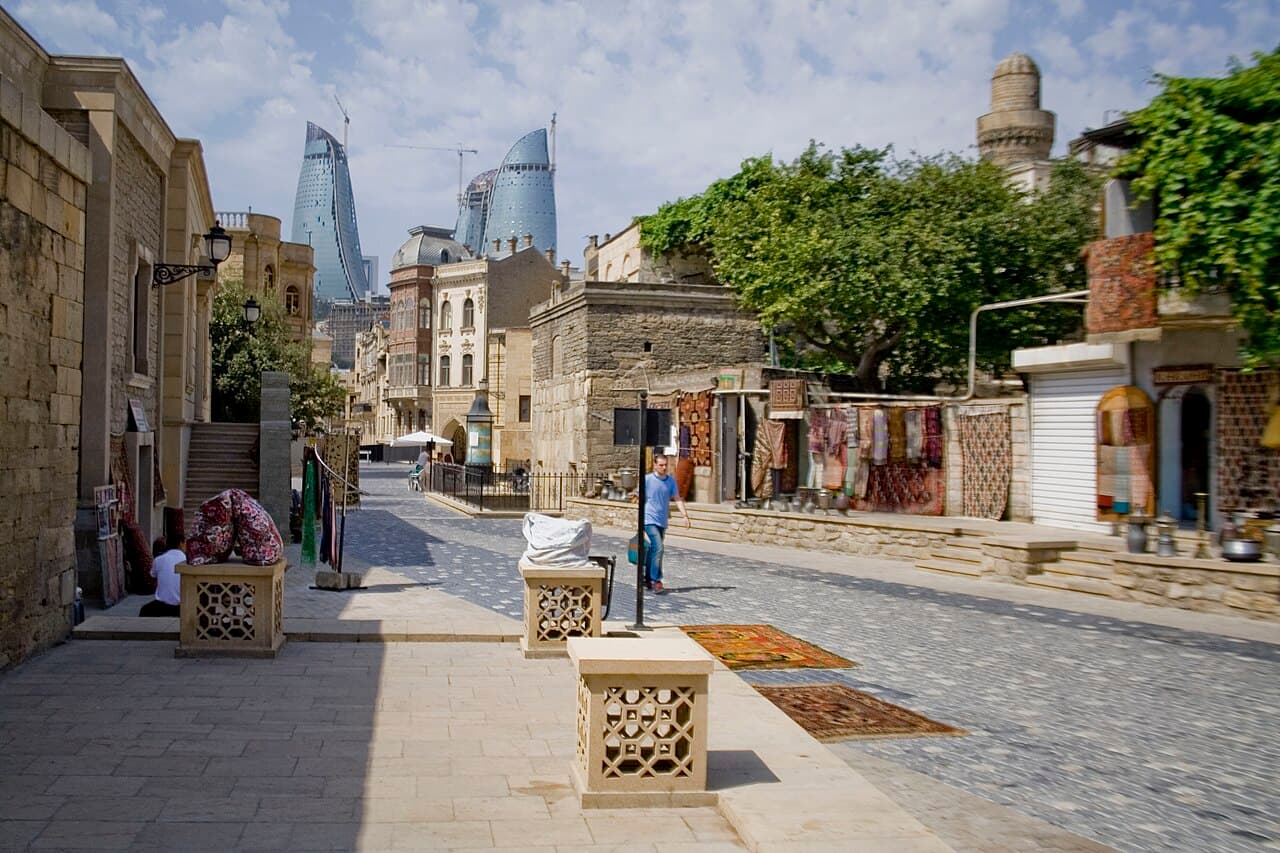
Baku is not the first city trying to turn oil revenue into an economy that outlives it. At least three cities have travelled that road before it, with very different results - and the differences between them teach more than any forecast.
Dubai: the case everyone cites, not always correctly
Dubai is the first comparison any estate agent reaches for, and it is worth treating carefully.
What is true in it: Dubai did turn oil revenue into an economy that is mostly not oil - tourism, logistics, finance and property. That proved the model is possible.
And what misleads: Dubai built a model resting on mass immigration of foreign workers and residents, on a tax-free zone, and on positioning as a global hub. Azerbaijan does none of those three to the same degree.
We covered the direct comparison in Baku versus Dubai. In short: Dubai's market is driven by foreign demand to a very high degree, and Baku's is driven mainly by local demand. These are two entirely different price mechanisms, and anyone expecting Baku to follow a Dubai pattern is expecting the wrong thing.
Astana: the closer comparison
Astana - Kazakhstan's capital - is far closer to Baku, and almost nobody compares to it.
The similarity is real: a post-Soviet state, an economy resting on hydrocarbons, a capital that underwent accelerated state-funded construction, a sovereign fund, and a Russian-speaking population.
What Astana teaches: that state-funded construction can produce an impressive city and still a thin housing market. A city built top-down produces supply before it produces demand, and the result can be a large stock with low liquidity.
That is the most relevant risk to Baku of the three, and it connects directly to the supply question raised in the housing supply pipeline. We covered the comparison in Baku versus Almaty and Tashkent.
Muscat: the quiet case
Oman barely features in investment conversations, which is precisely why it is interesting.
Muscat did not try to be Dubai. It chose a slow pace, low-rise building, and gradual diversification resting on quality tourism and logistics rather than megaprojects.
What that teaches: that there is more than one route, and that a slow pace is not a failure. A market that never inflated does not deflate as sharply either.
What the four actually share
Beyond the differences, three patterns recur in all four cities:
Public spending is the central demand engine. In all of them, the state is an actor of a size that does not exist in Western markets. We saw this in the 2026 budget: the Azerbaijani budget is about a third of the economy.
Supply responds slowly and then excessively. In state-funded building cycles, supply tends to arrive in waves and to flood. That produces sharper cyclicality than in a market where private developers respond to demand.
And liquidity is the weakness, not price. In all four cities, what breaks first in a downturn is the ability to sell. We saw that too in what happened in Baku in 2015.
The table
| Dubai | Astana | Muscat | Baku | |
|---|---|---|---|---|
| Main demand engine | Foreign, massive | Local and state | Local, moderate | Local |
| Building pace | Very fast | Fast, planned | Slow | Moderate |
| Taxation | Tax-free zone | Standard | Standard | No purchase tax |
| Geopolitical risk | Relatively low | Moderate | Low | Higher |
| Second energy product | Not applicable | Limited | Limited | Gas, growing |
Note that Baku is not the best in any column - and not the worst either. It is simply a different market, and that is the point.
Anyone looking for the Dubai model should buy in Dubai. Anyone looking for a market with a lower entry price, real local demand and higher geopolitical risk is looking at something else entirely - and both choices are legitimate, as long as you know which one you are making.
Where the comparison breaks entirely
Two things are unique to Baku among the three:
First: it borders Iran and Russia. Dubai, Astana and Muscat have no adjacency of that kind. That adds a layer of geopolitical risk which cannot be imported from the comparison. We covered it in Azerbaijan and Iran.
And second: it has a second energy product that is growing. While most oil producers face decline, Azerbaijan is increasing gas exports to Europe - as we saw in gas instead of oil. That is an advantage Astana did not have at the same stage.
The practical conclusion
Do not use Dubai as a pricing model. The mechanism differs, and anyone expecting Dubai returns in a market driven by local demand will be disappointed.
Do use Astana as a warning. "Who will buy from me" matters more than "what did it cost to build", and in a market built top-down that is not a trivial question.
And check liquidity before yield. That is the common denominator across all four cities, and it determines whether the investment behaves as planned when the market weakens.
That calculation can start in the rental yield calculator, remembering that yield on paper and liquidity in practice are two separate questions.
Related articles
 Real estate investing
The TRIPP Corridor: the Trump Route and What It Does to Baku
What the corridor linking Azerbaijan to Nakhchivan through Armenia actually is, why Iran sees it as a threat, where it really stands, and what it means for property
Read more → Real estate investing
The New Transport Map of the South Caucasus After Peace
The Middle Corridor, TRIPP and the gas pipelines - three systems redrawing the region's economic geography. What already exists, what is planned, and what it means for Baku
Read more →Real estate investingHow Oil Money Becomes Infrastructure - and Infrastructure Becomes Value
The chain linking a barrel of oil to the price of a flat runs through infrastructure. How it works, how long it takes, and the three points where it breaks
Read more →