How a Managed Beach Actually Works - and What Can Be Verified
Published on 2026-09-24 · 5 min read
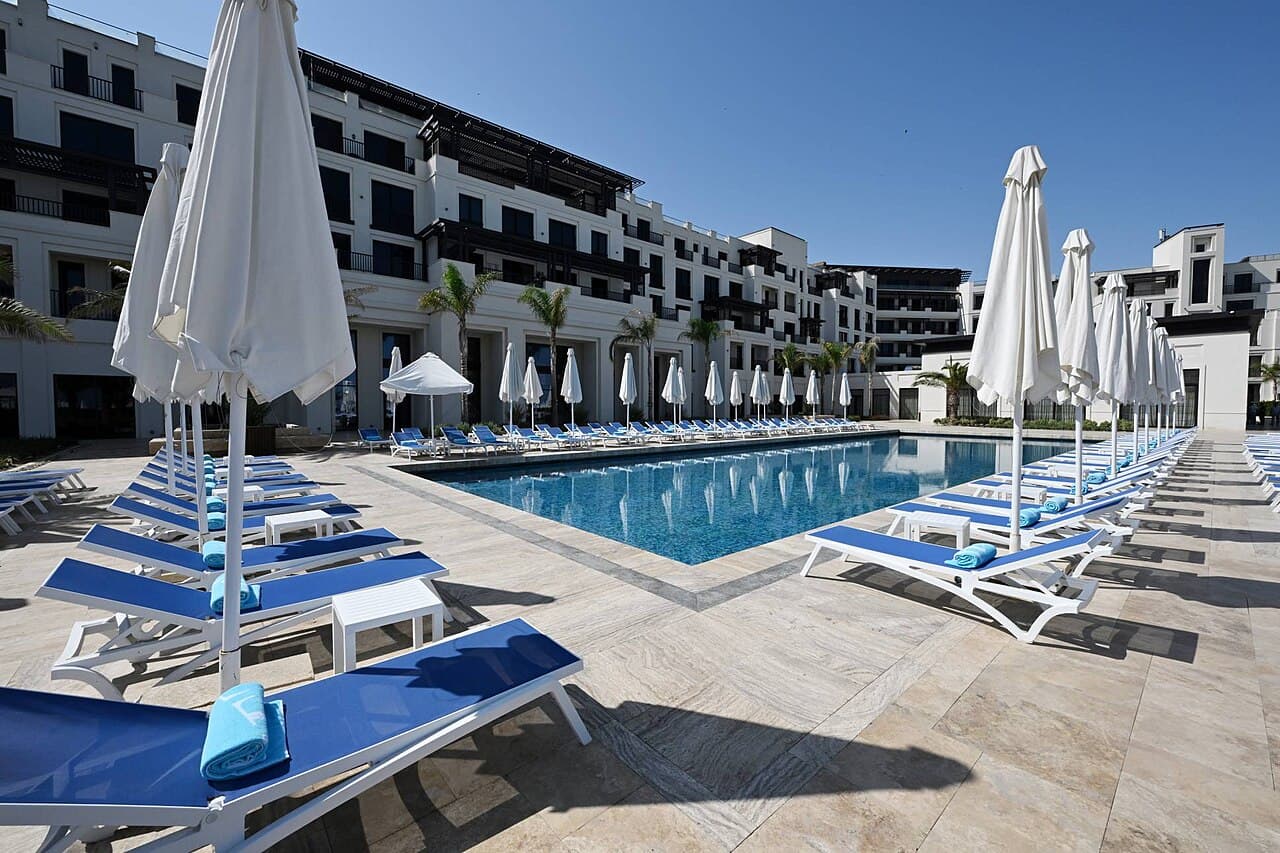
We looked for data on sea water treatment systems in the Sea Breeze area, and did not find any. What we did find was a reference to a filtration system for water supply, which is an entirely different thing.
That distinction is the whole article, and it matters to anyone weighing a coastal property: there are things a beach venue genuinely controls, and things no operator anywhere controls. Sea water is in the second category.
Why you cannot treat the sea
It sounds trivial but is worth saying plainly: the sea is not a pool.
A pool is an enclosed volume that can be filtered, chlorinated and tested. The sea is an open mass that moves, mixes, and is affected by what happens kilometres away. A beach operator can fence a stretch, clean it and maintain it - it cannot treat the water flowing into it.
And as we saw in the water quality map, water quality on Absheron is determined by factors no private operator controls: position on the peninsula, settlement drainage, surface runoff, and wind.
The implication: when any venue presents "clean water" as its advantage, it is in effect presenting its location as the advantage - which is an entirely legitimate argument, just a different one.
What a venue does control
And that is a long and meaningful list.
Physical cleanliness of the beach. Sifted and cleaned sand, waste removal, daily maintenance. That affects the experience considerably, and is entirely within the operator's control.
Safety. Lifeguards, marking, rules for entering the water on rough days. At a public beach this varies; at a venue it is a standard.
Density. A limited number of places means the beach is not swamped. At the White Beach Club, for instance, that is around 250 places.
Infrastructure. Shade, toilets, changing facilities, restaurants, pools. We covered it in the managed versus public beach comparison.
And pools - where control is genuinely complete. Three outdoor pools and two covered ones for children in the Sea Breeze area are water that really is filtered and monitored, unlike the sea.
What exists in the world, and what does not
To close the technical question: there are technologies operators genuinely use, and it is worth knowing what they do.
Sand sifting and mechanical cleaning - screening the sand, removing waste and marine debris. Common, affects the experience, and does nothing to the water.
Floating barriers - booms preventing floating debris or algae from entering a stretch. They help against what floats; they do not help against bacteria.
Enclosed sea pools - a volume of sea water separated from the sea and treated like a pool. These exist, and are the only solution that genuinely produces "treated sea water". They are also expensive, limited in size, and easy to identify visually.
What does not exist is a system treating the open sea off a beach. There is no such thing anywhere, and not for want of trying.
The practical conclusion: if you can see an enclosed sea pool at a venue, that is a claim you can verify with your eyes. If "treated water" is promised without showing what - the right question is where exactly the filtration sits.
The questions to ask
If "clean water" is presented to you as an advantage of a project, these four questions separate a claim from a fact:
Where is the project located on the peninsula? That is the real question. The north-eastern side differs materially from the bay.
What did the Ministry of Ecology's testing show on that stretch? Monitoring data exists, and it is public.
What is in the settlement behind the beach? Drainage, industry, agriculture - all affect the water and none is visible from the shore.
And what exactly does the operator clean - the sand or the water? Those are two different things, and only the first is possible.
What is genuinely true of Sea Breeze
And to be fair: the location really does favour it.
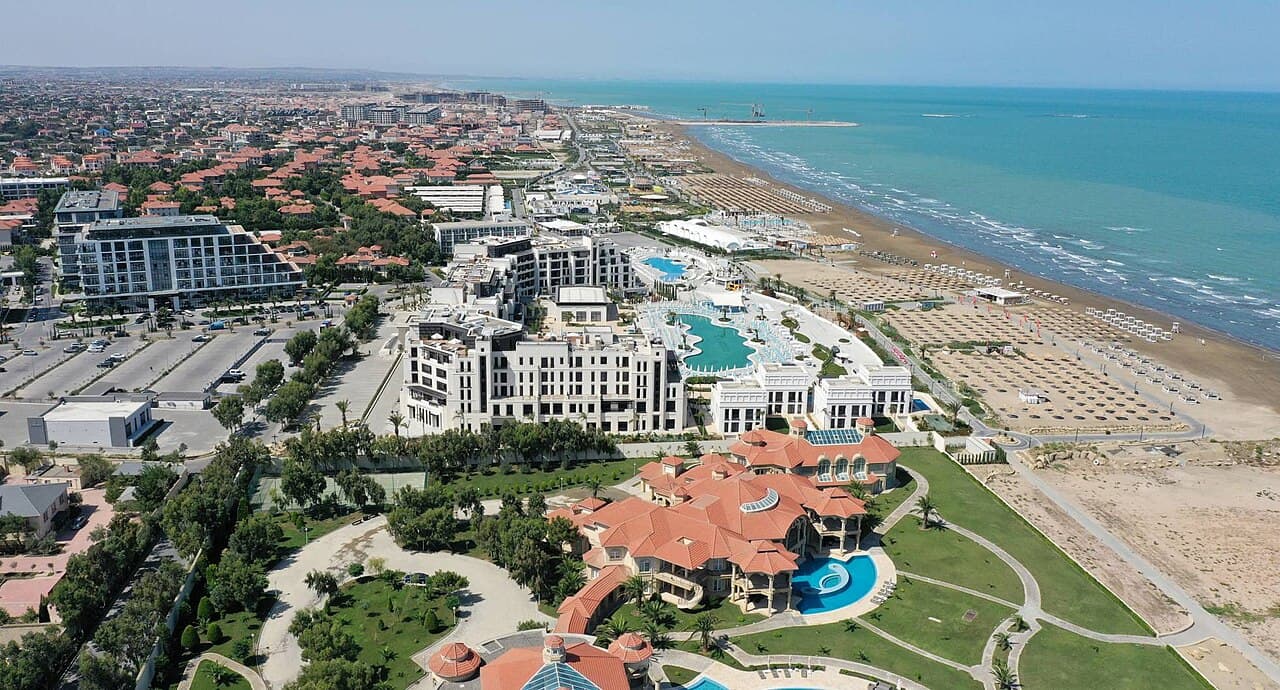
The Sea Breeze area sits at Nardaran, on the northern shore of the peninsula - on the same stretch the Ministry of Ecology lists among areas without sewer outfalls to the sea, and where summer 2025 monitoring found the water suitable for use.
That is a geographic fact rather than a marketing claim, and it is the strongest argument available. It simply is not an argument about technology - it is an argument about a map.
What this means for a buyer
Do not pay a premium for unproven technology. If the justification for a price is a treatment system, ask to see it and to understand exactly what it treats.
Do pay for location, if it is genuinely good. Location is the one factor that does not change over a holding period and, as we wrote in the water quality map, a property cannot be moved.
And check what happens when the sea does not cooperate. A venue with pools, restaurants and events works on a rough day too. A beach alone does not. That is the difference seen in the clean beach premium, and it is what actually stabilises occupancy.
Anyone weighing property categories in the area can start with the property type finder.
A note on sources
We could not verify the existence of sea water treatment systems in the Sea Breeze area, and have therefore claimed neither that they exist nor that they do not. Figures on facilities, capacity and pools rest on public information and vary between seasons - worth verifying directly.
Related articles
 New developments
How Clean Water Became Sea Breeze's Tourism Engine
Over 100,000 visitors in a season, 70-80% of them Russian, while national tourism fell 9.2%. What explains the gap, and what it says about what really drives demand
Read more →New developmentsSea Breeze Beach vs a Public Beach in Baku
On the northern coast the water is the same water. What actually differs between a managed resort beach and a public one, where each wins, and what it means for buyers
Read more → New developments
Who Is Hagag Group? The Israeli Developer Entering Sea Breeze in Baku
A factual look at Hagag Group, the publicly-traded Israeli developer that signed a memorandum of understanding for a project within Sea Breeze in Azerbaijan
Read more →