Baku Property Price Forecast 2027-2030
Published on 2026-09-08 · 4 min read
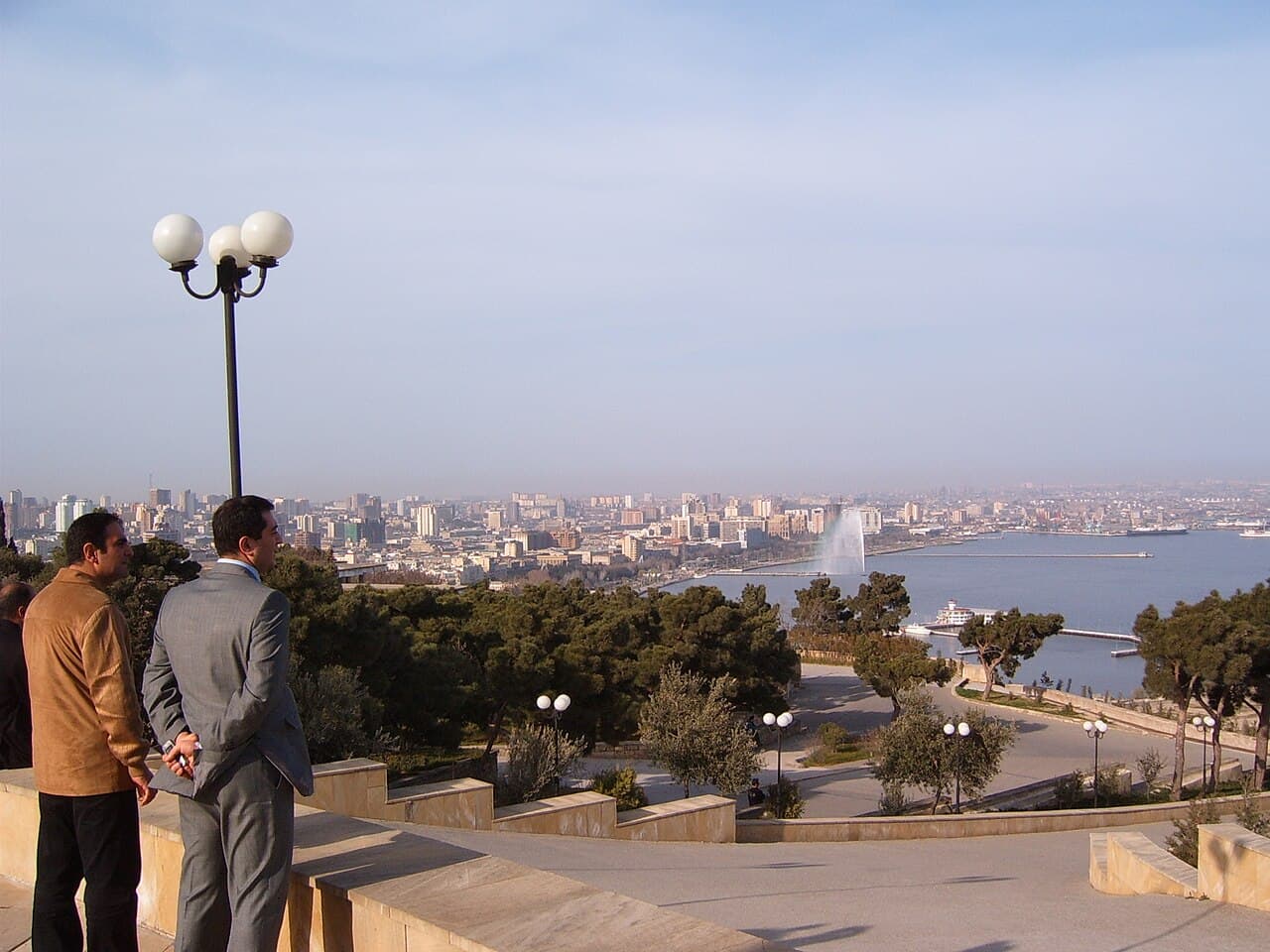
Every investor wants to know what will happen to prices. The honest answer is that nobody knows. What can be done is to identify the forces acting on the market, assess their direction, and be clear about what could go wrong. This article does exactly that — and does not attempt to sell a certainty that does not exist.
The Starting Point
The market enters the coming period after a year of significant increase: apartment prices in Baku rose by around 14% over the past twelve months, with the primary market leading at around 15.7%.
Broader market forecasts point to a moderate annual growth rate of the order of seven percent in the Azerbaijani property market over the coming period. The gap between the actual rise of the past year and the long-term forecast rate is itself an important data point: it implies the recent sharp increase is regarded as an outlier rather than a baseline rate.
The Supportive Factors
Economic diversification — the non-oil sector accounts for roughly three quarters of GDP and more than half of budget revenues, with expected real growth of around three percent. A more diversified economy supports the stability of household incomes. We expanded on this in economic diversification and the non-oil sector.
Demography and urbanisation — a relatively young population and continued urbanisation create structural housing demand. This is the steadiest supportive factor. We expanded on this in a young and growing population as a demand engine.
Expansion of housing finance — local mortgage programmes increase household purchasing power. We expanded on this in Azerbaijan's mortgage programmes.
Infrastructure investment — continued development of transport, public realm and urban projects supports property values in the areas that benefit. We expanded on this in Baku's urban master plan.
Tourism and events — a varied events calendar that spreads demand across seasons. We expanded on this in the Baku events calendar 2027.
The Restraining Factors
Moderate GDP growth — growth forecasts for Azerbaijan in the coming years run at only around two to three percent, depending on the forecasting body. That is a moderate pace that does not support double-digit price rises over time.
Supply risk — many new projects in the pipeline could create local oversupply in certain areas, particularly in coastal developments. We expanded on this in the new supply pipeline in Baku.
Affordability — when prices rise faster than incomes, domestic demand weakens. That is a natural brake on prolonged increases. We expanded on this in the affordability index: local income versus housing prices in Baku.
Energy dependence — despite diversification, export and budget revenues still rest substantially on oil and gas. A sharp fall in energy prices would affect the economy and the exchange rate.
Geopolitical risk — the regional environment is complex, and a geopolitical shock is the hardest risk to price in advance.
Three Scenarios
Rather than a single number, it is more useful to think in scenarios.
Base scenario — moderate economic growth continues, the currency is stable, domestic demand grows gradually. Prices rise at a single-digit rate, substantially below the 14% of the past year. This is the scenario consistent with broader market forecasts.
Positive scenario — acceleration in economic diversification, increased foreign investment flows, tourism expansion. A higher rate of price growth, chiefly in new stock and central areas.
Negative scenario — a sharp fall in energy prices or a regional shock, pressure on the currency, a slowdown in demand. Prices in manat stall or fall, and in dollar terms fall considerably further. This is the scenario that already occurred in 2015 and should not be treated as theoretical. We expanded on this in Baku property price history.
How an Investor Should Use a Forecast
The practical recommendation is simple: do not build a yield model that relies on capital appreciation. Calculate viability on the basis of running rental yield alone, and treat appreciation as a possible bonus rather than a component of the plan.
An investor whose deal only makes sense if the price rises is in a very high-risk position. An investor whose deal makes sense even without appreciation is in a far stronger one.
Important Caveats
Every forecast is an estimate based on partial information. Market data in Baku is limited in transparency, and there is no public transaction register for verification. The forecasts quoted here belong to external bodies and are themselves updated and revised.
Above all: this article is not investment advice. Every decision requires independent due diligence, local professional support and tax advice in your country of residence.
Summary
The picture for 2027 to 2030 points to a market supported by genuine structural factors — demography, urbanisation, economic diversification and infrastructure — but with a moderate rate of economic growth and real supply and currency risks. The reasonable pace is single-digit, not a repeat of the past year's 14%. The right approach is to build the investment on running yield rather than on an expectation of appreciation.
Related Articles
 Real estate investing
The Israel-Azerbaijan-US Triangle in 2026
An AI memorandum, an American strategic charter and talks on a trilateral format. What is actually new here, what was already in place, and what it means for buyers
Read more → Real estate investing
How Dependent Is Azerbaijan's Economy on Oil, Really?
The non-oil sector reaches 75.8% of GDP in 2026, but that share is rising for two different reasons. The official figures, the IMF's view, and what it means for buyers
Read more →Real estate investingThe Armenia-Azerbaijan Peace Deal: Where It Stands
The agreement was initialed in August 2025 but remains unsigned. What was agreed, what is blocking signature, what the Armenian election changed, and what it means for owners
Read more →