Baku's Major Event Legacy and Its Property Impact
Published on 2026-09-08 · 4 min read
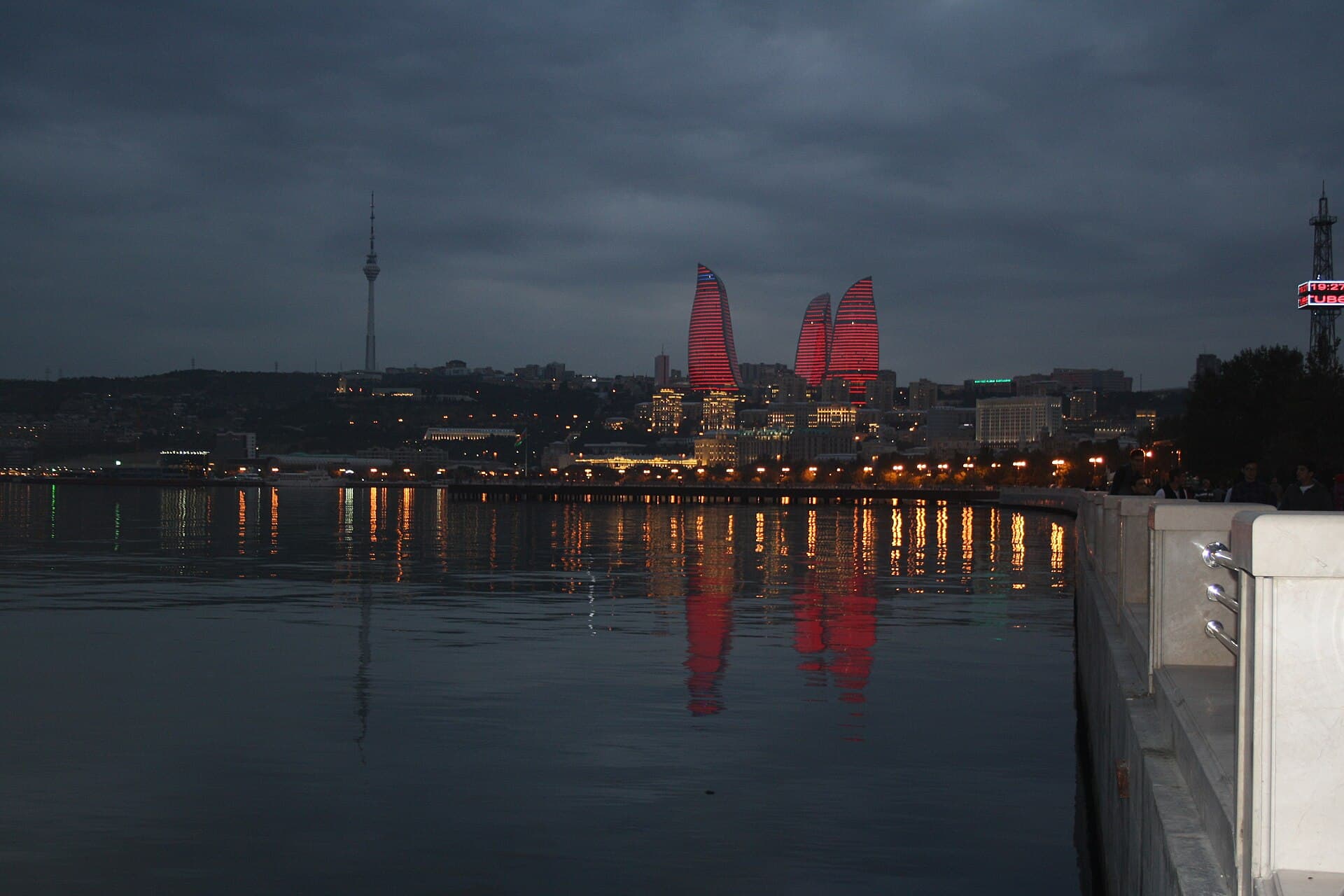
Today's Baku looks very different from the Baku of the early 2000s, and that is no accident. A series of major international events the city hosted — the Eurovision Song Contest, the European Games, international sporting championships and Formula 1 — served as a catalyst for deep urban change. For a property investor, this history is not trivia: it explains how the existing stock came about and where the city is likely to develop next.
The Model: An Event as a Catalyst for Urban Development
The pattern is familiar from many cities worldwide. A city wins the right to host a major international event, and with it acquires an immovable deadline. That deadline forces the delivery of projects that would otherwise drag on for years: roads, public transport, hotels, public realm and utilities.
Baku has applied this model consistently for over a decade. The result is a city that has undergone infrastructure upgrading far faster than would have occurred at a natural pace.
The Eurovision Song Contest and Its Effect
Hosting Eurovision was a turning point in Baku's international positioning. It required building a large events arena on the seafront, expanding the city's accommodation capacity, and substantially upgrading the public realm along the seafront boulevard.
Beyond the physical infrastructure, the significant effect was exposure: broadcast to an audience of hundreds of millions across Europe, for many of whom this was a first introduction to the city. We expanded on this in international events and Baku's global city brand.
The European Games and Sports Infrastructure
Hosting the European Games required a far larger scale of infrastructure: a national stadium, multiple sports facilities, an athletes' village, and a transport system to support the movement of thousands of participants and spectators.
The long-term effect on the property market arises from two sources. The first is the infrastructure itself, which continues to serve the city in hosting events. The second, and more significant in property terms, is the athletes' village — a residential project built for the event which afterwards entered the ordinary housing market.
How This Affects Specific Neighbourhoods
The recurring pattern is that major events concentrate investment in particular areas rather than across the whole city. In Baku, the main foci were the seafront, the city centre and the districts around the sports facilities.
The result is meaningful gaps between neighbourhoods in the quality of public realm, transport and infrastructure — gaps that translate directly into property prices. We expanded on those differences in price per square metre in Baku by district and the best neighbourhoods in Baku.
The Practical Insight for an Investor
The important lesson is not about the past but the future. If the historical pattern repeats, the areas likely to see significant upgrading are those marked in future development plans — not those already upgraded.
That is the logic behind examining the urban master plan rather than only the current situation. An investor buying in an area that has already been upgraded pays for the upgrade; an investor identifying the next area takes higher risk in exchange for greater potential. We expanded on this in Baku's long-term urban master plan.
Important Caveats
Two mistaken conclusions are worth guarding against.
The first is assuming that a major event guarantees appreciation. Global history is full of cities that spent enormous sums on events and were left with empty venues and debt. Success depends on whether the infrastructure built serves genuine use after the event.
The second is assuming an event's effect is immediate. The link between infrastructure and property values plays out over years and sometimes a decade, and is not visible over a horizon of months.
Summary
Baku's major event legacy is primarily an infrastructure legacy: accelerated upgrading of the urban realm, transport and hosting capacity, alongside international positioning that made the city a recognised destination. For an investor, the value of this history lies in understanding the pattern — how the city develops and where it is heading — rather than in expecting a return from a single event. As always, every purchase decision requires independent due diligence.
Related Articles
Real estate investingThe Israel-Azerbaijan-US Triangle in 2026
An AI memorandum, an American strategic charter and talks on a trilateral format. What is actually new here, what was already in place, and what it means for buyers
Read more → Real estate investing
How Dependent Is Azerbaijan's Economy on Oil, Really?
The non-oil sector reaches 75.8% of GDP in 2026, but that share is rising for two different reasons. The official figures, the IMF's view, and what it means for buyers
Read more → Real estate investing
The Armenia-Azerbaijan Peace Deal: Where It Stands
The agreement was initialed in August 2025 but remains unsigned. What was agreed, what is blocking signature, what the Armenian election changed, and what it means for owners
Read more →