The Middle Corridor and Baku Property
Published on 2026-09-08 · 4 min read
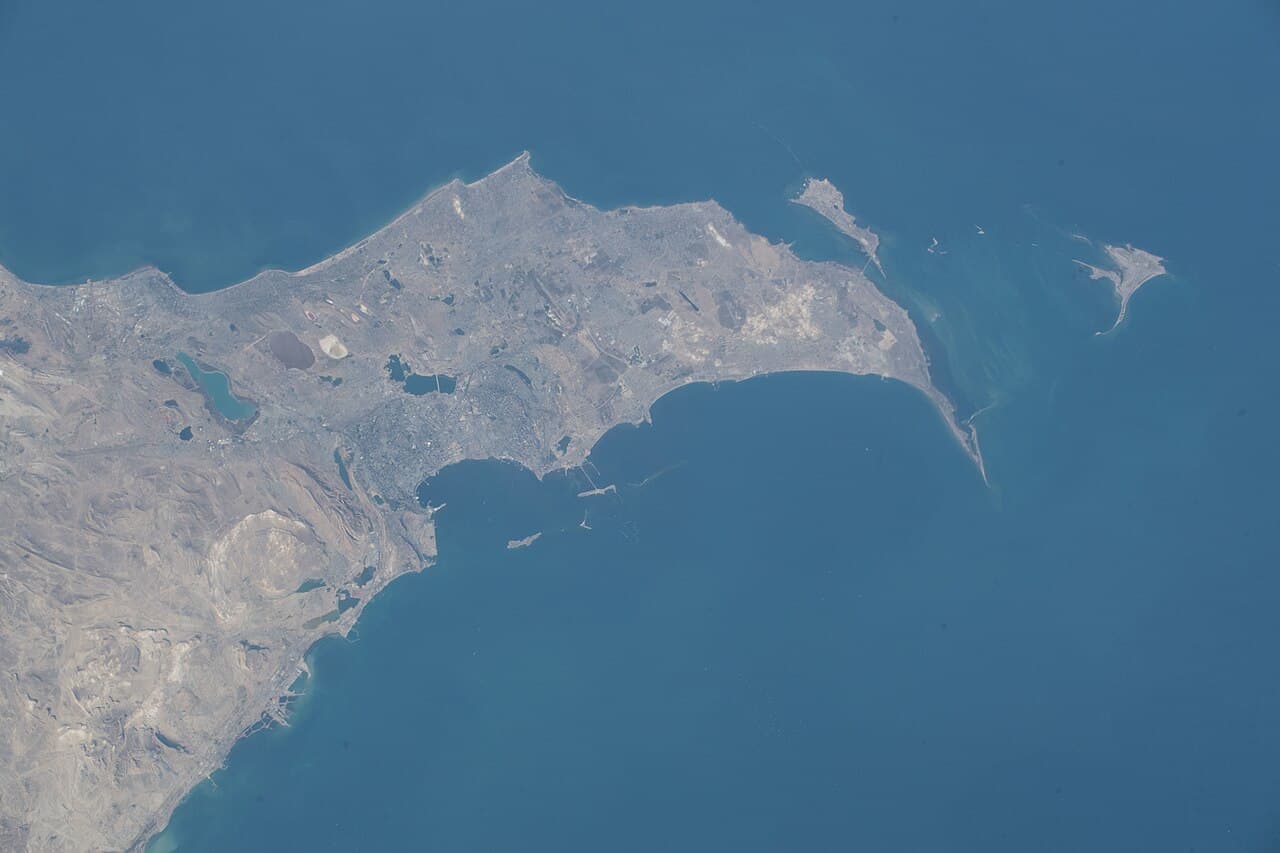
One of the most significant shifts in Azerbaijan's economy in recent years is neither in the housing market nor in the energy sector — it is on the map of global trade. The strengthening of the trade route running between Asia and Europe across the Caspian places Azerbaijan in a new strategic position, and that has direct implications for the Baku property market.
What the Middle Corridor Is
Cargo moving from China and Central Asia to Europe can take three main routes: the sea route around Asia, the northern overland route, or the middle route — through Kazakhstan, the Caspian Sea, Azerbaijan, Georgia and Türkiye.
The sea route is the cheapest but also the slowest. The middle route is faster than sea freight and less dependent on certain geopolitical factors that affect other overland alternatives. The result: sustained growth in interest and traffic volumes along this corridor.
Baku sits precisely at the transfer point between the Caspian and the route's continuation westward. That is a location that cannot be replicated.
What This Generates in the Economy
Infrastructure — a trade route requires ports, railways, roads, terminals and warehouses. These investments create employment in construction and operations, and improve the region's overall infrastructure.
Employment — logistics is a labour-intensive sector: drivers, terminal operators, customs agents, trade insurance and finance staff, IT and operations personnel. These are urban jobs that generate housing demand.
Ancillary services — around a logistics sector, offices, legal services, insurance companies and commercial banking develop. These generate demand for commercial property. We expanded on this in commercial real estate opportunities in Baku.
International positioning — a country that is a trade junction receives attention from investors, diplomacy and media. This reinforces what is already occurring through international events. We expanded on this in Azerbaijan as a Middle Corridor trade hub.
The Effect on the Property Market
The link is not immediate but it is identifiable on three levels.
Residential demand — every new job in logistics or ancillary services is a household needing housing. As the sector expands, the urban demand base expands with it.
Commercial and industrial property — warehouses, logistics centres and storage space near the port and along transport corridors. This is a different category from residential property, with its own pricing and letting logic, and one less familiar to a typical overseas investor.
The geography of demand — logistics activity concentrates on the city's periphery and near the port, not in the historic centre. Its effect on housing prices is felt mainly in those areas. We expanded on this in the Qaradagh neighbourhood guide.
Why This Is a Supportive Factor and Not a Guarantee
Precision matters here. A trade route does not guarantee prosperity, and history is full of cities that were trade junctions and lost that standing.
Competition is real — alternative routes are also improving, and sea freight prices affect relative viability.
Dependence on external factors — traffic volumes along the corridor depend on trade relations between China and Europe, on the regional geopolitical situation and on the policies of third countries.
The pace of development — building logistics infrastructure takes years, and the full economic benefit materialises gradually.
Azerbaijan's growth forecasts explicitly note that disruptions to global trade are among the main downside risks. We expanded on this in Azerbaijan GDP growth forecast.
What This Means for an Investor in Practice
The practical insight is not to "buy because of the corridor" but to use it as one variable in assessing an area.
If you are considering a property near a transport junction, the port, or a developing logistics zone, this is a supportive factor worth pricing in. If you are considering a property in the city centre, the effect is more indirect — it works through the general economy rather than physical proximity.
Important Caveats
Trade volume and corridor traffic data varies from year to year and is affected by global factors. Do not rely on a single year's trend.
In addition, the effect of logistics development on housing prices is slow and indirect. Do not expect an immediate change in property prices following an infrastructure project.
Summary
The strengthening of the trade route between Asia and Europe across the Caspian places Azerbaijan in a strategic position and generates employment, infrastructure investment and demand for commercial property. For a property investor in Baku, this is a genuine but indirect and slow supportive factor — one to treat as a single variable in an overall assessment rather than a sufficient reason to invest.
Related Articles
 Real estate investing
The Israel-Azerbaijan-US Triangle in 2026
An AI memorandum, an American strategic charter and talks on a trilateral format. What is actually new here, what was already in place, and what it means for buyers
Read more → Real estate investing
How Dependent Is Azerbaijan's Economy on Oil, Really?
The non-oil sector reaches 75.8% of GDP in 2026, but that share is rising for two different reasons. The official figures, the IMF's view, and what it means for buyers
Read more → Real estate investing
The Armenia-Azerbaijan Peace Deal: Where It Stands
The agreement was initialed in August 2025 but remains unsigned. What was agreed, what is blocking signature, what the Armenian election changed, and what it means for owners
Read more →