Baku Conferences and Exhibitions: The Business Calendar
Published on 2026-09-08 · 4 min read
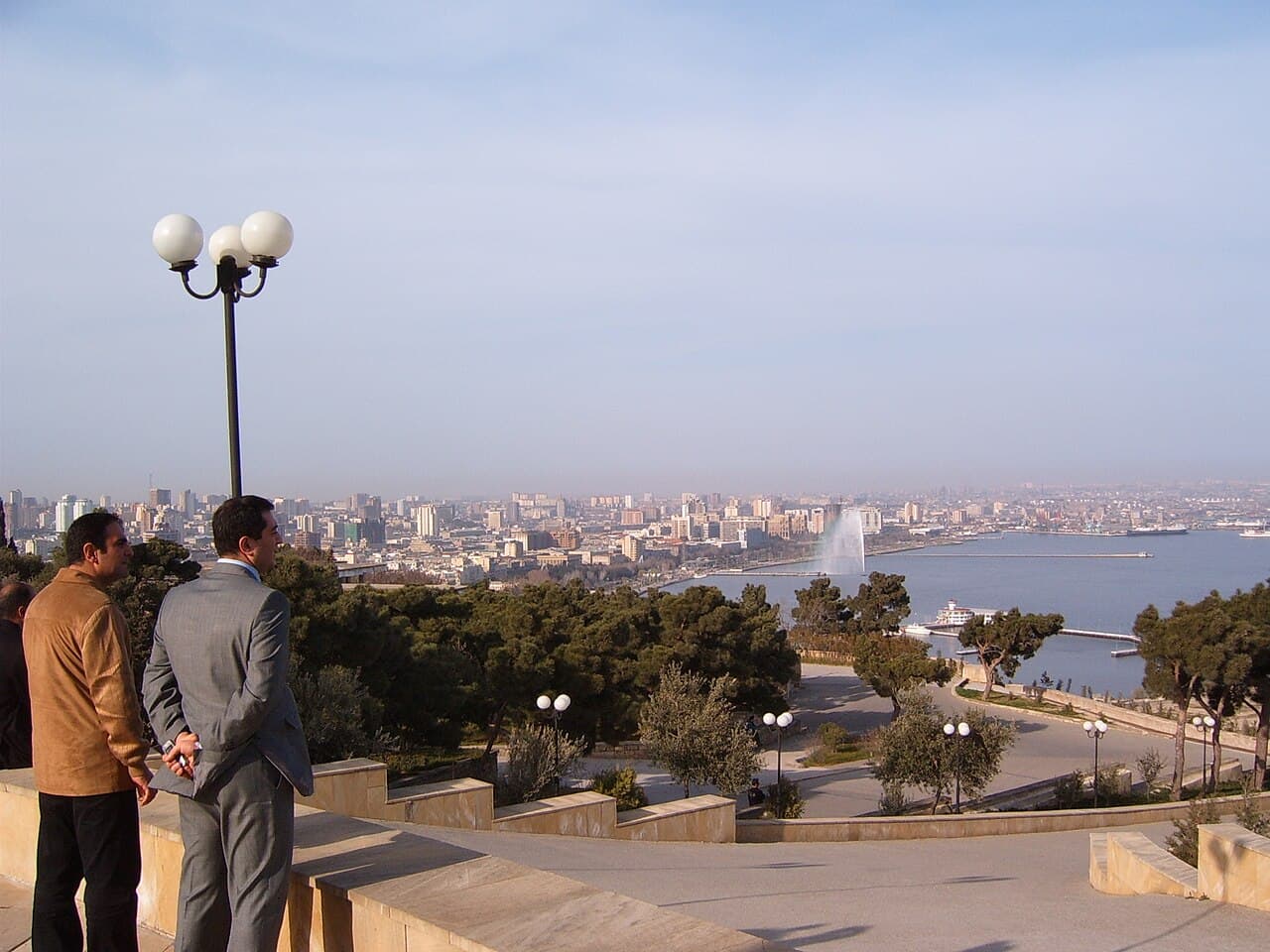
Business tourism is the quiet leg of Baku's accommodation market. Unlike leisure tourism, which concentrates in summer, conferences and exhibitions spread across spring and autumn — precisely the months when general tourist demand weakens. For an investor, this is one of the most important aspects of the city's calendar, and also one of the least discussed.
Why Baku Became a Conference City
The explanation combines three factors. The first is geography: Baku sits at the junction of Europe, Russia, Iran, Türkiye and Central Asia, making it a natural meeting point for regional forums.
The second is infrastructure. The city has developed large convention venues, internationally branded hotels and good air connectivity to a wide range of destinations. These are threshold conditions for hosting international conferences.
The third is policy: Azerbaijan invests deliberately in positioning itself as a host for international events, as part of a branding and investment-attraction strategy. We expanded on this in international events and Baku's global city brand.
The Main Sectors
Energy — this is the most pronounced sector. Azerbaijan is a long-established oil and gas producer, and Baku hosts forums and exhibitions across oil, gas and renewable energy. These are events with a professional audience of particularly strong spending capacity.
Logistics and transport — with the strengthening of the trade route between Asia and Europe across the Caspian, Baku has become a meeting point for the logistics sector. We expanded on this in the Middle Corridor trade route and what it means for Baku property.
Technology and digital — a growing sector, with conferences and hackathons drawing a younger and more international audience.
Tourism, construction and real estate — sector exhibitions attracting both trade audiences and investors.
The Profile of a Business Traveller
This is a fundamentally different audience from a leisure tourist, with characteristics highly convenient for a landlord.
They arrive in the shoulder seasons — spring and autumn — precisely when general occupancy is low. They are less price-sensitive, since the cost is usually covered by an employer. They look for a central location with easy access to the conference venue and transport. And they tend to be an easy guest: short to moderate stays, minimal wear, no noise.
Conversely, they are demanding on standard: fast and stable internet, a work desk, functioning air conditioning and reliable basic provision. A property that does not meet that standard simply will not be chosen.
What This Means for Property Selection
If you are targeting the business audience, location decides. Proximity to convention venues, the business district and metro stations is the single most important parameter. Districts such as Sabail and Khatai are the most relevant.
On specification, a small investment in work infrastructure — a good router, a desk, a proper chair and lighting — materially changes the property's positioning with this audience. We detailed the logic in the best areas for short-term rental by tourist type.
The Link to the Commercial Market
The conference calendar affects more than the accommodation market. Sustained international business activity generates demand for offices, co-working space and commercial property in the city.
For an investor considering commercial rather than residential property, this is an important indicator: a city that regularly hosts international forums attracts representative offices, liaison operations and international firms. We expanded on this in commercial real estate opportunities in Baku and the state of the Baku commercial property market in 2026.
How to Track the Calendar
Conference calendars are not published in a single central place. The practical sources are the websites of the city's convention venues, trade association sites in energy and logistics, and bilateral chamber of commerce sites.
The practical recommendation: build a watch list of five to ten recurring events in the relevant sectors and check it twice a year. Most conferences publish dates six months to a year in advance, which allows early pricing planning.
Important Caveats
Business tourism is sensitive to the economic cycle and to corporate budgets. In periods of global slowdown, conferences shrink or move online. This is not a guaranteed demand stream.
In addition, conferences are cancelled, postponed and moved between cities. Do not rely on a single event, and verify with the organisers.
Summary
Baku's conference and exhibition calendar is a genuine asset for a landlord, primarily thanks to its timing in the shoulder seasons and the convenient guest profile. It requires a centrally located property at an appropriate standard, and it demands ongoing tracking of dates. Like any demand source, it is one component of a diversified calendar rather than a sole basis for yield.
Related Articles
 Real estate investing
The Israel-Azerbaijan-US Triangle in 2026
An AI memorandum, an American strategic charter and talks on a trilateral format. What is actually new here, what was already in place, and what it means for buyers
Read more → Real estate investing
How Dependent Is Azerbaijan's Economy on Oil, Really?
The non-oil sector reaches 75.8% of GDP in 2026, but that share is rising for two different reasons. The official figures, the IMF's view, and what it means for buyers
Read more →Real estate investingThe Armenia-Azerbaijan Peace Deal: Where It Stands
The agreement was initialed in August 2025 but remains unsigned. What was agreed, what is blocking signature, what the Armenian election changed, and what it means for owners
Read more →